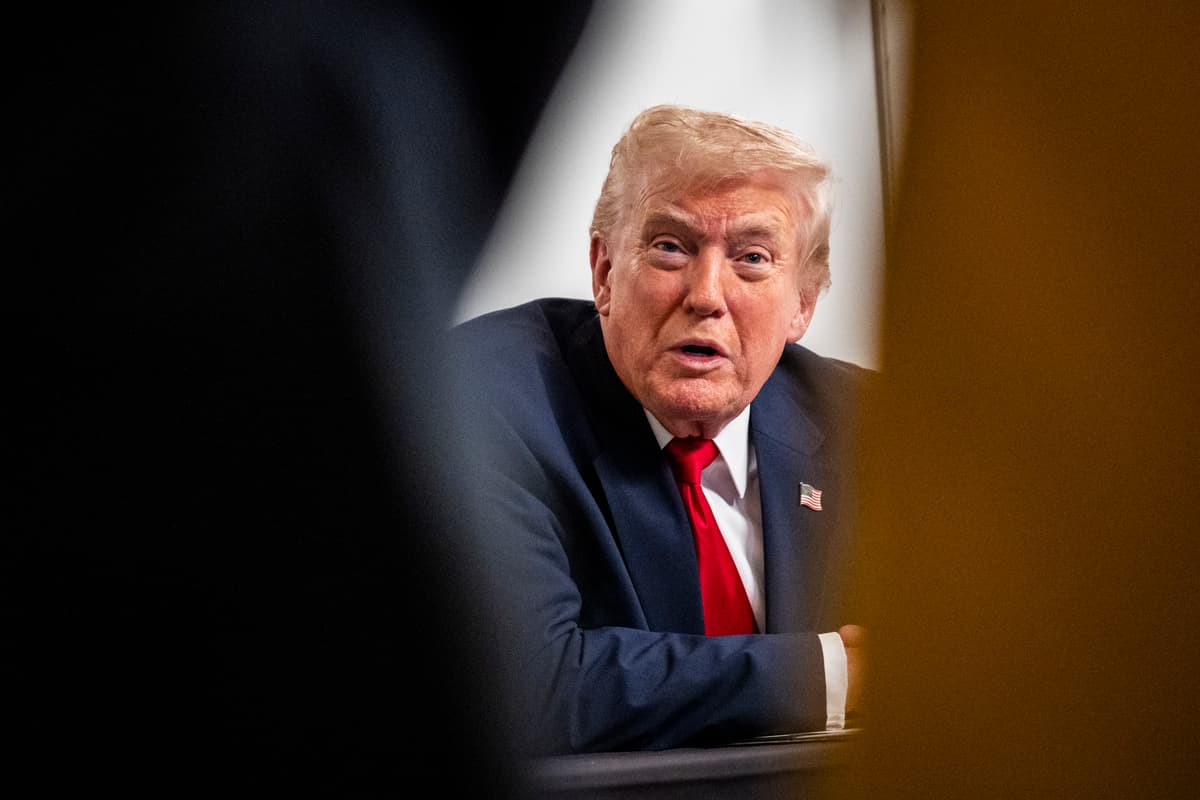
BREAKING: Former President Donald Trump has just announced a dramatic move to declare all documents and orders signed by President Joe Biden using an autopen as “terminated, and of no further force or effect.” This unprecedented declaration, made on Friday, October 20, 2023, could ignite a significant legal battle with implications for numerous high-profile executive actions, including critical pardons and policies on reproductive rights and climate change.
In a post on Truth Social, Trump asserted that an astonishing 92 percent of Biden’s signed documents were generated with the autopen. He claimed this method was utilized without proper authorization, stating, “The Autopen is not allowed to be used if approval is not specifically given by the President of the United States.” He further accused “Radical Left Lunatics” surrounding Biden of operating the device “illegally” and threatened, “If he says he was [involved], he will be brought up on charges of perjury.”
This assertion stems from a House Oversight Committee report released earlier this year, which examined thousands of documents. However, that report has faced skepticism, as it hasn’t undergone independent review or audit by external experts, leading many Democrats to label it a “political diversion.” They pointed out that courts have consistently upheld the validity of autopen signatures, including those from former Presidents George W. Bush and Barack Obama.
While it is recognized that Biden has used the autopen more frequently than his predecessors, his administration insists that its use was always sanctioned. The House report failed to provide evidence that White House staffers operated the autopen without Biden’s direct authorization.
Trump’s declaration could lead to significant legal challenges, especially concerning Biden’s pardons. While Trump can reverse many of Biden’s executive actions through his own orders, any attempt to invalidate presidential pardons would likely be subjected to scrutiny by the Supreme Court. According to Article II of the U.S. Constitution, presidential pardons are typically considered final, and legal precedent suggests that a president cannot rescind a predecessor’s pardons.
As this story develops, political analysts are watching closely. The implications of Trump’s bold statement could reshape the landscape of executive power and challenge established legal norms.
Stay tuned as we bring you the latest updates on this unfolding situation.