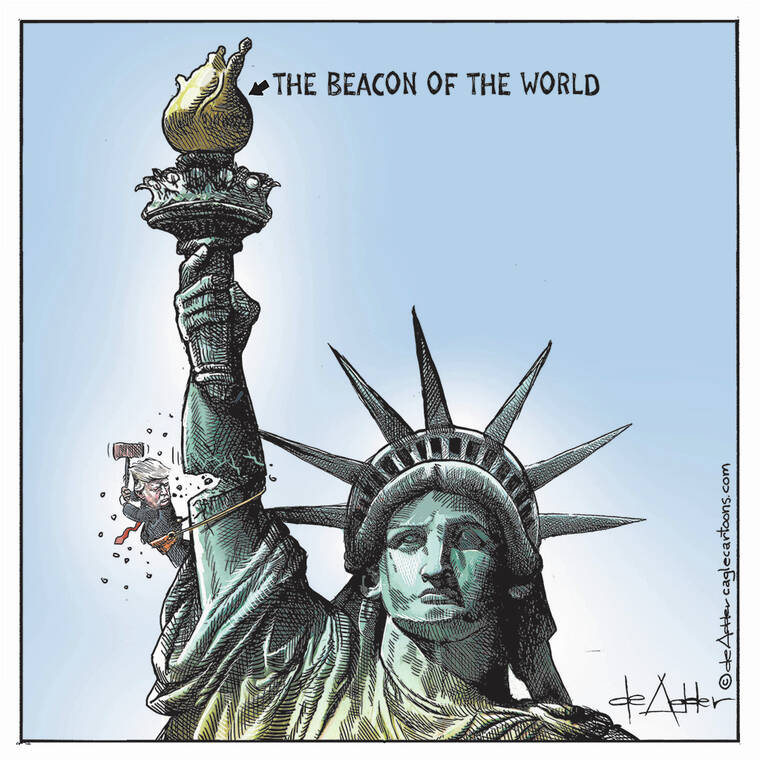
An editorial cartoon published on December 1, 2025, has sparked discussions regarding current political dynamics. The cartoon, which depicts various political figures engaging in heated debate, encapsulates the growing tensions and complexities faced by governments around the world. This visual commentary highlights critical issues such as international relations, public opinion, and the impact of social media on political discourse.
The cartoon features well-known leaders from several countries, showcasing their differing perspectives on pressing global matters. It serves as a reflection of the current political landscape, where divergent views often collide. Such illustrations not only entertain but also provoke thought and discussion among viewers, prompting them to consider the implications of these political narratives.
Impact on Public Discourse
In an era where information is rapidly disseminated, editorial cartoons play a significant role in shaping public opinion. They distill complex political issues into digestible visuals that resonate with a broad audience. The December 1 cartoon is no exception, using satire to challenge political figures and their policies while engaging citizens in the ongoing conversation about governance and accountability.
Many observers have noted that the influence of social media amplifies the reach of such cartoons, allowing them to spread rapidly across platforms. As audiences share and comment on these images, they contribute to a larger dialogue, often leading to increased scrutiny of political actions and decisions. This phenomenon demonstrates the powerful intersection of art and politics, where a simple cartoon can ignite debates and fuel public interest.
Reactions from Political Figures
Political figures from various parties have reacted to the cartoon, with some embracing its commentary and others pushing back against perceived misrepresentations. For instance, a spokesperson for one prominent party expressed appreciation for the cartoon’s ability to highlight critical issues, stating, “Art has always been a catalyst for change, and we welcome the dialogue it generates.” In contrast, another leader criticized the cartoon as oversimplifying complex issues, arguing that it fails to capture the nuances of policy-making.
The reactions underscore the enduring relevance of editorial cartoons in contemporary politics. They serve as a mirror reflecting society’s concerns while also providing a platform for political figures to engage with their constituents. As the political landscape continues to evolve, the role of satire in shaping public discourse remains significant, inviting both laughter and reflection.
The editorial cartoon from December 1, 2025, exemplifies the potency of visual commentary in today’s political arena. By distilling complex issues into a single image, it invites viewers to engage with the political landscape critically and humorously. Such creations are not just art; they are vital components of the ongoing dialogue that shapes our understanding of governance and society.