
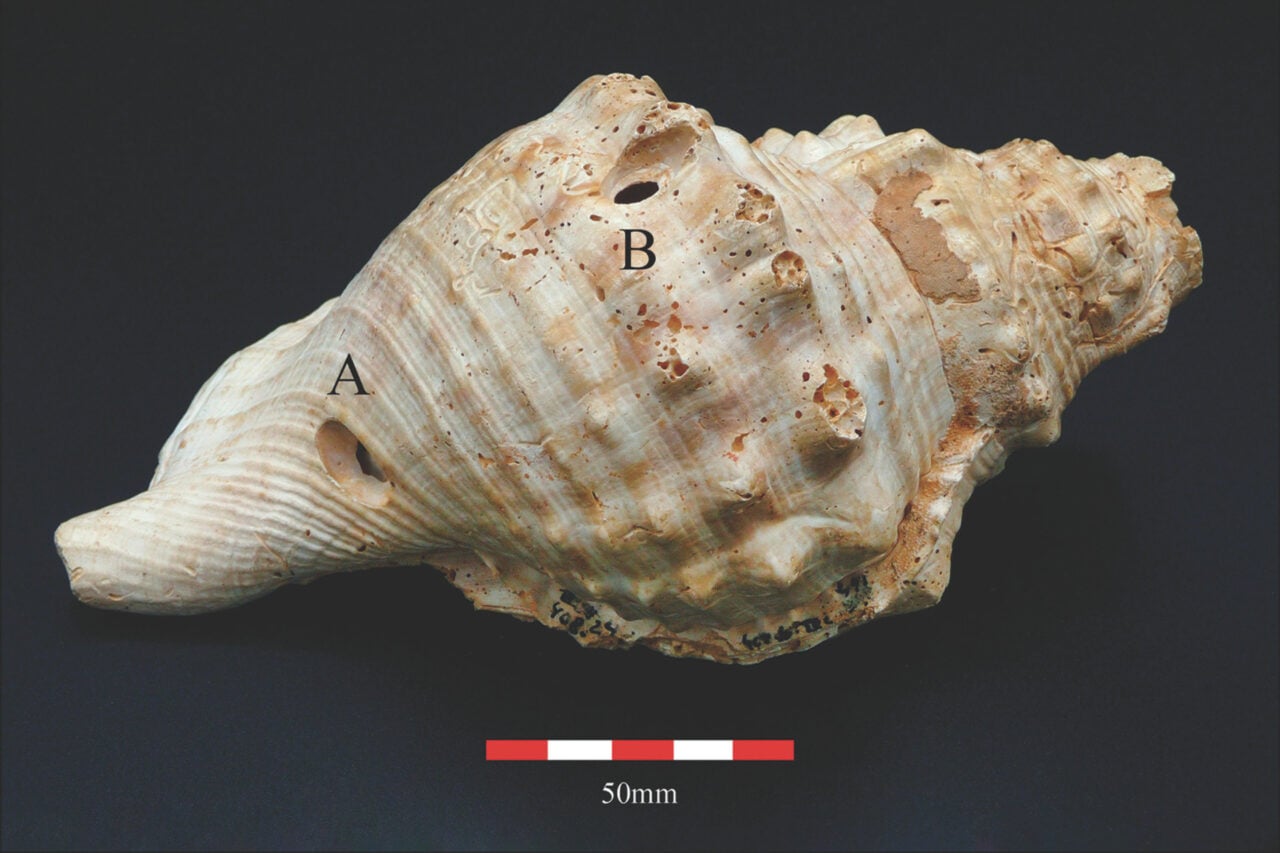
Archaeologists have revealed that 6,700-year-old conch shell trumpets from Neolithic sites in Catalonia, Spain, served as both musical instruments and tools for long-distance communication. Research published in the journal Antiquity highlights the significance of these artifacts, which have been largely overlooked in scholarly discussions.
Understanding Prehistoric Communication
The study, led by archaeologists Margarita Díaz-Andreu and Miquel López-García from the University of Barcelona, involved hands-on experimentation with the ancient trumpets, specifically Charonia lampas shells. These shells were discovered in a concentrated area along the lower course of the Llobregat River and the pre-coastal depression of the Penedès region, east of Barcelona.
Díaz-Andreu noted that the shells had their apexes removed, leading to speculation that they were intentionally crafted to produce sound. “They had their apexes removed, leading some researchers to suggest they may have served as musical instruments,” she explained. Evidence suggests that these shells were likely gathered after the mollusks inside had died, indicating they were not meant for consumption.
Acoustic Characteristics and Cultural Impact
To explore the shells’ potential, Díaz-Andreu and López-García tested their acoustic properties. The shells, aged between 5,000 and 7,000 years, were played to assess their sound quality. López-García, also a professional trumpet player, highlighted their effectiveness: “The shell trumpets are capable of producing high-intensity sounds and would have been highly effective for long-distance communication,” he stated. Additionally, he noted their ability to produce melodies, suggesting that they may have been used for expressive musical purposes as well.
The research indicates that these shell trumpets were instrumental in facilitating communication within and between Neolithic communities. The densely populated region suggests that the instruments played a role in agricultural and mining activities, possibly influencing social dynamics through sound-based interaction.
According to Díaz-Andreu, the findings reshape our understanding of early human interactions. “Our study reveals that Neolithic people used conch shells not only as musical instruments, but also as powerful tools for communication,” she said. This insight emphasizes the importance of sound in shaping social connections and spatial dynamics in prehistoric societies.
As researchers continue to uncover the complexities of ancient communication, these shell trumpets stand as a testament to the sophisticated ways in which early communities engaged with their environment and each other.


