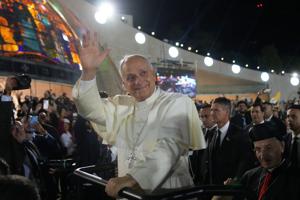
Pope Leo XIV commemorated the victims of the devastating Beirut port explosion during his visit to Lebanon, praying silently at the site where the tragedy unfolded on August 4, 2020. The explosion, which claimed the lives of 218 people and caused extensive damage, has become a poignant symbol of Lebanon’s ongoing struggles with government impunity and systemic corruption.
As the Pope arrived, relatives of the victims gathered at the site, holding photographs of their loved ones and standing in somber silence beside the remnants of the last grain silo still standing. The scene was marked by wreckage and charred vehicles, remnants of the blast that erupted when hundreds of tons of ammonium nitrate detonated in a warehouse.
Cecile Roukoz, whose brother was among those killed, expressed her hope that the Pope’s visit would emphasize the need for accountability. “The visit clearly sends the message that the explosion was a crime,” she stated. “The country should end impunity and ensure justice is served.”
Despite ongoing demands for accountability, no official has been convicted in the investigation, which has faced significant hindrances, fueling anger among Lebanese citizens who view the incident as yet another example of governmental negligence.
Emotional Visits and Calls for Change
During his final day in Lebanon, Pope Leo visited the De La Croix hospital, which specializes in providing care to individuals with mental health challenges. The atmosphere was filled with emotion as the hospital’s staff and young children dressed as Swiss Guards welcomed him. Mother Marie Makhlouf, the hospital’s head, expressed gratitude for the Pope’s visit, highlighting the facility’s commitment to those often overlooked by society.
In his address, Pope Leo emphasized the importance of remembering the most vulnerable. “We cannot forget those who are most fragile,” he stated, urging society to confront issues of poverty and vulnerability rather than clinging to superficial notions of well-being.
As part of his visit, Pope Leo is expected to conclude his trip with a Mass along the Beirut waterfront, where thousands of Lebanese gathered to welcome him. The significance of this visit cannot be overstated; it marks the first time a pope has set foot in Lebanon in years, following various obstacles related to the country’s political and economic crises, as well as the Pope’s own health challenges.
Maggie Claudine, a pilgrim waiting at the hospital, expressed the profound impact of the visit. “For Lebanon, it means a lot. We hope that peace will prevail,” she shared, reflecting the hopes of many for a brighter future.
Pursuing Justice and Accountability
Pope Leo’s visit also resonated deeply with the families of those who perished in the explosion. Among them was Mireille Khoury, whose 15-year-old son, Elias, was killed in the blast. She vocalized the need for justice in order for Lebanon to heal. “Our children were killed because someone kept ammonium nitrate in the main port of the city near a residential area,” Khoury emphasized, underscoring the negligence that led to the tragedy.
Since the explosion, families of the victims have gathered monthly to commemorate their loved ones and advocate for the completion of the investigation. Their calls have been met with resistance from officials who have largely failed to cooperate. Khoury reflected on the emotional toll of the ongoing struggle for justice, stating, “I will not say that this anger will fully just disappear. But I think it will give some sort of relaxation of this anger that is in my heart until justice is served.”
As Pope Leo concludes his visit, the hope for justice and accountability remains strong among the families who continue to seek the truth behind the explosion that forever changed their lives.