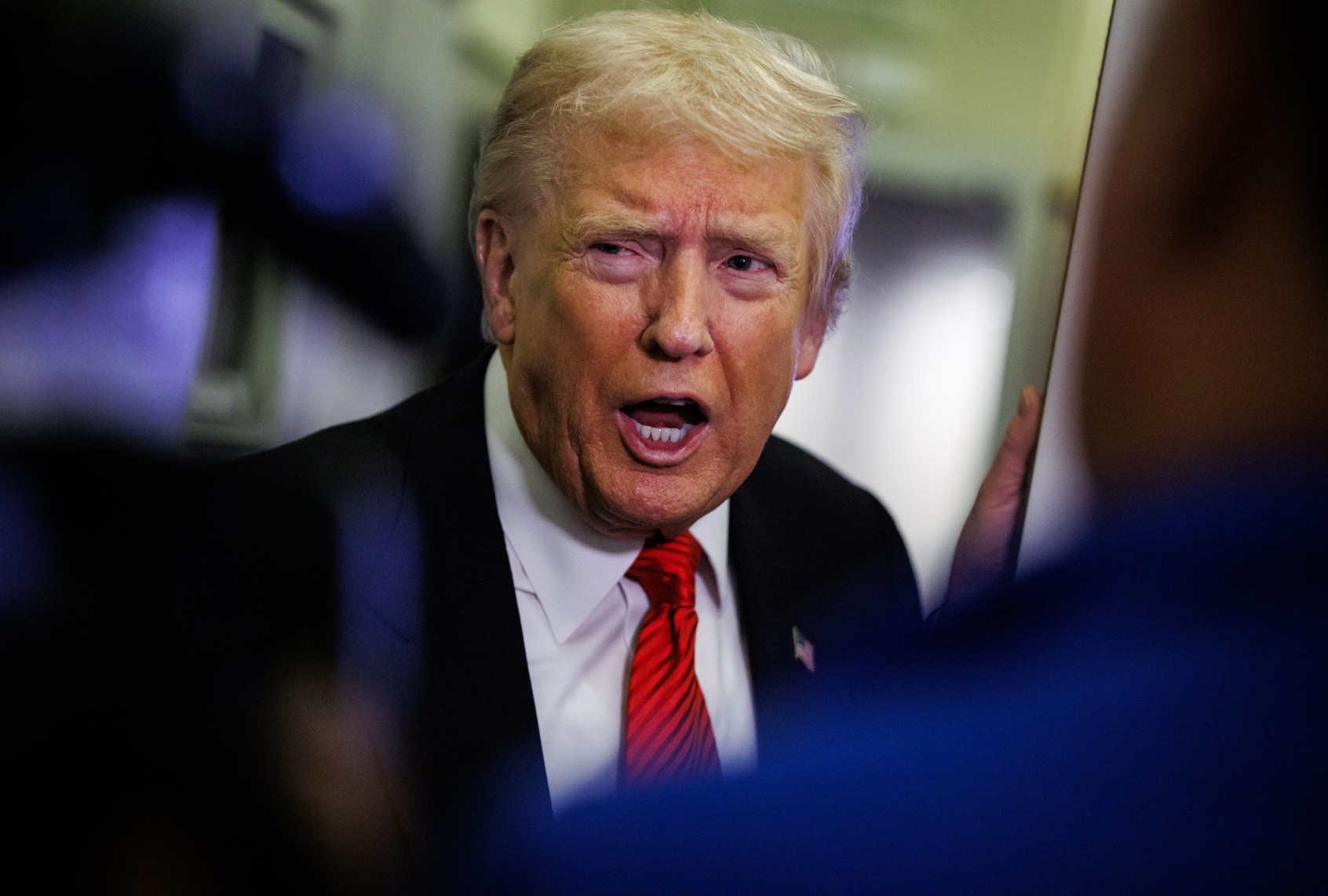
President Donald Trump has made headlines with a series of provocative statements and actions regarding his administration’s ongoing campaign against drug trafficking. Over the Thanksgiving weekend, he posted a warning on Truth Social, advising airlines and pilots to consider the airspace around Venezuela as closed. This statement raised concerns about a potential military operation against the country, which Trump later downplayed by instructing the media not to “read anything into it.”
However, new developments emerged when reports indicated that Trump had recently communicated with Venezuelan President Nicolás Maduro, advising him to leave the country within a week. This follows the administration’s intensified military operations targeting alleged drug boats in the Caribbean Sea. Amid these actions, a scandal has surfaced, implicating Defense Secretary Pete Hegseth in potential war crimes for reportedly ordering the execution of unarmed survivors of an attack on September 2. Trump claimed that Hegseth denied giving such orders, suggesting that if evidence arose, Hegseth’s position could be at risk.
Trump’s actions are framed as part of a broader war on what he labels “narco-terrorism” in Venezuela. In 2020, during his first term, the Justice Department indicted Maduro and 14 others on charges including drug trafficking and corruption, alleging their intent to flood the United States with cocaine. While the language used was dramatic, most charges related to financial crimes rather than direct drug shipments to the U.S. Notably, the cocaine trade is primarily directed towards Europe, and fentanyl, which has become a major focus, is mostly smuggled from Mexico.
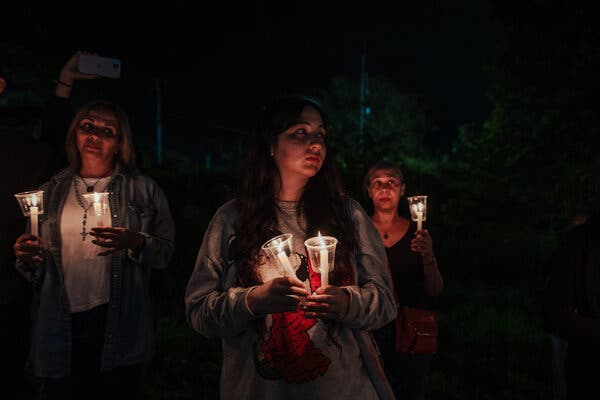
The seriousness of this drug war was echoed by Republican Senator Dave McCormick, who remarked on Fox News Sunday that drug-related deaths in the U.S. surpassed those from the Vietnam War, citing 100,000 American fatalities due to drugs last year alone. Another Republican senator, Markwayne Mullin, also drew parallels to the Vietnam conflict, framing the drug crisis as a significant threat to American lives.
Amid this backdrop of heightened military engagement and rhetoric, Trump’s recent announcement of his intention to pardon Juan Orlando Hernández, the former president of Honduras, has raised eyebrows. Hernández is currently serving a 45-year prison sentence for trafficking over 500 tons of cocaine into the United States. In a post on Truth Social, Trump claimed that Hernández was treated unfairly and described the prosecution as a setup orchestrated by President Joe Biden.
Trump’s connection to the case deepens, as he reportedly consulted with former federal prosecutor Emil Bove, who was instrumental in the indictment of Hernández’s brother. Evidence presented during Hernández’s trial included allegations of bribes from drug lord El Chapo and a machine gun linked to him, indicating a deep involvement in drug trafficking operations.
The political implications of the pardon are significant. Trump’s decision comes in the context of lobbying efforts by individuals advocating for Hernández, including his advisor Roger Stone. Stone has promoted the Próspera charter city experiment in Honduras, which is backed by U.S. venture capital. The project, however, faces skepticism within Honduras, further complicating the political landscape.
Additionally, Trump has expressed support for another notable figure in the drug trade, Ross Ulbricht, the founder of the Silk Road, an online marketplace for illegal drugs. Ulbricht was convicted of generating over $200 million in illegal sales, including drugs like cocaine and heroin. Trump has indicated his belief that Ulbricht was also treated unfairly, showcasing a pattern of pardoning those involved in the drug trade while simultaneously advocating for severe penalties against drug dealers.
As the United States grapples with a crisis of substance abuse and drug-related violence, Trump’s mixed messages regarding drug policy raise questions about the coherence of his administration’s approach. While he publicly pushes for a tough stance on drug trafficking, his willingness to pardon individuals with substantial criminal backgrounds suggests a nuanced and potentially contradictory position.
Critics and supporters alike continue to scrutinize Trump’s actions, particularly in light of the broader implications for U.S. foreign policy in Latin America and the ongoing battle against drug trafficking. As this complex situation unfolds, the impact of these decisions remains to be seen, particularly as Trump positions himself for a potential return to the White House in the 2024 elections.