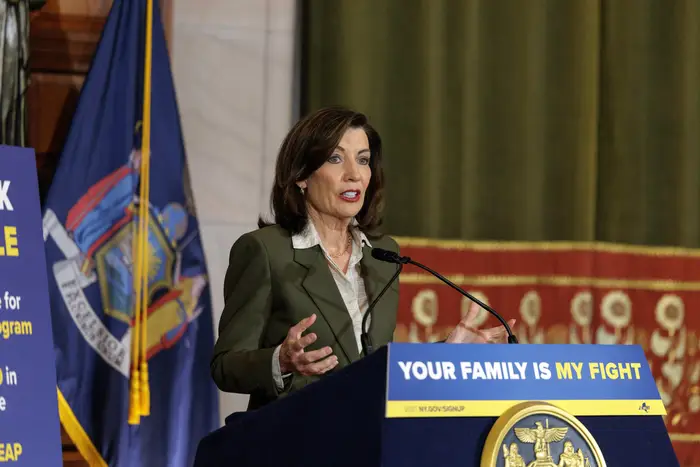
UPDATE: New York Governor Kathy Hochul has proposed significant amendments to the controversial Medical Aid in Dying Act, including a requirement for patients to videotape their requests for physician-assisted deaths. This urgent development comes as Hochul prepares to finalize her decision on the bill, which has sparked intense debate across the state.
Sources reveal that Hochul presented these amendments to the Legislature late last month, aiming to address concerns surrounding the sensitive issue of assisted dying. The proposed changes also include a mandatory seven-day waiting period for terminally ill patients seeking life-ending medication and a stipulation that all applicants undergo a mental health evaluation by a psychiatrist. Additionally, the bill would be restricted to New York residents and would not take effect until one year after Hochul’s signature.
“I hear from a lot of people on that issue,” Hochul told reporters, acknowledging the strong emotions involved. “There are intense views on both sides of the spectrum, and I’m conscious of that. It’s going to be a very weighty decision on me.”
The Medical Aid in Dying Act is among over 200 bills requiring action from Hochul before the end of the year. It remains uncertain if her proposed amendments will satisfy the lawmakers who passed the original bill in June, including Assemblymember Amy Paulin and state Senator Brad Hoylman-Sigal. They have not commented on the bill’s current status.
The act, which has already been legalized in 11 other states and the District of Columbia, aims to provide terminally ill patients with the option for assisted dying under strict regulations. Proponents of the bill, including advocacy groups like Compassion & Choices, argue that it contains numerous safeguards and that the videotape requirement is unprecedented and unnecessary.
Critics, including the state’s Roman Catholic bishops, assert that the bill violates moral standards, with Bob Bellafiore of the New York State Catholic Conference describing the amendments as “deck chairs on the Titanic.” He emphasized that the bill leads to potential tragedies and unintended consequences.
Supporters have rallied for the bill, sharing personal letters detailing their experiences with terminal illness and the suffering of loved ones. The American Medical Association has voiced opposition to physician-assisted death, complicating the discussion further.
As the debate intensifies, Hochul’s spokesperson Kara Cumoletti stated that the governor is still reviewing the legislation. The clock is ticking, and the urgency surrounding this issue is palpable as New Yorkers await a decision that could change the landscape of end-of-life care in the state.
What happens next? Watch for updates on Hochul’s final decision and further negotiations with lawmakers in the coming days. The outcome will not only impact terminally ill patients but also raise critical ethical questions about the practice of assisted dying in New York.