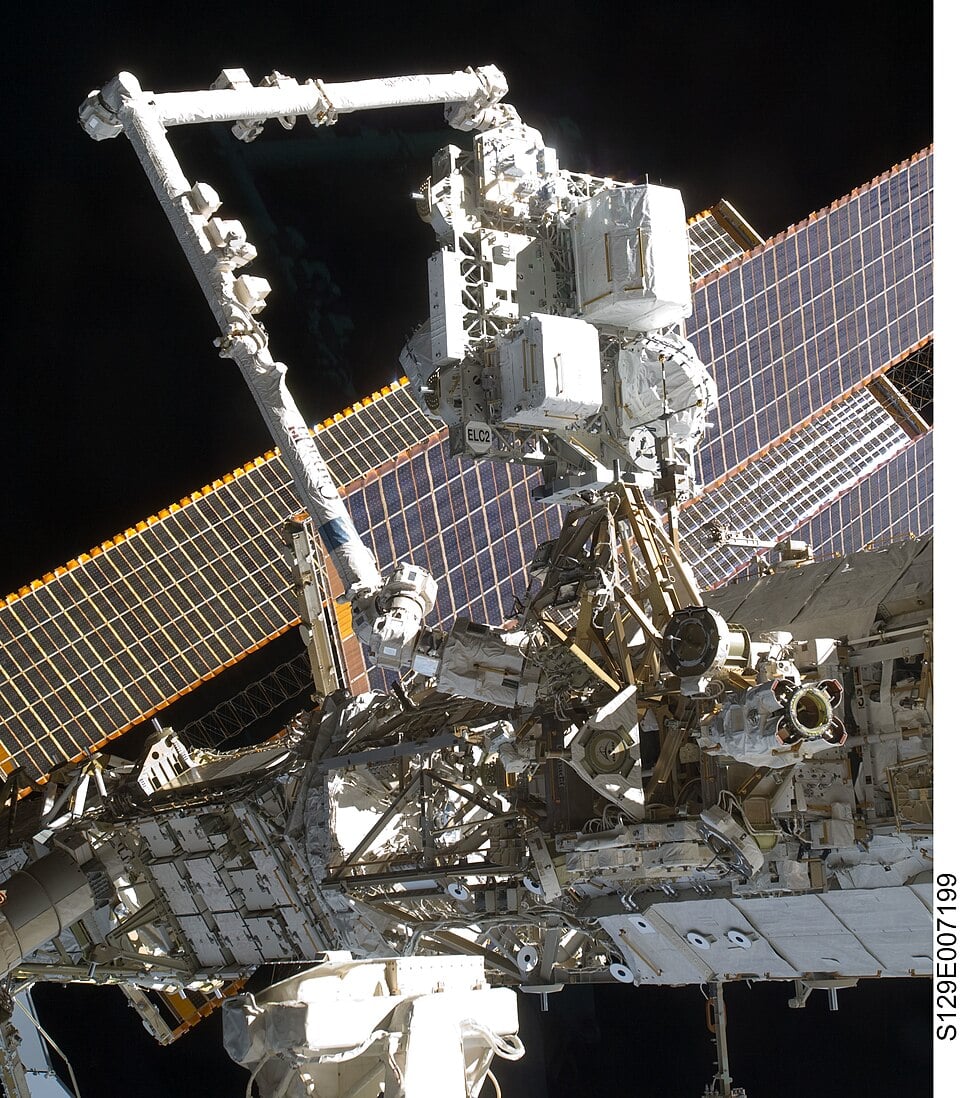
Researchers are investigating the behavior of soft matter, including substances like mayonnaise, in a groundbreaking new facility aboard the International Space Station (ISS). This initiative, known as COLIS, aims to understand how materials age without the influence of Earth’s gravity, which complicates such studies on the ground.
Soft matter refers to materials such as gels, foams, and colloids, whose internal structures change gradually over time. These changes can affect everyday products like sunscreen, prescription creams, and food emulsions. When particles in these materials settle or cluster under the constant force of gravity, it can obscure the underlying processes at work.
To address this challenge, a collaborative team from the Politecnico di Milano and the Université de Montpellier developed COLIS, which is now operational in the microgravity environment of the ISS. This facility represents over 25 years of research by physicist Luca Cipelletti of the Laboratoire Charles Coulomb and Roberto Piazza, who leads the Soft Matter laboratory at Politecnico di Milano.
Understanding Soft Matter through Advanced Techniques
COLIS employs sophisticated optical techniques to observe materials without disturbing them. Using dynamic light scattering, researchers analyze how laser beams interact with samples, revealing subtle variations known as speckle patterns. These patterns provide insights into how gels and similar materials undergo structural changes over time.
Additionally, the facility can heat samples in controlled environments, triggering aging processes in a precise and reproducible manner. This capability allows researchers to monitor molecular-level changes that occur as materials age.
Early findings have already begun to reshape understanding of soft matter. The team discovered that gravity exerts a more significant effect on the structure of these materials than previously thought, impacting their properties even over extended periods.
Industry Implications and Future Directions
The implications of this research extend beyond academic curiosity. Pharmaceutical companies require drugs that maintain stability for years, while cosmetics manufacturers seek creams that do not separate. Food producers depend on emulsions that retain consistency throughout distribution and storage.
Insights gained from studying soft matter in a weightless environment could revolutionize how these products are formulated. The COLIS project is currently examining colloidal nanoparticles, which are crucial for investigating internal reorganization and aging processes in soft matter.
Funded under the European Space Agency’s “Colloids in Space” program, this research is supported by both Italian and French space agencies. As COLIS continues its work, the potential to unlock new formulations and improve product stability could have far-reaching benefits across various industries.
By exploring the behavior of soft matter in a microgravity setting, scientists are not only pushing the boundaries of material science but also paving the way for advancements that could enhance everyday products used by millions.