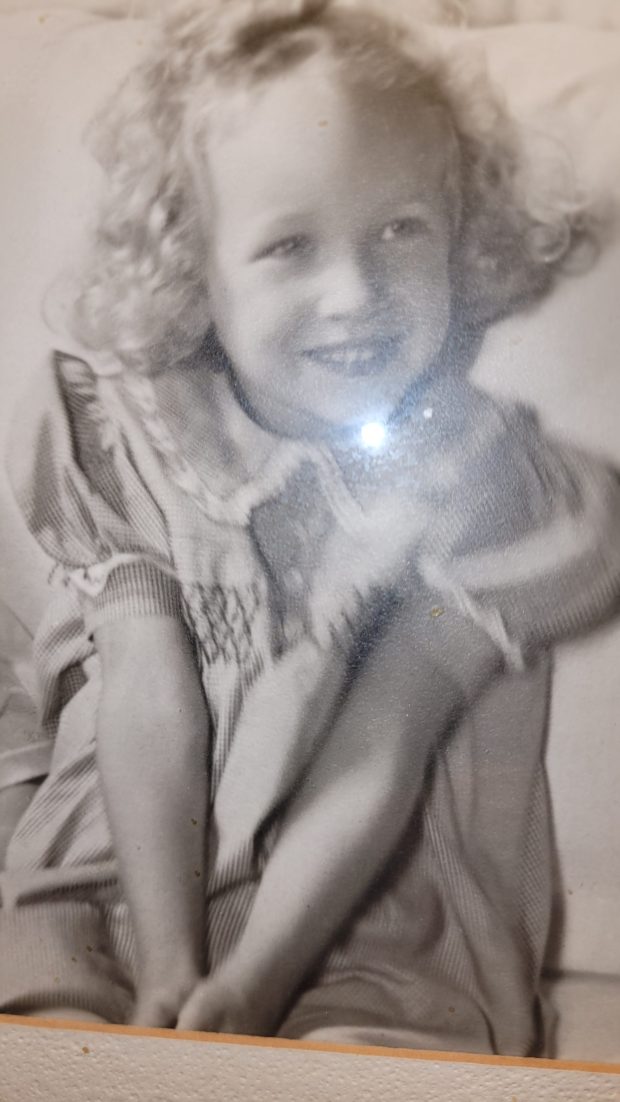
Many childhood experiences are shaped by events that occur in the world around us. For Lucy Sperlin, the memories of her early years are intertwined with the significant historical events of World War II. At just four years old on December 7, 1941, she first heard the shocking news of the attack on Pearl Harbor, a moment that marked the beginning of a tumultuous era in American history.
As the war unfolded, Sperlin’s family adapted to the changes that came with it. Living on the East Coast, her father found employment with General Electric Co., contributing to the war effort through electrical engineering. This decision allowed the family to remain in New Jersey, where Sperlin’s formative memories were shaped by the ongoing conflict.
Daily life was marked by adjustments that, while alarming for adults, were often perceived as normal or even entertaining by young children. Sperlin recalls how her family pulled down window shades before dusk to prevent enemy planes from spotting their home. These small acts of vigilance became part of their routine.
Food shortages led to creative solutions, with families relying on rationing and coupons. Sperlin fondly remembers mixing orange packets into white oleomargarine, a substitute for butter, and waiting in line for their family’s share of food coupons. Cooking fat, saved in a can for munitions factories, provided them with extra meat coupons. Even children participated in the war effort, collecting scrap metal and aluminum foil to contribute to recycling campaigns at school.
Transportation was another area significantly affected by the war. Gas rationing limited the family’s use of their 1937 Willys sedan. In response, Sperlin’s father rode a bicycle to work, saving gasoline for their weekly family trips, which they referred to as a “Sunday Drive.” The scarcity of rubber for tires made children’s bicycles a rare sight, but Sperlin’s father managed to refurbish a used bike for her sixth Christmas in 1943, an act she remembers with affection.
During this time, Sperlin developed a fascination with the military. She spent hours observing men in uniform while traveling on buses and trains, learning to recognize their ranks and the songs associated with each military branch. A visit from her uncle, who wore a naval officer’s uniform, left a lasting impression on her.
Family vacations to the Jersey Shore revealed the omnipresence of the war. Sperlin and her family watched blimps patrolling the coast in search of enemy submarines. Newsreels depicting battles in Europe were juxtaposed with lighthearted Disney films in theatres, creating a surreal experience for young viewers.
Sperlin’s mother expressed concern regarding the internment of Japanese Americans, recalling a close friend whose family was unjustly affected by these policies. When rumors of death camps in Germany surfaced, Sperlin’s mother could hardly fathom the reality, saying, “Surely, that can’t be right.” Such moments of reflection demonstrate how the war affected even those far from the front lines.
With the end of the war in sight, Sperlin began to engage more with music. She listened repeatedly to the ballad “Roger Young,” a song about a fallen Marine, using the family record player connected to their old GE radio. The emotional weight of these lyrics resonated with her youth, creating a lasting memory of the era.
When VE Day arrived, Sperlin vividly remembers the excitement in her neighborhood as the announcement blared from their radio. She gazed out the window to see a boy joyfully celebrating by dragging cans behind his bicycle, marking a moment of relief and joy in the aftermath of years of conflict.
The following year, Sperlin’s family packed up their belongings in a “new” 1941 Dodge Sedan for a cross-country drive to Seattle. Her mother sought to escape the humid East Coast, while her father looked forward to returning to the Cascade Mountains for skiing and climbing. This journey represented not only a physical transition but also the beginning of a postwar chapter in their lives.
Today, Lucy Sperlin resides in Chico, reflecting on her childhood through the lens of a world shaped by war. Her memories illustrate how the impacts of significant historical events can remain etched in the minds of those who experience them, coloring their perspectives for decades to come.