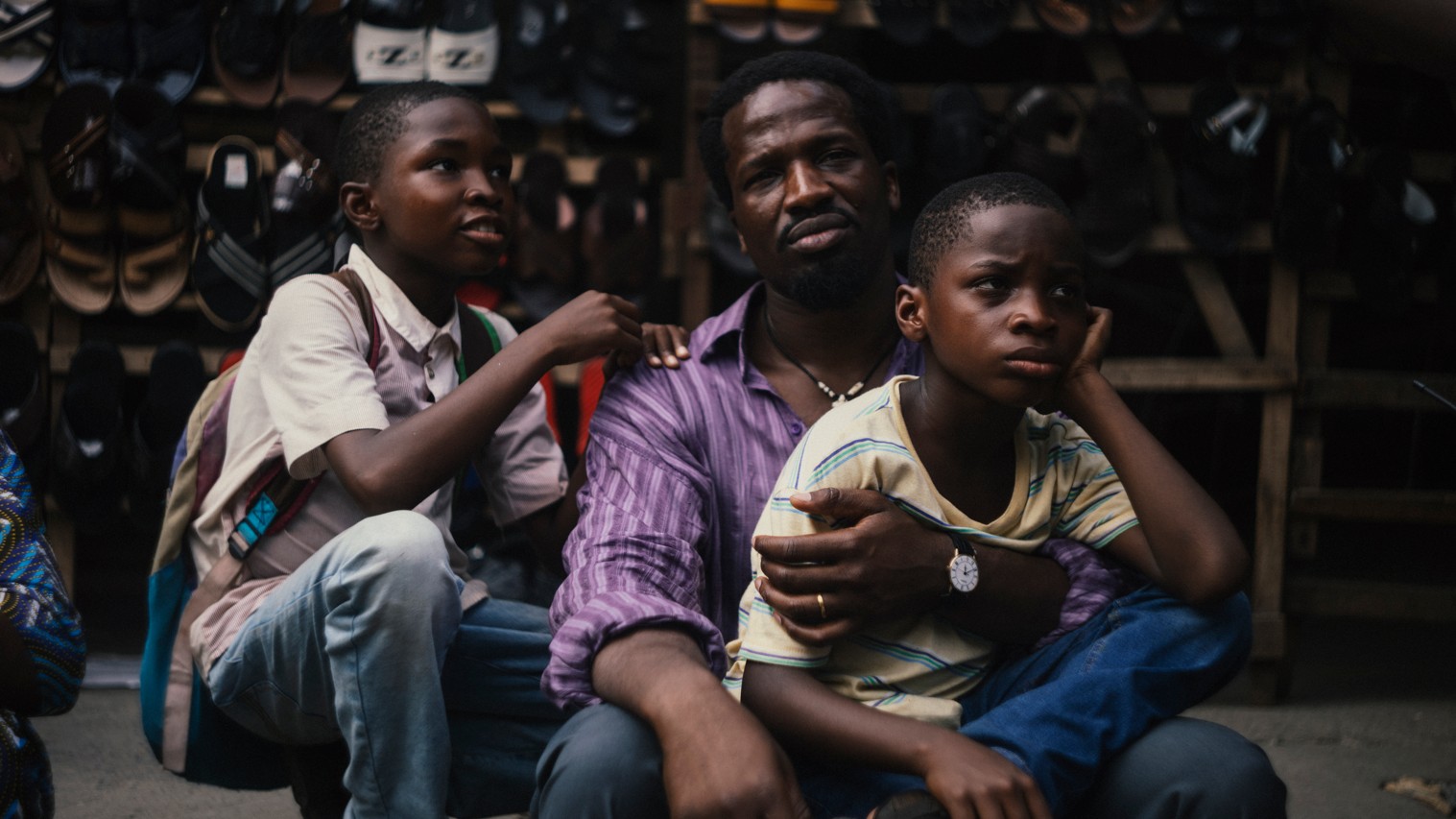
British-Nigerian filmmaker Akinola Davies Jr. has made an impressive mark in the film industry with his debut feature, My Father’s Shadow. This semi-autobiographical film, set in Lagos, has garnered significant acclaim, including its selection as the official U.K. submission for the 2025 Academy Award for Best International Feature Film.
The film premiered in May 2023 at the Cannes Film Festival as part of the Un Certain Regard section, where it received a special mention for the Camera d’Or. Following its success in Cannes, Davies secured the Best Director award at the British Independent Film Awards in November 2023 and won two awards at the Gotham Film Awards in December 2023 for Best Breakthrough Director and Best Lead Performance. Recently, he was also named among the 20 up-and-coming talents on the 2025 BAFTA Breakthrough Brits list, supported by Netflix.
Exploring a Complex Narrative
Davies describes the film as a “semi-autobiographical supernatural drama,” stating, “There’s so much of our real family stories and life in there, but there is also a lot that encases that in fiction.” He articulates the challenge of distinguishing between fact and imagination, highlighting the emotional depth and personal connections embedded in the story.
Authentic Representation of Africa
The film aims to present a nuanced portrayal of Nigeria, breaking away from stereotypical depictions often seen in mainstream cinema. Davies emphasizes the importance of authenticity in representing African life, stating, “We wanted to document something that felt close to our existence in Africa.” He reflects on the ambition and optimism prevalent in Nigerian society, underscoring the desire to depict a Nigeria that resonates with his and Wale’s experiences.
Davies is particularly proud of how the film captures the essence of daily life in Lagos, a place where people are seen thriving despite challenges. He believes this authenticity is crucial for audiences to appreciate a side of Africa that is often overlooked.
The filmmaker also places great importance on the details within the film, noting that specificity enhances storytelling. By including cultural references and period-specific elements, Davies aims to evoke nostalgia and accurately transport viewers to 1993.
Casting the young brothers was a fortuitous decision, as their chemistry brought authenticity to their roles. The two displayed natural rapport, which was an asset for the film’s dynamic. Similarly, Ṣọpẹ Dìrísù’s involvement was a significant boon. Davies had seen him perform in various roles and felt he embodied the vulnerability and charisma needed for the character.
Davies is now looking ahead to future projects, revealing that he and Wale have several ideas in development. He expresses excitement about continuing their collaboration and hopes to bring more engaging stories to life, ideally set in Nigeria.
As he reflects on his journey, Davies credits his crew for their contributions, stating, “I think I’m really just a reflection of my crew.” He emphasizes the collective effort that shaped My Father’s Shadow, a film that not only marks the beginning of his directorial career but also serves as a testament to the talent and dedication of those involved.