A coalition of nonprofits in Marin County is taking action to address the shortcomings of the county’s winter shelter program for homeless individuals. Frustrated by what they perceive as inadequate efforts from local authorities, these organizations are exploring the launch of an independent emergency shelter initiative.
Mark Shotwell, chief executive officer of the Ritter Center in San Rafael, highlighted that while the county has participated in planning discussions, it has not taken a leadership role or provided resources. “The county has attended many of the planning meetings, but is not leading the effort or offering any resources at this time,” he stated.
The nonprofit representatives have begun discussions around a pilot program aimed at providing shelter during inclement weather. Currently, this initiative is in its early stages, with a trial activation planned at a church in Novato. Shotwell explained that the shelter will operate during specific weather events, such as rain or extreme cold that do not meet the county’s severe weather emergency shelter (SWES) criteria.
Adriana Rabkin, the only staff member from the Marin chapter of Voluntary Organizations Active in Disaster (VOAD), is organizing this initiative. The program seeks to supplement existing emergency shelter services rather than replace them. “The motivation behind this inclement weather shelter program is to help unhoused communities in inclement weather and reduce preventable harm by providing shelter, resources, and medical and behavioral health care services directly in the communities where unhoused residents live and gather,” Rabkin explained.
The planning team for this initiative includes various organizations such as the St. Vincent de Paul Society of Marin, Community Action Marin, and the Bolinas Cavalry Presbyterian Church. All partners are volunteering their staff, resources, and space, but as of now, no funding has been secured.
Marin County has recently approved a contract worth $161,534 with Episcopal Community Services to manage the county’s SWES for the 2025-26 fiscal year, which runs from July 1, 2025, to June 30, 2026. According to Gary Naja-Riese, a county homelessness official, this contract was placed on an “extension list” to avoid service disruptions.
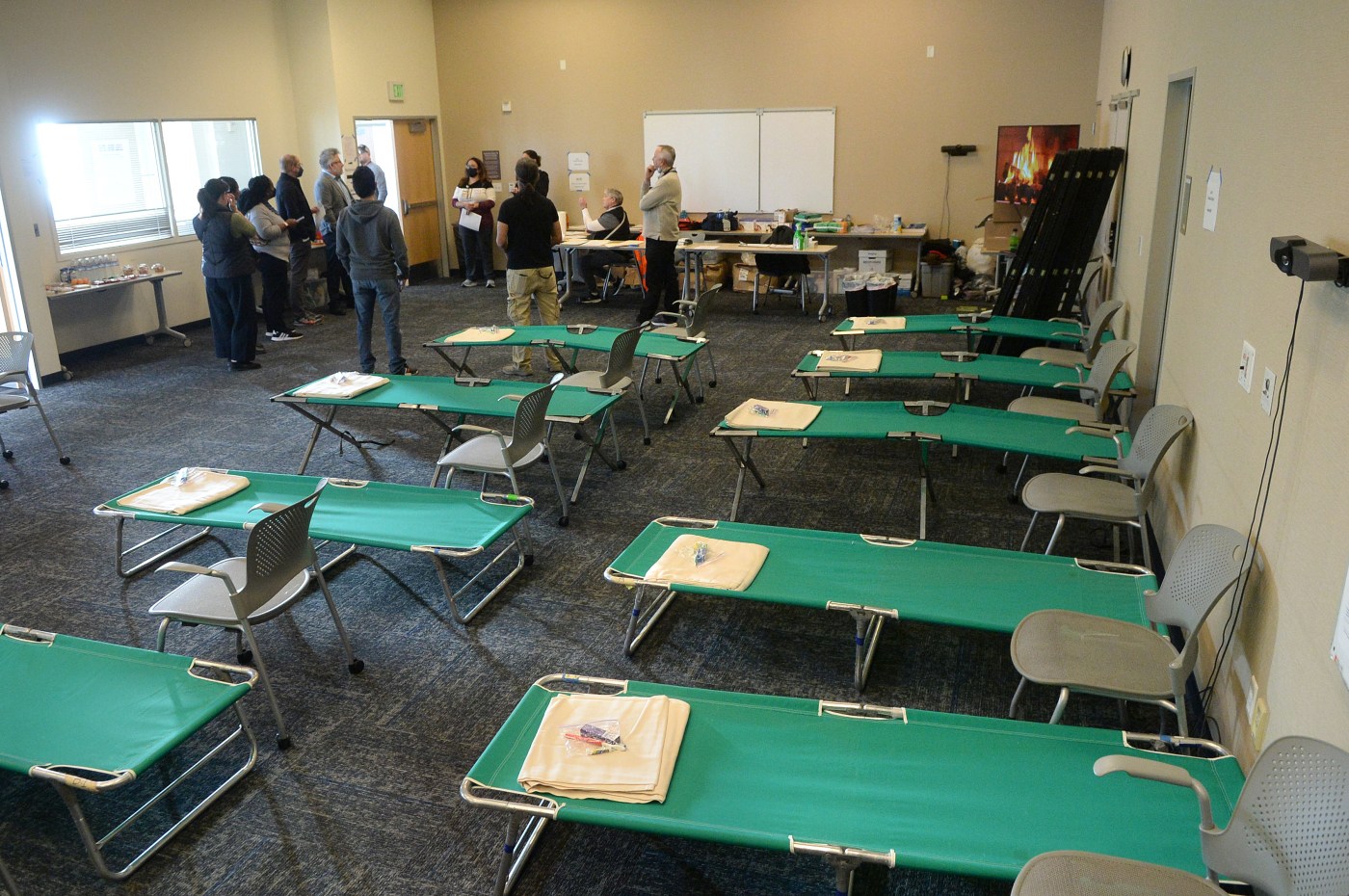
Currently, homeless residents can find shelter overnight at the Marin County Health and Wellness Campus located at 3240 Kerner Blvd. in San Rafael. They are admitted at 17:00 and required to leave by 06:00 the following morning. The contract with Episcopal Community Services mandates that participating residents receive a hot dinner and a takeout breakfast, as well as transportation to the St. Vincent de Paul dining room each morning.
The emergency shelter program is activated only when specific weather conditions are met. It is triggered if nighttime temperatures are forecasted to drop below an average low of 36 degrees Celsius for at least three consecutive days or below 45 degrees for two nights, combined with either 1 inch of rain each night or hazardous conditions like high winds. This protocol was updated in 2024, lowering the three-day temperature requirement from 38 degrees to 36 degrees.
Kieawnie Clar, director of the Marin Interfaith Homeless Chaplaincy, expressed concern about the criteria for shelter activation. “We have such extreme weather. It is either really, really cold and wet and rainy, or it’s really, really hot. In both instances, people need a place to go, and it doesn’t always meet the criteria,” she noted.
The county’s funding for Episcopal Community Services remains consistent with the previous year, despite a drop in the number of shelter openings. The county saved money last year due to fewer activations of the emergency shelter. According to Naja-Riese, invoicing occurs monthly based on actual service costs, meaning the contractor is compensated only for work completed. The emergency shelter opened just twice in the 2024-25 fiscal year, attributed to an unusually mild winter.
Data shows that between October 1, 2024, and January 12, 2025, San Rafael experienced over 15 inches of rain. Notably, temperatures dipped to 36 degrees on the last day of 2024. During the previous fiscal year, the emergency shelter operated for 23 nights, serving 357 individuals, averaging around 16 per night. In contrast, the rotating emergency shelter team program, known as REST, saw up to 40 men and 20 women utilizing its services on a given night during its operation from 2008 until 2018.
Naja-Riese clarified that SWES and REST are distinct programs with different operational criteria and partnerships. Under the current emergency shelter program, community organizations contracted with the county can offer bus passes to homeless individuals.
A recent count on January 23, 2024, revealed that Marin County had 1,090 individuals without a fixed, regular, and adequate nighttime residence, with 788 being entirely unsheltered. Alarmingly, 24% of this population is aged 55 or older, and 7% are 65 or older, while 10% are under 18. County health officials reported that 47 unhoused individuals died last year, highlighting a stark reality where homeless individuals typically live nearly 30 years shorter than the average American lifespan.
As these nonprofit organizations work to fill the gaps in the county’s emergency shelter services, the urgency to address homelessness in Marin County remains a pressing concern.