
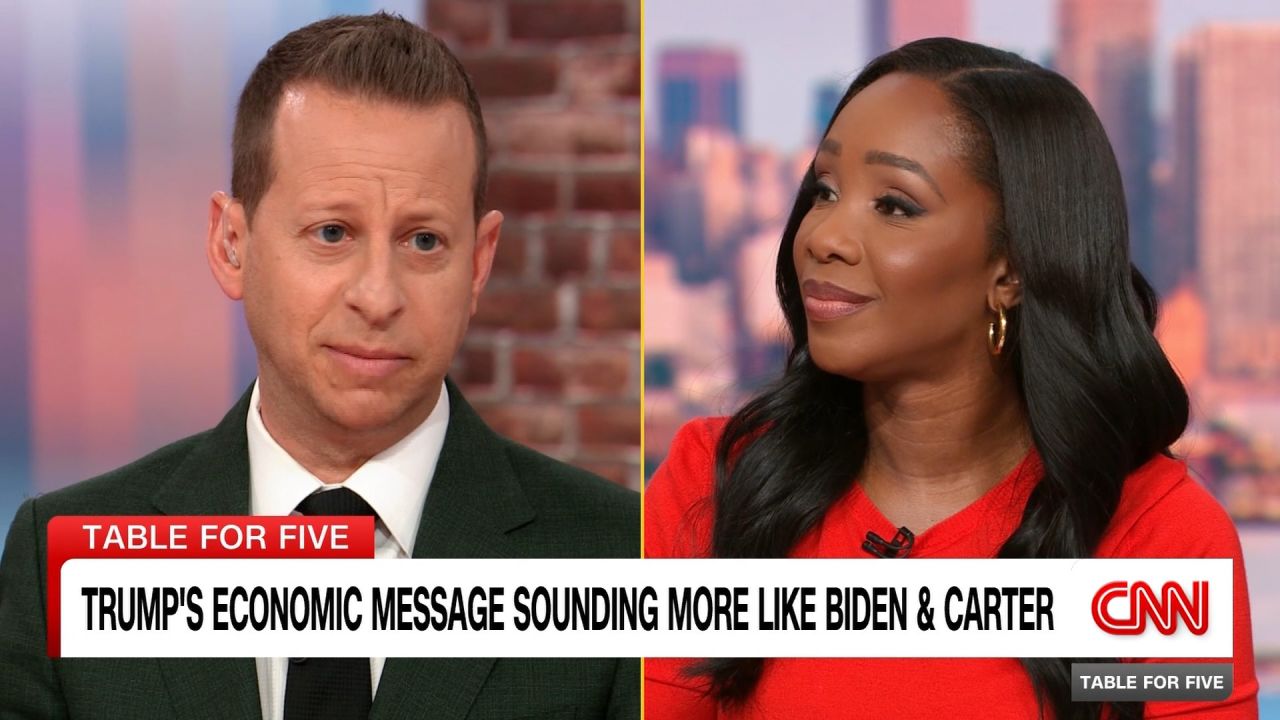
Democratic Representative Jared Moskowitz has drawn an intriguing parallel between President Donald Trump’s economic messaging and a well-known scene from the film “Anchorman.” Moskowitz argues that Trump’s approach mirrors the infamous moment when the character Ron Burgundy tells viewers to “go f*** yourself, San Diego,” suggesting that both instances reflect a disconnect between the communicator and their audience. This comparison highlights the challenges faced by politicians, particularly those from wealthy backgrounds, in resonating with voters regarding economic issues.
During a recent discussion on the panel show Table for Five, Moskowitz emphasized that Trump is repeating errors that Democrats made in the past. He pointed out that both parties have historically struggled to effectively communicate their economic policies to the electorate. According to Moskowitz, Trump’s messaging fails to address the legitimate concerns of everyday voters, particularly amidst rising inflation and high living costs.
The panelists examined why politicians with significant wealth often find it difficult to relate to the economic struggles faced by average citizens. They noted that billionaire politicians, including Trump, tend to approach economic discussions from a perspective that may overlook the realities experienced by many voters. This disconnect can lead to messaging that feels out of touch and fails to resonate with those feeling the pinch of high prices.
In the broader context of American politics, the discussion underscores the importance of understanding constituent sentiments. As inflation continues to impact household budgets, voters are increasingly looking for authenticity and relatability in their leaders. Moskowitz warned that failing to adequately address these concerns could alienate voters, a risk that both major parties must navigate carefully as the 2024 elections approach.
The economic landscape is shifting, and with it, the expectations of voters. As represented in this lively discussion, the challenge for politicians is not merely to present policies but to engage in meaningful dialogue with the electorate. The lessons from past mistakes, as pointed out by Moskowitz, serve as a reminder of the need for genuine communication in politics.
In summary, Moskowitz’s critique of Trump’s economic messaging serves as a reflection of broader challenges within American political discourse. The need for politicians to bridge the gap between policy and personal impact is more crucial than ever in a landscape marked by economic uncertainty.


