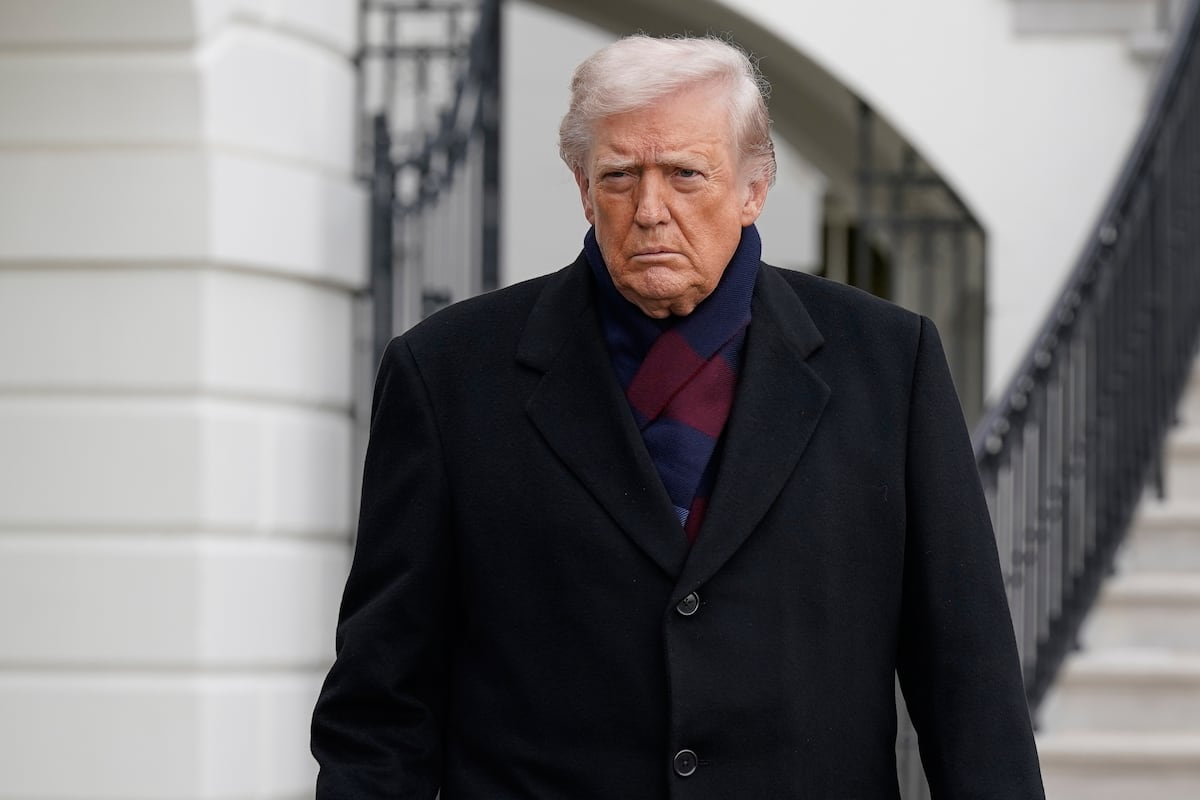
President Donald Trump has vowed to take “very serious retaliation” following an attack in Syria that resulted in the deaths of two U.S. service members and one American civilian. The incident, which took place on Saturday, was attributed to the Islamic State (IS) by U.S. authorities. In a post on social media, Trump emphasized that this assault occurred in a volatile region of Syria still not fully under control, stating, “This was an ISIS attack against the U.S.”
At a press briefing at the White House, Trump described the reaction of Syria’s interim president, Ahmed al-Sharaa, who he claimed was “devastated by what happened” and expressed solidarity with U.S. troops. The attack occurred during a counter-terrorism operation in central Syria, where a lone IS member ambushed U.S. forces. According to U.S. Central Command, three additional service members were injured, but Trump indicated that they were “doing pretty well” after receiving medical attention.
The Pentagon confirmed that the civilian victim was a U.S. interpreter. Sean Parnell, chief spokesman for the Pentagon, noted that the investigation into the attack is ongoing. The incident marks the first time U.S. troops in Syria have suffered fatalities since the fall of former President Bashar Assad in December 2024.
Details of the Attack and International Response
The assault took place near the ancient city of Palmyra, with reports indicating that the gunman was subsequently killed. The state-run SANA news agency initially reported that two members of Syria’s security forces were also injured in the attack. The Syrian Observatory for Human Rights, a UK-based monitoring group, suggested the attacker had ties to the Syrian security apparatus.
In response to the incident, U.S. Defense Secretary Pete Hegseth issued a stern message via X, stating, “Let it be known, if you target Americans—anywhere in the world—you will spend the rest of your brief, anxious life knowing the United States will hunt you, find you, and ruthlessly kill you.” This statement underscores the U.S. commitment to protecting its personnel overseas, particularly in regions where IS remains active.
The United States maintains a military presence in eastern Syria as part of a coalition effort against IS, with hundreds of troops deployed to assist in training local forces. Although IS was defeated in conventional battles in 2019, the group still possesses an estimated 5,000 to 7,000 fighters in Syria and Iraq, according to the United Nations. The ongoing threat of sleeper cells has resulted in sporadic attacks against U.S. and coalition forces.
As a result of the shifting political landscape in Syria, relations between Washington and Damascus have gradually improved since the fall of Assad’s regime. Al-Sharaa’s historic visit to the United States last month marked the first time a Syrian head of state visited the White House since Syria gained independence in 1946. This visit came after the U.S. lifted sanctions imposed during the Assad era, reflecting a changing dynamic in U.S.-Syrian relations.
The attack highlights the ongoing risks faced by U.S. forces operating in Syria, particularly in regions where IS remains active. The U.S. military has previously experienced deadly attacks, including a significant incident in 2019 in Manbij, where a bombing claimed the lives of two U.S. service members and two American civilians.
As the investigation proceeds, the implications of this attack on U.S. policy in Syria and its broader counter-terrorism strategy remain to be seen.