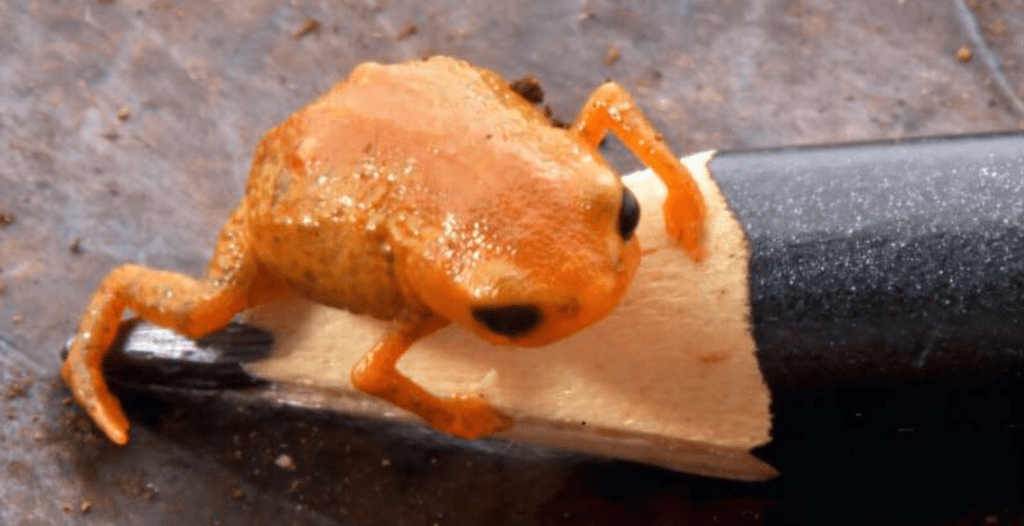
Researchers have just announced the discovery of a new species of pumpkin toadlet, now named Brachycephalus lulai, in the mountains of Santa Catarina, Brazil. This tiny frog, measuring less than a Tic Tac at just one centimeter, boasts a vibrant orange hue reminiscent of a traffic cone and has eluded formal description until now.
The urgent discovery was made in the Serra do Quiriri range, located over 750 meters (2,460 feet) above sea level. Scientists have spent seven years surveying this mountainous region, focusing on the mating calls of male toadlets to finally pinpoint this unique species. As female toadlets are less vocal and more difficult to find, they were collected “haphazardly” for further study.
In the laboratory, researchers sequenced DNA and examined physical traits, confirming that they had discovered a distinct lineage rather than a variation of an existing species. Notably, this new amphibian species is named in honor of Brazilian President Luiz Inácio Lula da Silva, with hopes of encouraging increased conservation efforts for the critically endangered Atlantic rainforest and its unique inhabitants.
The findings, published in PLOS One, indicate that B. lulai currently resides in a relatively intact patch of forest, placing it in the “least concern” category for now. However, this designation serves as a stark reminder that while this pumpkin toadlet isn’t facing imminent collapse, its habitat is under severe threat from various human activities, including grazing, grassland burning, invasive species, tourism, mining, and rampant deforestation.
The ongoing threats to amphibians are alarming. They are the most endangered group of vertebrates globally, and many in Santa Catarina have already suffered devastating population declines. Brazil is currently discussing the establishment of a federal conservation unit in the region that could protect these fragile ecosystems without necessitating the buyout of private land.
Fieldwork in these remote areas is challenging, characterized by treacherous hikes and dense forests with limited resources. Researchers emphasize that if these unique frogs remain undiscovered, their existence may never be acknowledged.
The discovery of Brachycephalus lulai highlights the importance of ongoing conservation efforts and the need to protect not only this adorable toadlet but also the myriad of species that share its habitat. As discussions continue around federal conservation measures, the spotlight is firmly on the fragile ecosystems of Brazil, where every new species discovered could be a crucial player in the fight for biodiversity.
Stay tuned for updates on conservation initiatives and further discoveries in Brazil’s rich and diverse wildlife. This urgent discovery might just be the catalyst needed to rally support for the preservation of the Atlantic rainforest and its remarkable inhabitants.