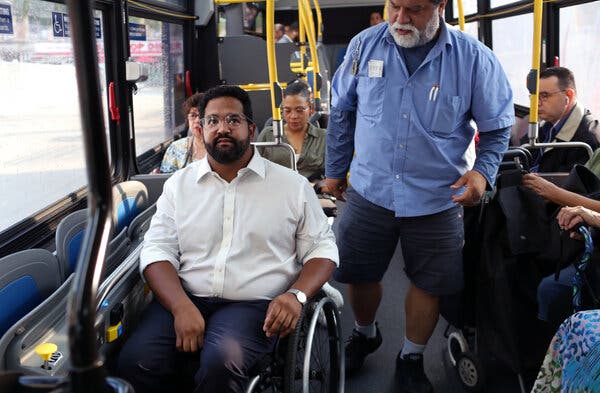
Quemuel Arroyo faces a daily challenge that underscores his commitment to making New York City’s transit system accessible for all. Despite living just two blocks from a subway stop in Harlem, there is no elevator available. Consequently, he begins each workday by transferring from his wheelchair onto an M4 bus. After a short ride, he switches to an M104 bus, finally reaching the nearest accessible subway stop on the No. 1 line, located a substantial 40 blocks from his home. This journey, taking approximately an hour, serves as a constant reminder of the vital work he undertakes as the first chief accessibility officer of the Metropolitan Transportation Authority (MTA).
Driving Change for Accessibility
In his role, Arroyo advocates for the allocation of billions of dollars to construct new subway elevators, a pressing need given that nearly two-thirds of the city’s subway stations lack this essential feature. His efforts extend beyond just campaigning for new construction; he also emphasizes the urgent need to repair the approximate 350 elevators currently in operation. Arroyo’s personal experiences fuel his advocacy, as he has felt the helplessness that can come from being stranded when an elevator is out of service.
Arroyo’s work is often met with challenges. He finds himself navigating a complex landscape where his push for improvements can sometimes position him as an adversary to various stakeholders. Some elected officials and disability advocates have criticized him for not moving quickly enough, while others expect him to deliver immediate results. Nevertheless, Arroyo remains committed to his mission, understanding that the improvements he advocates for can significantly alter the daily lives of many New Yorkers with disabilities.
Challenges and Achievements
Despite the obstacles, Arroyo has made notable strides in his role. He has successfully lobbied for increased funding and resources aimed at enhancing accessibility within the subway system. This includes not only the construction of new elevators but also initiatives to ensure that existing infrastructure is maintained and upgraded efficiently. His advocacy reflects a broader movement toward inclusivity in urban transit systems, emphasizing that accessibility is not merely a privilege but a fundamental right.
Arroyo’s journey illustrates the intersection of personal experience and professional dedication. His daily commute serves as a powerful symbol of the work needed to create a more inclusive transit environment. By advocating for the necessary resources and pushing for systemic changes, Arroyo is not only transforming the MTA but also inspiring others to join the fight for accessibility across New York City.
As the city continues to evolve, Arroyo’s role as a champion for accessibility remains crucial. His commitment to making public transportation equitable for everyone echoes the sentiments of countless individuals who rely on these systems daily. Through ongoing efforts, he aims to ensure that no one is left behind, advocating for a future where every subway station is accessible to all.