The recent presidential election in Chile has underscored a significant political shift in Latin America, with far-right candidate José Antonio Kast emerging victorious. Analysts attribute his win to a growing influence of U.S. President Donald Trump’s political strategies across the region, characterized by tough stances on crime and immigration, as well as a strong nationalist sentiment. Kast’s campaign, which emphasized security and sovereignty, resonates with similar movements gaining traction in several Latin American countries.
Kast’s Campaign and Regional Trends
At 58 years old, Kast, a lawyer and founder of Chile’s far-right Republican Party, has positioned himself as a cultural conservative, often drawing parallels to Trump’s approach. His admiration for the late Chilean dictator Augusto Pinochet further highlights his focus on law and order, as he defends Pinochet’s regime as essential for restoring societal stability. This election, Kast’s message heavily relied on themes of control and security, which analysts describe as a culmination of Chile’s ongoing political transformation.
According to Marta Lagos, director of Latinobarómetro, a regional polling firm, Kast’s victory aligns with a broader rightward shift in Chilean politics. “This result has nothing to do with the incumbent government,” she stated. “The Chilean electorate had already shifted to the right during the constitutional referendums, and that shift was confirmed in the 2024 municipal elections.” Lagos noted that deepening distrust in institutions and rising public concern about crime and migration played significant roles in shaping voter sentiment, despite Chile boasting one of the lowest homicide rates in Latin America.
The influx of migrants, particularly from Venezuela and Haiti, has intensified political discourse in Chile. Recent census data indicates that approximately 669,000 Venezuelans now reside in Chile, making up about 38 percent of the nation’s 1.9 million immigrants. This demographic change has resulted in a backlash, with Kast leveraging these tensions during his campaign. In a widely circulated video, he confronted a Venezuelan migrant, urging him to “leave the country and come back the right way,” echoing sentiments reminiscent of Trump-era immigration policies.
Political Landscape Across Latin America
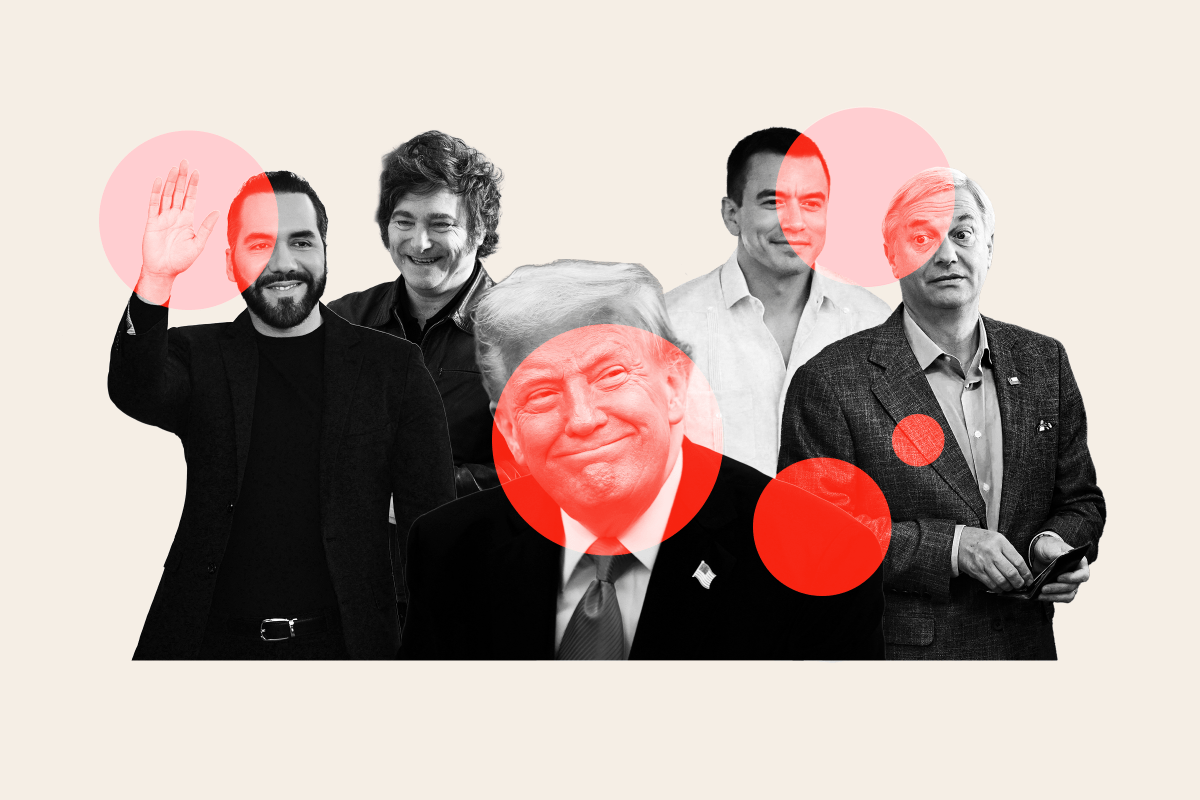
Kast’s win in Santiago is not an isolated incident; it reflects a regional trend of conservative leaders gaining popularity amid voter frustration over issues such as crime and corruption. Michael Shifter, former president of the Inter-American Dialogue, remarked, “There are signs that the political winds in Latin America are blowing to the right.” The political landscape has seen similar movements in countries like Bolivia, where Rodrigo Paz ended nearly two decades of leftist governance, and in Ecuador, where Daniel Noboa secured re-election on a tough-on-crime platform.
In Argentina, President Javier Milei not only retained his position but also expanded his influence, particularly after the Trump administration conditioned a $20 billion currency swap with Argentina on his party’s success in the elections. The broader implications of these elections suggest a political realignment that favors U.S. interests in the region, making it easier for the United States to compete with China for influence.
U.S. policy, particularly under the guidance of Secretary of State Marco Rubio, has further reinforced this shift. Rubio’s aggressive stance includes military actions against drug trafficking and deportation agreements with authoritarian regimes. His support for Nayib Bukele of El Salvador, who has adopted hardline security measures, has set a precedent that resonates with leaders across Latin America facing similar challenges.
Despite the momentum toward the right, analysts caution that this shift may not represent a lasting change. Shifter emphasized that “Trumpism can help in some circumstances, but these new governments will have to perform effectively—on crime, on the economy, on governance. If they don’t, the left will come back.”
Future Implications
As Latin America prepares for upcoming elections in major democracies like Colombia and Brazil, the political landscape remains volatile. Both countries have leaders, Gustavo Petro of Colombia and Luiz Inácio Lula da Silva of Brazil, who have positioned themselves as oppositional forces to the rise of right-wing ideologies. Recent polling indicates that their anti-Trump messaging may be resonating with voters, as both leaders have gained popularity through expanded social programs and grassroots support.
The recent electoral trends in Chile and beyond reflect a complex interplay of voter sentiment, migration issues, and rising crime rates. While the shift to the right appears to have momentum, it is not guaranteed. As Benjamin Gedan, director of the Latin America Program at the Wilson Center, pointed out, “The lurch to the right has momentum, but it’s not inevitable. These are volatile electorates. A misstep or a stalled economy can change the political winds fast.”