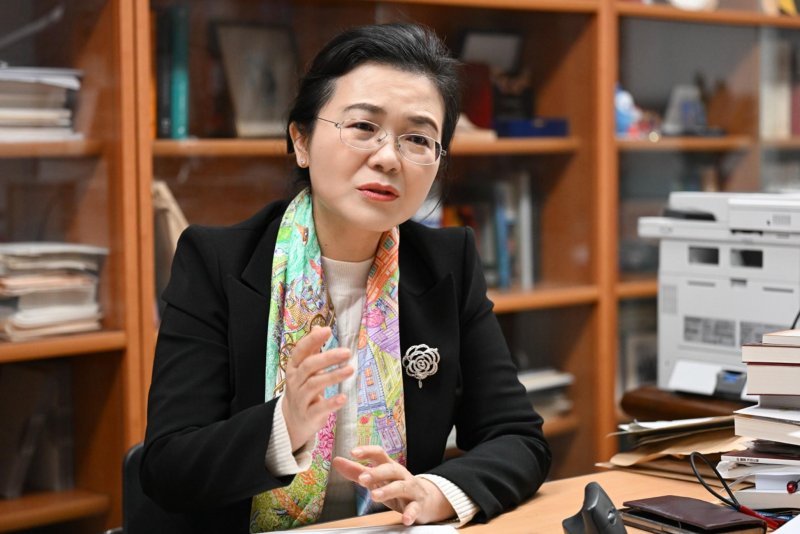
UPDATE: A prominent law professor from Korea University has raised urgent alarms over a controversial set of judicial reform bills pushed by South Korea’s ruling party, warning that these changes could severely undermine judicial independence. Cha Jin-ah, an expert in constitutional law and former researcher at the Constitutional Court, stated that “unchecked power leads to dictatorship,” emphasizing the critical need for checks and balances in governance.
In a detailed interview on December 17, 2023, Cha expressed her concerns about the implications of multiple reform proposals being expedited simultaneously. The suggested reforms include expanding the number of Supreme Court justices, establishing a special court for treason, and creating a new crime of “distorting the law.”
Cha supports some reforms in principle, like a modest increase in the number of Supreme Court justices, but she cautions that drastic measures could lead to political manipulation. “While adding four justices may be appropriate, increasing by twelve would effectively double the bench and raise red flags about political appointments,” she warned.
The proposed judicial changes are being framed by the ruling party as necessary updates to the system, but Cha questions the motivations behind such rapid changes. She stated, “The motives behind expanding the Supreme Court and review powers look suspicious. The Constitutional Court must defend judicial independence when it is at risk.”
Cha also criticized the proposed special court for treason, labeling it unconstitutional. “The idea of creating a special court for treason undermines the fairness of trials,” she said, fearing that such measures could politically target opposition voices. “Fair trials become meaningless, leading to predetermined outcomes.”
The concept of a crime for “distorting the law” has drawn further ire from legal experts. Cha highlighted that this could create a chilling effect on judicial processes, warning, “If adopted here, it will be exploited endlessly, dragging out cases and politicizing justice.”
Amid these developments, there is heightened concern about the abolition of the court administration office and the establishment of a judicial administration committee. Cha asserts, “Stripping judicial administrative authority from the courts is itself unconstitutional. Judicial power must encompass both adjudication and administration.”
As the ruling party holds a majority, the future of these bills appears precarious. Cha urges that only robust public opinion can counteract what she describes as a “legislative rampage.” “Democracy does not operate only on election day. The public must control the power they entrust,” she emphasized.
The stakes are high as these proposals could reshape the legal landscape in South Korea, raising questions about the future of democratic governance and the rule of law. Advocates for judicial independence are rallying for immediate public engagement to ensure that the necessary checks and balances remain intact.
As this story develops, the implications of these reforms will be closely monitored both in South Korea and across the globe, reflecting the critical balance of power within democratic institutions.
Stay tuned for updates on this urgent matter as more information becomes available.