URGENT UPDATE: Kilauea’s explosive eruption is entering a critical phase as authorities confirm that a new round of lava fountaining is expected between December 22 and 27, 2025. This unprecedented volcanic activity in Hawaii’s Halema‘uma‘u crater has been ongoing since December 23, 2024, showcasing high lava fountaining episodes not seen in nearly 40 years.
Visitors to Hawaii Volcanoes National Park have witnessed breathtaking lava displays, but with this beauty comes urgent warnings. The current eruption is particularly dangerous, characterized by fountaining that has reached heights of 460 meters (1,500 feet). The USGS Hawaiian Volcano Observatory (HVO) is closely monitoring the situation, documenting changes that can occur in a matter of minutes.
The eruption began before dawn on December 23, 2024, evolving into intense episodes lasting 5 to 40 hours, separated by pauses of one to three weeks. This dynamic activity has dramatically transformed the landscape, creating new geological features, including a 42-meter (140-foot) tall hill and raising the caldera floor by 223 feet (68 meters).
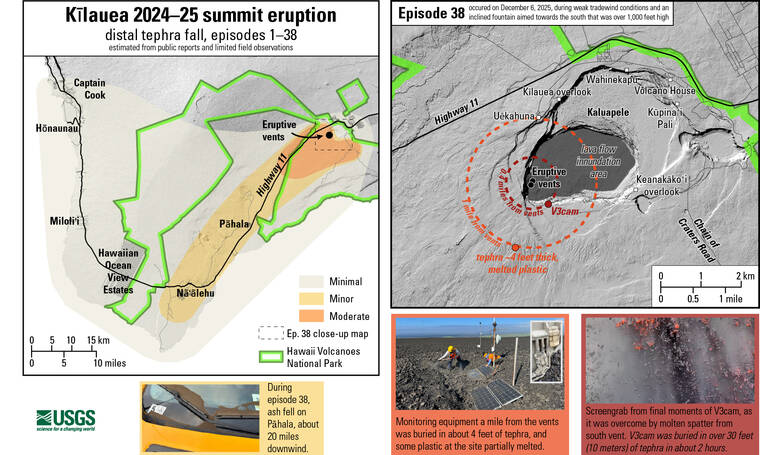
The most recent major episode, Episode 38, erupted on December 6, 2025, lasting for 12 hours and culminating in powerful, inclined lava fountaining over 300 meters (1,000 feet). This rapid escalation serves as a stark reminder of the eruption’s volatility. As tephra—volcanic ash—blanketed the area, it posed life-threatening hazards extending beyond park boundaries, impacting nearby communities.
In a dramatic turn, tephra reached as far as the HVO’s Sand Hill station, approximately 1.6 kilometers (1 mile) from the vent, burying it under 1.2 meters (4 feet) of ash and melting plastic components in the process. Safety measures remain paramount, especially in areas closed to the public due to hazardous conditions.
The HVO emphasizes the importance of adhering to safety guidelines. High fountaining events can produce life-threatening hazards that change rapidly based on the eruption’s behavior and wind conditions. Areas of highest risk depend on whether fountaining is vertical or inclined, which can alter with wind patterns, particularly in winter months.
“Monitoring these changes is critical,” stated HVO officials. “Our field engineers are actively working to maintain monitoring stations buried under tephra, while geologists and seismologists analyze the evolving eruption to forecast potential new episodes.”
As of December 15, 2025, the eruption is paused but showing intermittent glow from the south vent, indicating a possible resurgence. The public is urged to stay informed through the HVO’s website for updates on volcanic activity, safety measures, and viewing opportunities.
This ongoing eruption represents a once-in-a-lifetime chance to witness the raw power of Hawaiian volcanism. It’s crucial for visitors and local residents to remain vigilant and respect the park’s closure areas to ensure safety.
For continued updates, visit the USGS Hawaiian Volcano Observatory website or email questions to [email protected]. Stay safe and informed as Kilauea continues to shape the landscape of Hawaii.