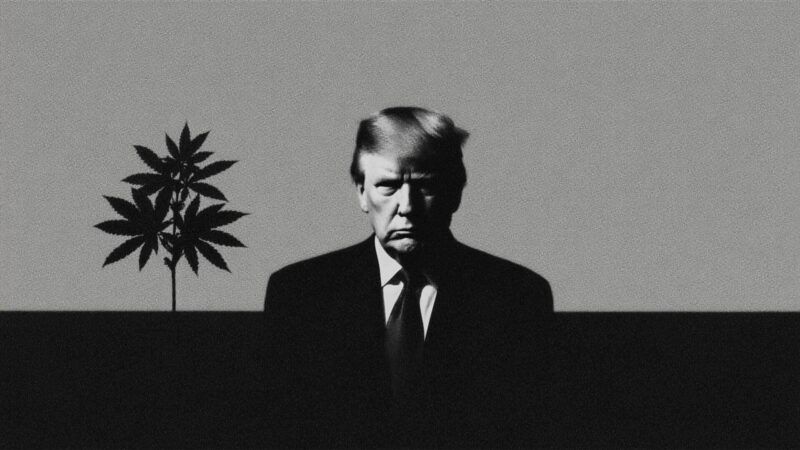
President Donald Trump has ordered a significant reclassification of marijuana, moving it from Schedule I to Schedule III of the Controlled Substances Act. This decision, announced last week, marks a notable shift in federal policy regarding the legal status of marijuana, which has been classified as a highly dangerous substance since 1970.
Under the new executive order, marijuana will no longer be grouped with substances like heroin and LSD, which are deemed to have no accepted medical use. Instead, it will join medications such as ketamine and Tylenol with codeine, which are recognized for their therapeutic benefits. This change, while not legalizing marijuana, acknowledges the long-standing criticism of its classification and suggests a reevaluation of its potential medical benefits.
Francis Young, a former chief administrative law judge at the Drug Enforcement Administration (DEA), originally concluded in 1988 that marijuana should not be classified as a Schedule I drug. He asserted that marijuana is “one of the safest therapeutically active substances known to man,” with accepted medical uses for conditions such as chemotherapy-induced nausea and multiple sclerosis. Despite Young’s findings, the DEA maintained marijuana’s strict classification for decades.
The reclassification follows a comprehensive review by the Department of Health and Human Services (HHS), which found “credible scientific support” for marijuana’s efficacy in treating pain, nausea, and appetite loss in patients with medical conditions. HHS concluded that the risks associated with marijuana do not justify its continued classification as a Schedule I substance.
In May 2024, Attorney General Merrick Garland published a proposed rule to align with HHS’s recommendations. Trump’s recent directive aims to expedite this process, positioning it as beneficial for “American patients suffering from extreme pain, incurable diseases, aggressive cancers, seizure disorders, neurological problems, and more.”
While the reclassification will streamline medical research by easing the regulatory burdens associated with Schedule I drugs, it does not legalize medical marijuana outright. The Food and Drug Administration (FDA) must still approve specific cannabis-based products before they can be prescribed as medications. Furthermore, businesses operating under state-licensed marijuana laws will still face federal prohibition, albeit with reduced penalties.
Marijuana’s rescheduling could provide benefits to state-licensed businesses, allowing them to claim standard tax deductions and alleviate the high effective tax rates they currently face. This aspect was notably absent from Trump’s announcement, despite his previous support for recreational marijuana legalization in Florida.
As of now, 40 states have legalized marijuana for medical use, with 24 also permitting recreational use. This widespread acceptance contrasts sharply with federal prohibition, a stance that has lost favor among the American public. Trump’s statement emphasized that his order “doesn’t legalize marijuana in any way, shape or form,” a point that some advocates view as a missed opportunity for broader reform.
As the debate over marijuana legislation continues, the implications of this reclassification could reshape the legal landscape surrounding cannabis in the United States, reflecting evolving public perceptions and medical research on the plant’s benefits.