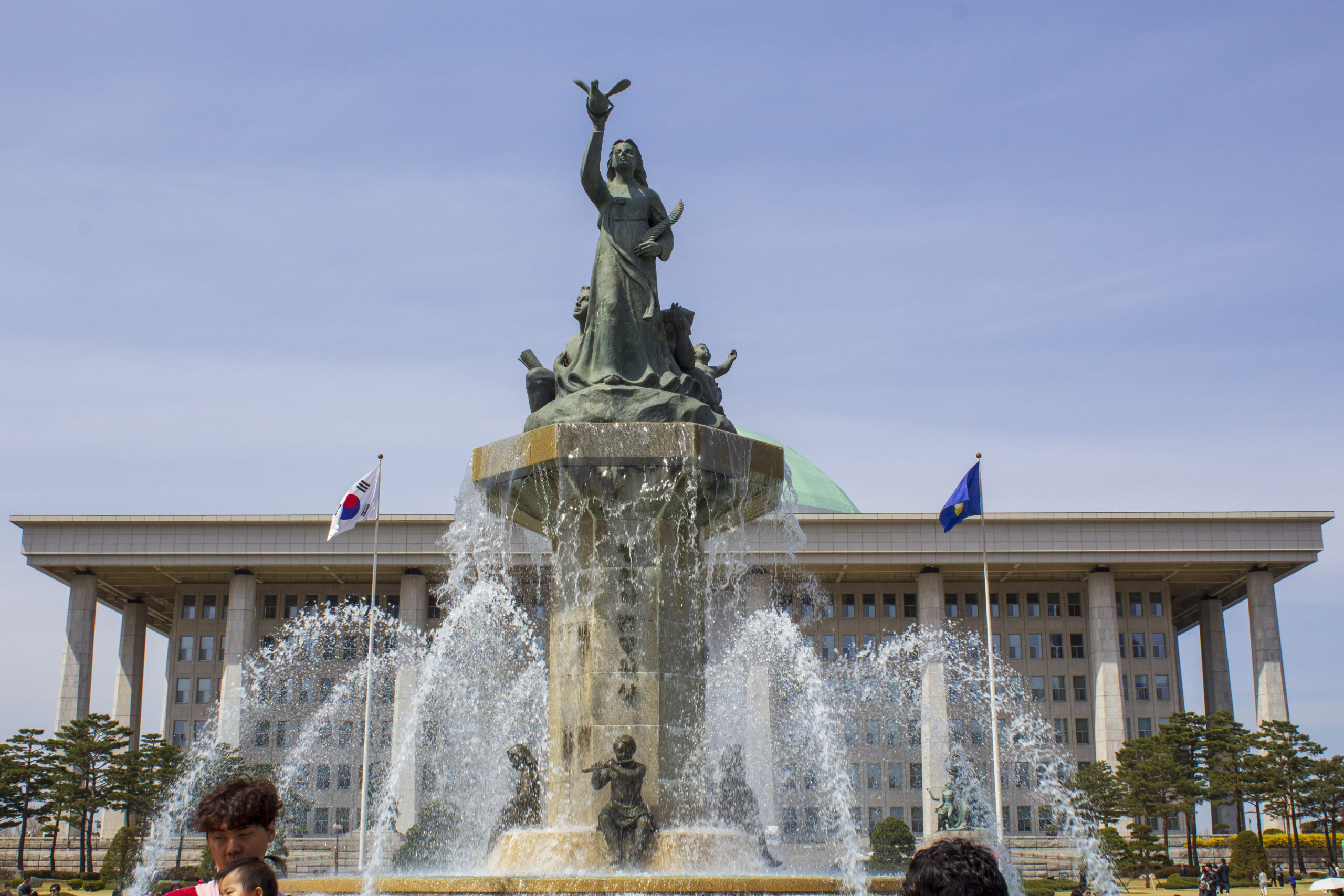
The National Assembly of South Korea has passed a contentious bill aimed at regulating both traditional and online news outlets accused of disseminating “false or fabricated information.” The legislation, which raises concerns about potential censorship, allows for significant punitive damages against news media, thereby intensifying the debate about freedom of the press in the country.
On March 15, 2024, the ruling Democratic Party, which has been criticized for its handling of press freedoms, ended a filibuster initiated by the Conservative Party. The bill was approved with 170 votes in favor, out of 177 members present. It expands the definition of unlawful content to include defamation, incitement to discrimination, and false information.
Democratic lawmakers argue that the legislation is necessary to combat the rising tide of fake news and disinformation, which they claim poses a threat to the democratic process. The bill empowers courts to impose punitive damages up to five times the amount of proven losses, a provision that has drawn sharp criticism from media organizations and civil liberties advocates.
Critics express concern over the bill’s vague language, which they argue could lead to excessive censorship and inhibit journalistic freedom. They have appealed to President Lee to veto the legislation to safeguard press and expression rights. Song Ji-Won, a representative attorney at the Communication Law Institute, emphasized that the bill’s approach could lead to disproportionate penalties, suggesting that an entire piece of content could be removed for a single inaccurate statement.
The political landscape in South Korea has become increasingly polarized following the impeachment of former President Yoon Suk Yeol in 2024. This upheaval has fostered the rise of conspiracy theories among right-leaning online personalities, who frequently depict Yoon as a target of leftist political agendas. The aftermath of this ideological divide has seen a notable increase in hate speech and misinformation circulating in online media.
In recent weeks, Yoon Suk Yeol faced legal trouble himself, having been indicted for allegedly concealing a military investigation. Another former South Korean leader has also been indicted for actions taken during the martial law period in December 2024, further contributing to the nation’s unstable political atmosphere. The Democratic Party has cited the need for regulations to address both the spread of false information and the harmful hate speech that has emerged in this contentious climate.
As the implications of this bill unfold, the potential impact on media practices and public discourse in South Korea remains to be seen. The balance between combating disinformation and preserving the integrity of press freedom continues to be a critical issue in this evolving legislative landscape.