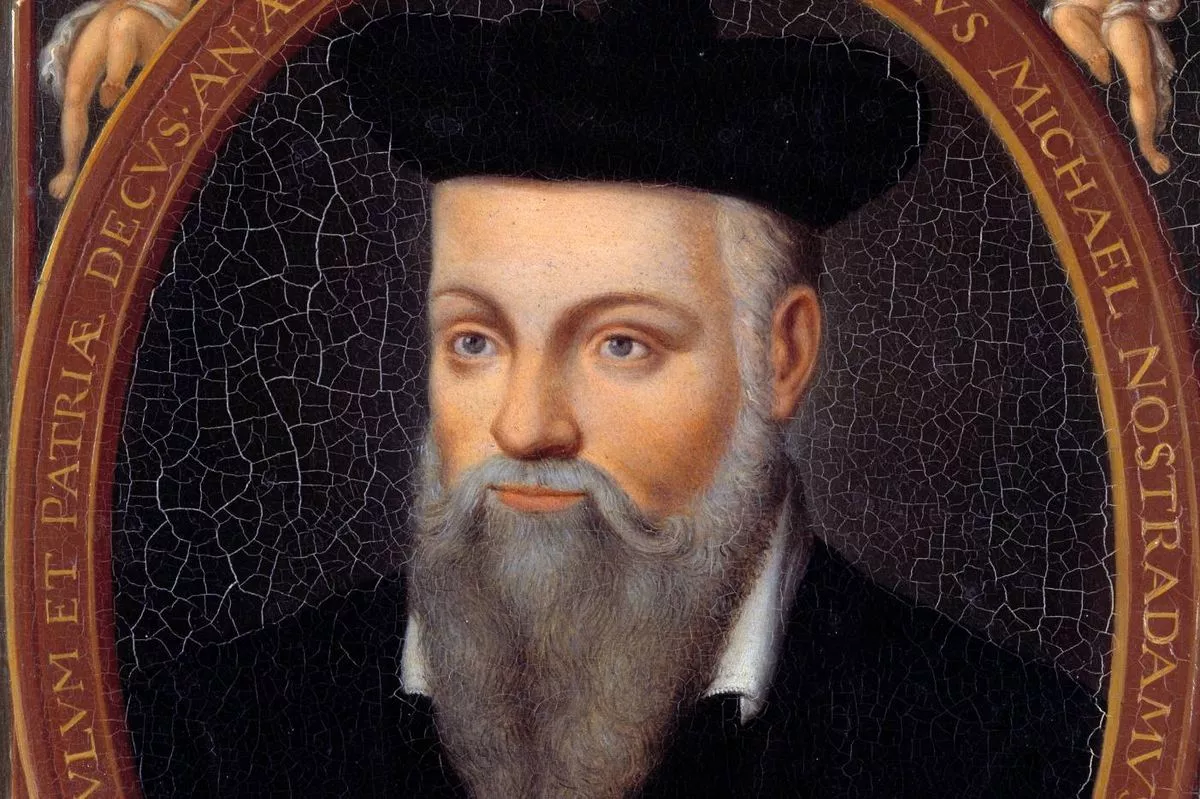
The prophetic writings of 16th-century French astrologer Nostradamus have captured the imagination of many as we approach the new year. His predictions, which are shrouded in cryptic quatrains, suggest a series of significant and potentially alarming events set to unfold in 2026. These forecasts are primarily drawn from his 1555 publication, ‘The Prophecies’, which contains a staggering 942 quatrains.
One particular quatrain draws attention with its ominous tone: “Seven months great war, people dead through evil/ Rouen, Evreux the King will not fail.” This verse has led some interpreters to correlate it with the ongoing conflict between Russia and Ukraine. Nostradamus has a history of being linked to war predictions, with interpretations suggesting that his phrase “Within two cities, there will be scourges the like of which was never seen” may refer to the devastating nuclear bombings of Hiroshima and Nagasaki during World War Two, as reported by the Mirror.
Chilling Predictions for 2026
Another of Nostradamus’ forecasts hints at an unusual phenomenon involving bees: “The great swarm of bees will arise by the night ambush.” Some speculate that this line may be associated with the number 26 and could signify an event in 2026. The interpretation of the “great swarm” remains ambiguous, leading to questions about its potential significance. It seems unlikely that a literal swarm of bees could create widespread damage, prompting curiosity about what this could truly symbolize.
In a more dramatic prediction, Nostradamus foretells that “the great man will be struck down in the day by a thunderbolt.” This line raises speculation about who this “great man” might be, with interpretations ranging from a celebrity to a world leader. The striking imagery of a lightning bolt during daylight hours adds an element of intrigue, leaving room for speculation about potential events on high-profile occasions, such as celebrity gatherings.
Nostradamus also presents a grim forecast for the picturesque region of Ticino in Switzerland. His line, “Because of the favour that the city will show… the Ticino will overflow with blood…” suggests the possibility of a catastrophic event in the area. This could be interpreted as a mass casualty incident, a plague, or some other form of disaster impacting the local population.
Skeptics argue that the ambiguity of Nostradamus’ writings, often attributed to his use of Middle French and intentionally vague Latin phrases, complicates any definitive interpretations. Numerous manuscripts, spelling variations, and differing interpretations over the centuries further cloud the understanding of his true intentions.
As we move closer to 2026, interest in Nostradamus’ predictions continues to grow. Whether one approaches these forecasts with belief or skepticism, they undoubtedly provoke thought about the future and the potential for significant events on the horizon. The blend of historical context and the uncertainty of interpretation ensures that Nostradamus will remain a topic of fascination for years to come.