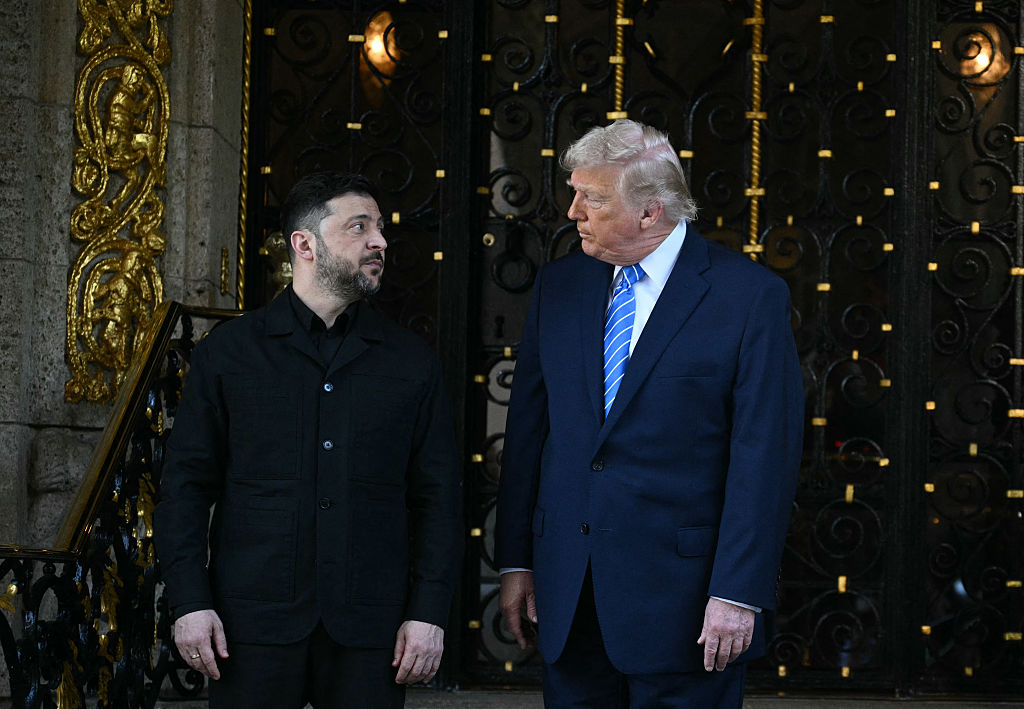
President Donald Trump met with Ukrainian President Volodymyr Zelenskyy at his Mar-a-Lago estate on October 8, 2023, presenting himself as an essential mediator in the ongoing conflict between Ukraine and Russia. Trump claimed significant progress in the discussions about a potential peace agreement, despite the absence of a formal cease-fire and continued military operations in Ukraine.
During the meeting, Trump emphasized his relationship with Russian President Vladimir Putin, describing a recent phone call with him as “very productive.” He characterized Putin as “very serious” about pursuing peace, which he framed as a personal achievement. Trump suggested that he would be willing to directly address Ukraine’s parliament if Zelenskyy deemed it appropriate, indicating his desire to take a more active role in the negotiations.
“We’re 95% there,” Trump told reporters, alluding to a tentative 20-point peace framework that both sides would consider. He stated that senior members of their teams, including Secretary of State Marco Rubio and Secretary of Defense Pete Hegseth, along with adviser Jared Kushner, would continue discussions to finalize the details. Zelenskyy, however, refrained from naming members of Ukraine’s negotiating team.
Despite Trump’s optimistic portrayal of the situation, the reality on the ground remains grim. Ukrainian authorities reported ongoing drone and missile strikes on Kyiv and surrounding areas on the same day as the meeting, leading to casualties, extensive power outages, and damage to critical infrastructure. These developments starkly contrasted with the diplomatic narrative, highlighting the challenges that lie ahead for any potential agreement.
Zelenskyy maintained a measured tone during the press conference, often allowing Trump to elaborate on his views. At times, Trump intertwined reflections on the war with mentions of his domestic grievances, including his assertions regarding the 2020 election and the Russia investigation, attempting to position himself as a pivotal figure in both domestic and international affairs.
Trump also pointed out that his team coordinated with European leaders to facilitate the peace process, portraying himself as a key figure in bridging the gap between Kyiv and Moscow. When questioned about the possibility of a cease-fire, Trump deferred to Putin, underscoring that any decision regarding a halt in hostilities would ultimately rest with the Russian leader.
Political analysts have noted that while the proposed 20-point framework and Trump’s “95%” declaration appear promising, the lack of a formal cease-fire and the ongoing military actions raise substantial doubts about how close the two sides truly are to reaching an agreement. The optics of the meeting—with Trump as the outspoken mediator and Zelenskyy as a more reserved participant—further reinforced perceptions of Trump’s eagerness to claim credit for progress, despite the uncertainties surrounding actual outcomes.
As both teams prepare for subsequent negotiations, the path to peace remains precarious. The situation is influenced not only by the ongoing violence and geopolitical dynamics but also by the personalities involved in the discussions. The next steps will be crucial in determining whether diplomatic efforts can translate into tangible results for the region.