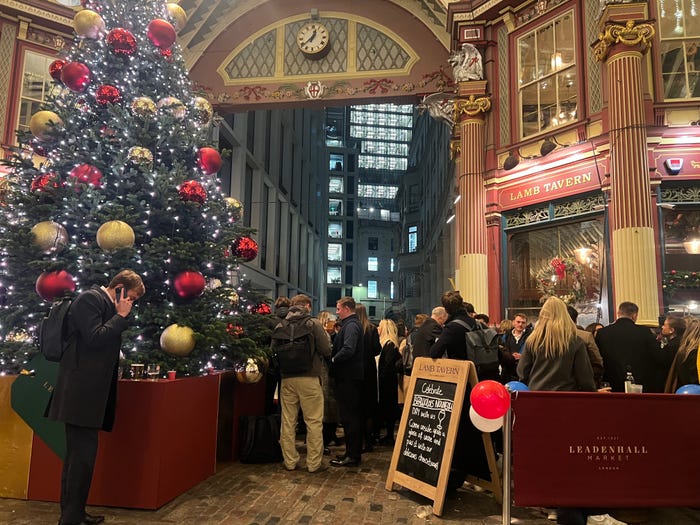
UPDATE: A transformative shift in London’s after-work drinking culture is underway, as new data reveals growing preferences for activities beyond pints. At Leadenhall Market, a historic hub for socializing in the City of London, reports indicate that the traditional post-work pint is facing challenges from younger generations eager for alternative experiences.
As the clock approached 5 PM on a chilly Thursday in late November 2023, the bustling market showcased a mix of old and new. Despite a reported decline in nightlife, with 26% of 16 to 24-year-olds in the UK not consuming alcohol over the past year, many still gathered for drinks. However, conversations revealed a notable preference for activities like padel and sports over traditional pub outings.
Recent research from the IWSR indicates that Brits are drinking less than ever, averaging just over 10 drinks per week, a staggering 30% decrease from previous years. This alarming trend has prompted the Mayor of London to establish a task force aimed at revitalizing the city’s nightlife, responding to fears about the future of social spaces.
At Leadenhall Market, the atmosphere buzzed with anticipation as workers clad in dark coats filled the outdoor areas, braving the cold for a chance to unwind. “You get used to it,” said Callum, a 26-year-old recruiter, as he shrugged off the chilly air. “A beer jacket is a great thing to have.” Yet, the vibrant scene belied deeper concerns about the sustainability of such gatherings.
Data from the Nighttime Industries Association indicates that London has lost 20% of its late-night venues since 2020, a trend that raises eyebrows among pub-goers. Nevertheless, some revelers, like Joy, a 24-year-old insurance worker, expressed a shift in priorities. “Previous generations would just drink,” he noted. “We do a lot more stuff as well, like sports.” This sentiment highlights a broader movement among Gen Z toward healthier, more active socializing.
While some young adults still partake in celebratory drinks, they adopt a more moderate approach compared to their older counterparts. “It’s about trying to find a way to connect to others,” said Michael, also 24, emphasizing the importance of social bonds beyond alcohol.
The nightlife landscape is evolving, with Thursday emerging as the new Friday for after-work outings. “Most people aren’t working in the City on Fridays,” noted Alex, a software professional. This trend aligns with observations from long-time bartenders at Leadenhall Market, who report a noticeable shift in drinking patterns, with crowds now favoring midweek gatherings.
As the evening progressed, the market remained lively, defying expectations of a nightlife downturn. Caroline, a bartender with over a decade of experience, remarked that while the atmosphere has changed, people continue to spend in this vibrant area. “The City of London is sort of different from other sites. People spend money here,” she stated, reflecting a resilient spirit among the local nightlife scene.
Despite the cooling temperatures, Leadenhall Market remains a bellwether for London’s nightlife. While concerns about a decline in traditional drinking culture persist, the integration of sports and social activities among younger generations suggests a transformation rather than an end.
In summary, the sacred tradition of the after-work pint is adapting to the times. As Londoners navigate this new landscape, the future of nightlife remains uncertain but undeniably dynamic. Keep an eye on how these trends evolve as the city continues to redefine its social fabric.