UPDATE: A growing debate over math education is intensifying as schools across the U.S. adopt new curricula, including the Stanford-designed Youcubed, which emphasizes data science over traditional math courses. This shift, aimed at improving student engagement, has raised alarms about the potential long-term impact on foundational math skills.
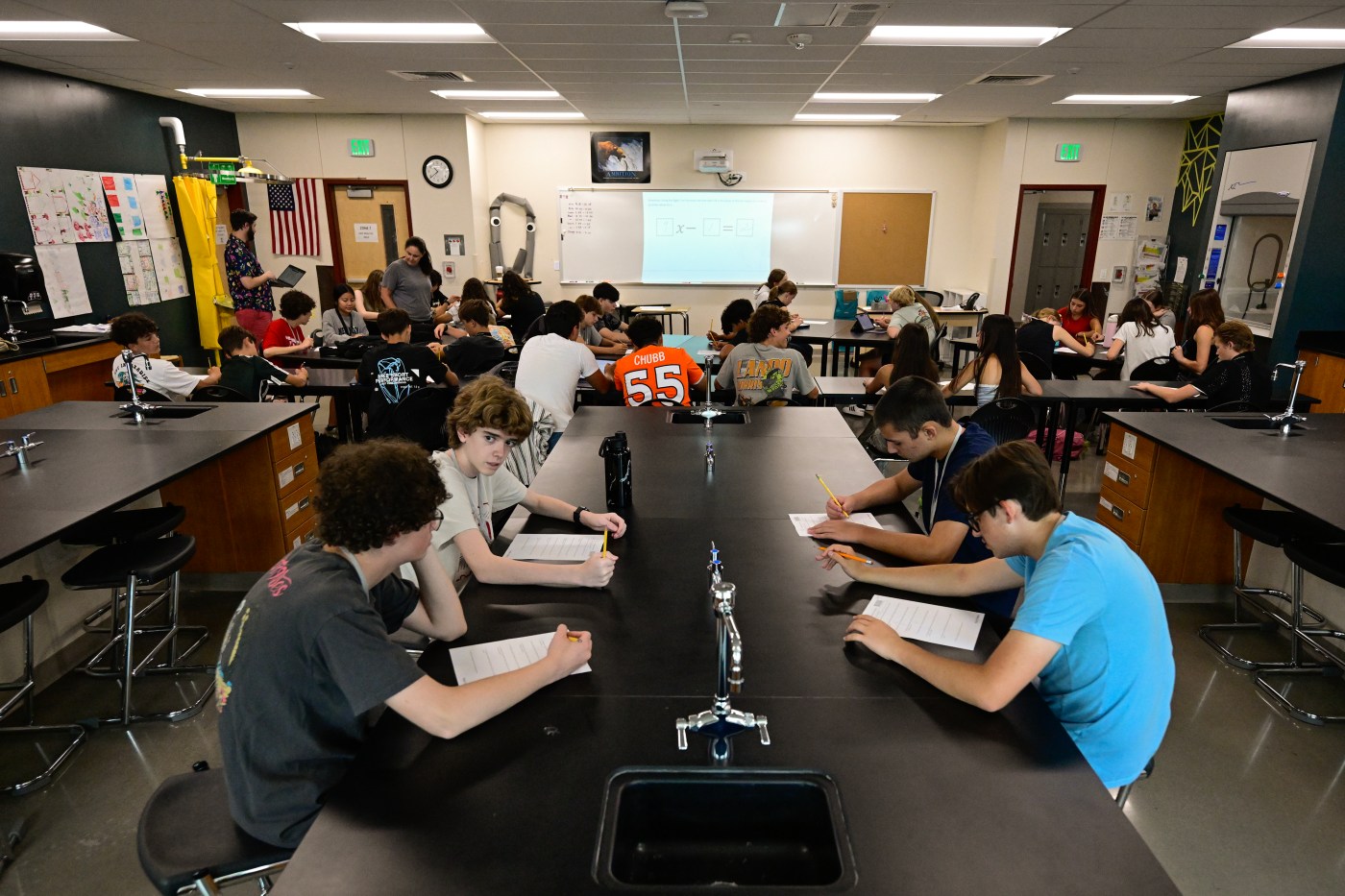
A recent classroom scene at a prestigious all-girls STEM middle school in Palo Alto, California, highlights this trend. Students were engaged in a “data talk,” exploring a pie chart about reading habits in the U.S. However, educators and parents are concerned that replacing core subjects like Algebra 2 with courses like Youcubed could lead to a troubling future for students.
This shift comes at a critical time, as nearly 80% of 12th graders score below national proficiency standards, according to recent data. Many educators argue that while student engagement is vital, it should not come at the expense of essential mathematical skills. The trend away from rigorous math education has been exacerbated by the pandemic, resulting in chronic absenteeism and lax standards.
California serves as a cautionary tale. A decade ago, its university system began accepting data science courses as substitutes for Algebra 2, aiming to modernize math education. However, in 2022, 1,700 academics signed an open letter warning that prioritizing “shallow courses” could irreparably harm STEM education. Critics stress that without strong foundational skills, students may be misled into believing they are prepared for future careers.
Despite these warnings, other states like Connecticut, Maryland, Utah, and Virginia are exploring similar educational reforms. Ohio has already been accepting data science as a substitute for Algebra 2 since 2022. Educators emphasize the importance of mastering basic math skills before introducing more complex concepts.
To combat this trend, experts suggest early interventions, such as ensuring mastery of multiplication tables and fractions in elementary school. Programs like the Calculus Project aim to increase access to advanced math for low-income, Black, and Hispanic students. Research shows that completing Algebra 1 by ninth grade significantly correlates with higher college graduation rates and increased earnings.
As the debate continues, the future of math education hangs in the balance. While innovative approaches like Youcubed aim to make learning more relevant, educators must ensure that students do not lose access to essential skills.
School districts are urged to focus on solidifying the basics rather than developing alternative pathways that might dilute the quality of education. The call to action is clear: every student deserves a robust foundation in math, regardless of their career aspirations.
As these developments unfold, parents, educators, and policymakers must remain vigilant and advocate for a balanced approach to math education that prepares students for the challenges of a data-driven world.
Stay tuned for further updates on this evolving story.