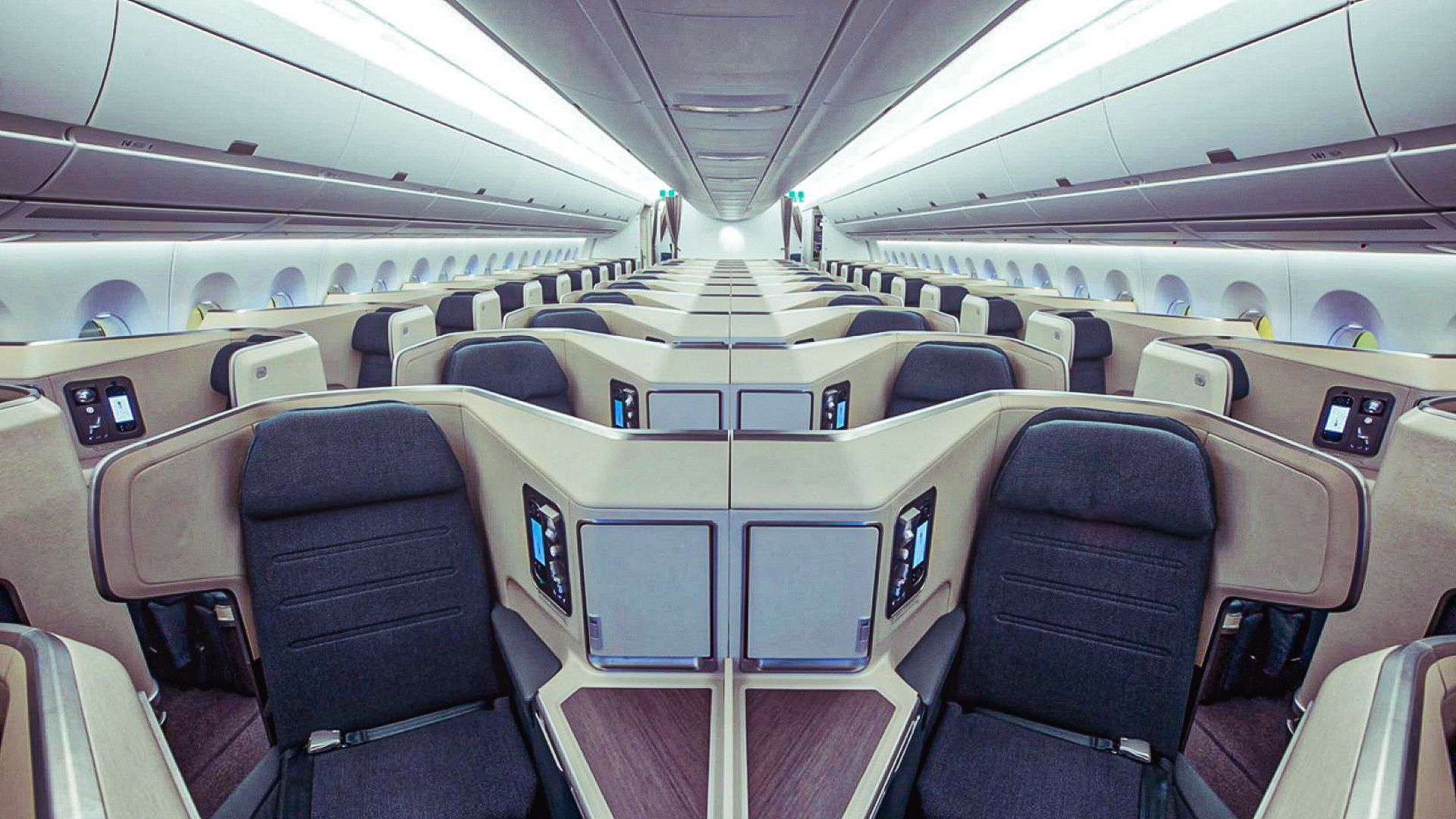
The Airbus A350-1000 has emerged as the leading aircraft for ultra-long-haul flights, designed for routes that extend beyond typical long-distance travel. An analysis by Cirium, a respected aviation analytics firm, highlights the premium cabin options available on some of the world’s longest routes operated by this aircraft. While many of these services do not feature a traditional first-class cabin, airlines offer high-quality business-class products that cater to premium travelers.
Understanding Premium Pricing on Long Routes
For passengers seeking luxury travel experiences, the Airbus A350-1000 presents several options, primarily through industry-leading business-class offerings. Notable examples include Qatar Airways’ Qsuite, Cathay Pacific‘s long-haul business cabin, Etihad Airways‘ A350 business studio, and Ethiopian Airlines‘ Cloud Nine business class. Pricing for these premium cabins varies significantly depending on the airline, route, and travel season.
In general, ultra-long-haul routes command substantial price premiums, which help airlines manage operational costs and fuel efficiency. Factors such as competition, schedule density, and inventory levels also play a critical role in determining fares. For instance, during peak travel periods, prices can rise sharply due to increased demand for premium seats.
Case Examples of Premium Routes
One of the standout routes for the A350-1000 is the nonstop service between Doha and Los Angeles. This route, often regarded as a flagship for Qatar Airways, showcases the capabilities of the aircraft. Business-class round-trip fares from Doha Hamad International Airport (DOH) to Los Angeles International Airport (LAX) typically start around $5,000. Pricing can fluctuate dramatically based on holidays, last-minute bookings, and preferred fare contracts, making it essential for travelers to monitor fare trends closely.
Similarly, the nonstop service to Dallas/Fort Worth International Airport (DFW) mirrors the pricing structure observed on the Los Angeles route. With business-class fares starting in the mid-$5,000s, this route benefits from substantial corporate and leisure demand, bolstered by connections through the Qatar Airways hub in Doha.
Passengers should consider timing when booking flights on this route, as fare spikes often coincide with school breaks and significant events in the Gulf region.
Another premium offering is Cathay Pacific’s nonstop route connecting Hong Kong International Airport (HKG) and John F. Kennedy International Airport (JFK). This service, while not featuring a traditional first-class cabin, provides an upscale business-class experience priced at approximately HKD 50,637 or around $6,800. The high demand for travel between these two financial hubs supports elevated pricing, particularly during peak weeks.
Cathay Pacific’s other prominent route to Chicago O’Hare International Airport (ORD) also demonstrates similar pricing trends. Round-trip fares can be as high as $6,900 for flights in late February and early March 2026. This serves as a reminder that shorter routes do not necessarily translate to lower prices, especially for lie-flat business-class services.
In contrast, Etihad Airways operates A350-1000 missions to the United States, primarily offering business class on routes like Abu Dhabi International Airport (AUH) to Hartsfield-Jackson Atlanta International Airport (ATL). Fares can start as low as $4,400, making it a competitive option compared to other Gulf-to-US services. The airline’s pricing strategy reflects the demand for connections to India and Asia, particularly during peak travel times.
Conclusion: The Landscape of Premium Air Travel
The analysis of the A350-1000 routes illustrates a broader trend in the aviation industry where premium cabins are crucial for profitability. With few airlines still operating true first-class services, modern business-class offerings have taken center stage, commanding significant fare premiums on long-haul flights.
Travelers seeking to secure the best prices are encouraged to book in advance and remain flexible with travel dates. The competitive landscape of premium air travel continues to evolve, with airlines focusing on optimizing their schedules and offerings to attract high-value customers.