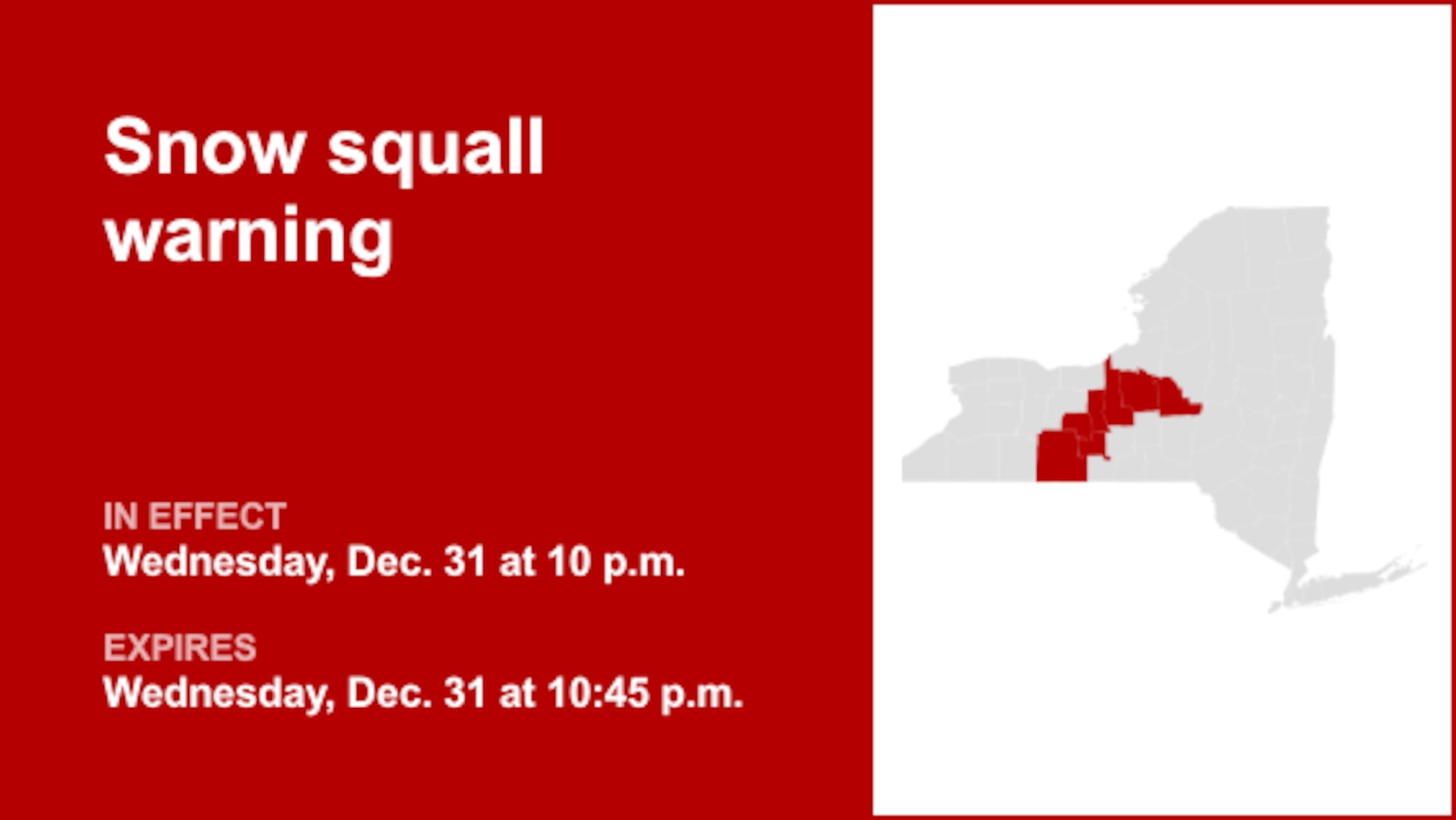
UPDATE: A severe snow squall warning has been issued for several counties in New York, with dangerous conditions expected to last until 10:45 PM tonight. The National Weather Service confirmed the warning at 10:00 PM, affecting Cayuga, Madison, Onondaga, Schuyler, Seneca, Steuben, and Yates counties.
The warning indicates a rapidly developing snow squall moving east at 25 mph, affecting areas including Syracuse, Clay, and Auburn. Travelers in these regions should prepare for life-threatening conditions as visibility could drop to near zero in just minutes.
Travel Alert: The weather service reports that “travel will become difficult and potentially dangerous within minutes.” Authorities urge drivers to avoid travel until the squall passes. If travel is absolutely necessary, it is crucial to reduce speed and turn on headlights to enhance visibility.
The snow squall is characterized by intense bursts of heavy snow and gusty winds, with wind speeds reaching up to 35 mph. These conditions can lead to white-out scenarios and icy roadways, significantly increasing the risk of accidents.
Snow squalls are brief but hazardous winter weather events often associated with strong cold fronts. Unlike prolonged snowstorms, which can last for hours or days, snow squalls can cause severe conditions in as little as 30-60 minutes. The rapid changes in weather can create dangerous driving situations, and historical data shows that such conditions have led to fatal traffic incidents.
Residents are advised to follow these key safety measures during a snow squall warning:
– **Avoid or Delay Travel:** Postpone any non-essential travel until the snow squall has passed.
– **Reduce Speed:** If on the road, slow down and increase the distance between vehicles.
– **Increase Visibility:** Turn on hazard lights and headlights to help other drivers see you.
– **Avoid Sudden Braking:** Gradually slow down to prevent accidents caused by skidding on slick roads.
For those who must travel, ensure your vehicle is winter-ready by checking tires, brakes, lights, and fluid levels. Additionally, equip your car with an emergency kit that includes blankets, non-perishable food, water, and a flashlight to prepare for any unforeseen breakdowns.
As this situation unfolds, the National Weather Service will continue to provide updates. Residents are encouraged to stay tuned to local news channels and weather updates for the latest information and safety recommendations.
Stay safe and informed as this hazardous weather event impacts New York tonight.