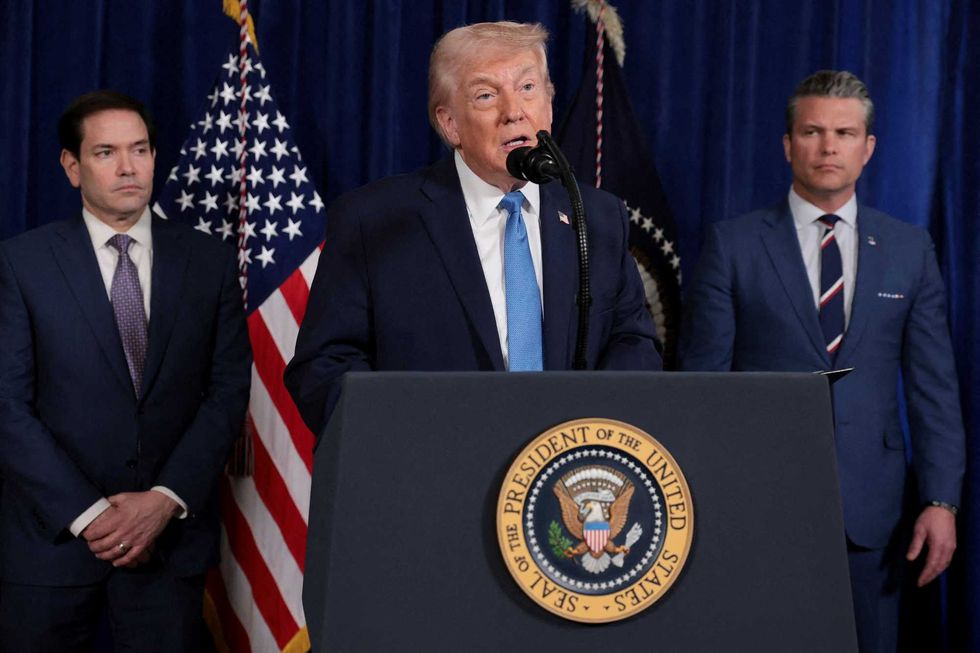
Members of the U.S. Congress have called for urgent legislative action to prevent President Donald Trump from escalating military operations in Venezuela. This demand follows Trump’s recent threats of a “second wave” of attacks and comments suggesting that the U.S. intends to exert control over the South American nation’s government indefinitely.
On January 3, 2026, Rep. Greg Casar (D-Texas), chair of the Congressional Progressive Caucus, stated, “Congress should vote immediately on a War Powers Resolution to stop” President Trump. He criticized the administration’s actions, claiming they have unlawfully targeted vessels in international waters and threatened direct military intervention without congressional approval. “Trump has no right to take us to war with Venezuela. This is reckless and illegal,” Casar added.
Another prominent voice, Rep. Rashida Tlaib (D-Mich.), characterized the administration’s military actions as those of a “rogue state.” She emphasized that Trump’s “illegal and unprovoked bombing of Venezuela” constitutes grave violations of both international law and the U.S. Constitution. Tlaib also expressed that the American public does not support another regime change war abroad.
In a broader context, establishment Democrats have joined progressives in condemning the unauthorized military actions. Sen. Adam Schiff of California expressed concern over the implications of Trump’s military strategy. He stated, “Without congressional approval or the buy-in of the public, Trump risks plunging a hemisphere into chaos and has broken his promise to end wars instead of starting them.”
Sen. Tim Kaine (D-Va.) announced plans to force a Senate vote on a bipartisan War Powers Resolution aimed at curbing further military action in Venezuela. Kaine voiced concerns about the potential ramifications of Trump’s military strategy, questioning whether it could lead to the deployment of troops for various conflicts around the globe. “It is long past time for Congress to reassert its critical constitutional role in matters of war, peace, diplomacy, and trade,” he stated.
The congressional push for action reflects growing unease regarding Trump’s intentions in Venezuela, especially following his recent comments that the U.S. “is going to run” the country. During a press conference, Trump indicated a willingness to deploy troops, hinting at a strategy to manage Venezuela’s extensive oil reserves. “We’re not afraid of boots on the ground,” he declared, indicating that his administration is “designating various people” to govern.
Support from the Republican majority in Congress may determine the outcome of any proposed resolutions. Some Republican leaders, including House Speaker Mike Johnson (R-La.) and Senate Majority Leader John Thune (R-SD), have publicly endorsed the administration’s military actions, describing them as “decisive” and justified.
Prior to Saturday’s military action, congressional attempts to pass War Powers Resolutions aimed at limiting Trump’s authority were unsuccessful. Sen. Mike Lee of Utah had previously raised constitutional concerns regarding military intervention but appeared to withdraw those after discussions with Secretary of State Marco Rubio. In contrast, Rep. Andy Kim (D-NJ) criticized this approach, stating that both Rubio and Defense Secretary Pete Hegseth misled Congress regarding the nature of the military operations.
As the situation develops, lawmakers are grappling with the implications of Trump’s approach to Venezuela, emphasizing the need for clear congressional authorization before engaging in military conflict. The outcome of the congressional response to Trump’s actions could significantly influence U.S. foreign policy and military engagement in the region.