Venezuela’s military announced its support for Vice President Delcy Rodriguez as the acting leader of the country following the capture of President Nicolas Maduro by U.S. forces on March 2, 2024. The endorsement came from Defense Minister Vladimir Padrino Lopez, who confirmed the Supreme Court’s decision to appoint Rodriguez as interim president for a period of 90 days.
Rodriguez, who has held the position of vice president since 2018, is next in line for the presidency and has been influential in managing Venezuela’s oil-dependent economy and its intelligence services. Following the high court’s order, she addressed the nation, condemning Maduro’s capture as “barbaric” and an “illegal and illegitimate kidnapping.” In her televised statement, she characterized the U.S. actions as an assault on Venezuela’s sovereignty and demanded the immediate release of both Maduro and his wife, Cilia Flores.
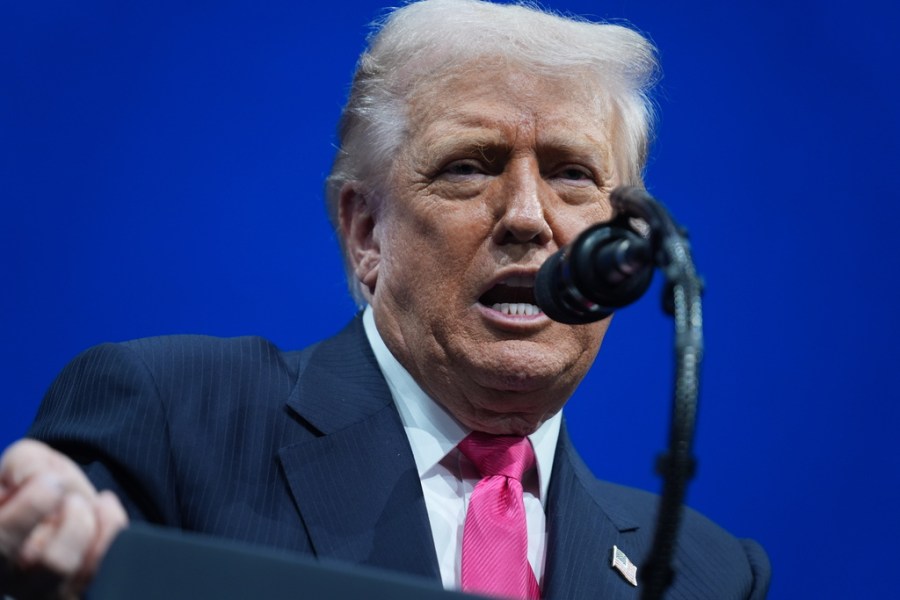
In a further development, President Donald Trump indicated that the U.S. had been in contact with Rodriguez, stating that “she’s essentially willing to do what we think is necessary to make Venezuela great again.” This statement is significant given Rodriguez’s prior sanctions by the U.S. government during Trump’s first term for her involvement in undermining democratic processes in Venezuela.
Despite the turbulent circumstances, Rodriguez expressed her willingness to engage in dialogue with the U.S. while reassuring supporters of the ruling party. “We are willing to have respectful relations,” she stated, addressing the current U.S. administration. This overture comes against a backdrop of heightened tensions and military action.
Trump also warned Rodriguez, suggesting that if she fails to align with U.S. expectations, “she is going to pay a very big price, probably bigger than Maduro.” This comment highlights the precarious position Rodriguez now occupies as she navigates international relations while maintaining internal support.
U.S. Secretary of State Marco Rubio discussed the complexities of the situation during an interview, emphasizing the need for “mature statesmanship” in conversations with Rodriguez and the Venezuelan government. He acknowledged that previous efforts to engage with Maduro had been unproductive, stating, “The difference is that the person who was in charge, even though not legitimately in the past, was someone you could not work with.”
Following Maduro’s capture, he and Flores were reported to have arrived in New York, facing federal charges related to drug trafficking and alleged connections with terrorist organizations. A video shared by the White House showed Maduro being escorted by U.S. Drug Enforcement Administration agents, further illustrating the dramatic turn of events.
Padrino Lopez reported that some of Maduro’s bodyguards were killed during the U.S. military operation, although he did not provide specific casualty figures. Venezuelan officials have yet to release an official toll of casualties stemming from the operation. In contrast, Trump confirmed that while some U.S. personnel sustained injuries, there were no fatalities among American forces.
In light of the current situation, Padrino Lopez urged Venezuelans to return to their daily routines, stating, “The homeland must follow its constitutional course.” His call for normalcy reflects a desire to stabilize the nation amid ongoing political turmoil.
As Venezuela navigates this significant transition, the international community remains watchful, aware that the outcome will have lasting implications for the country’s future and its relations with the United States.