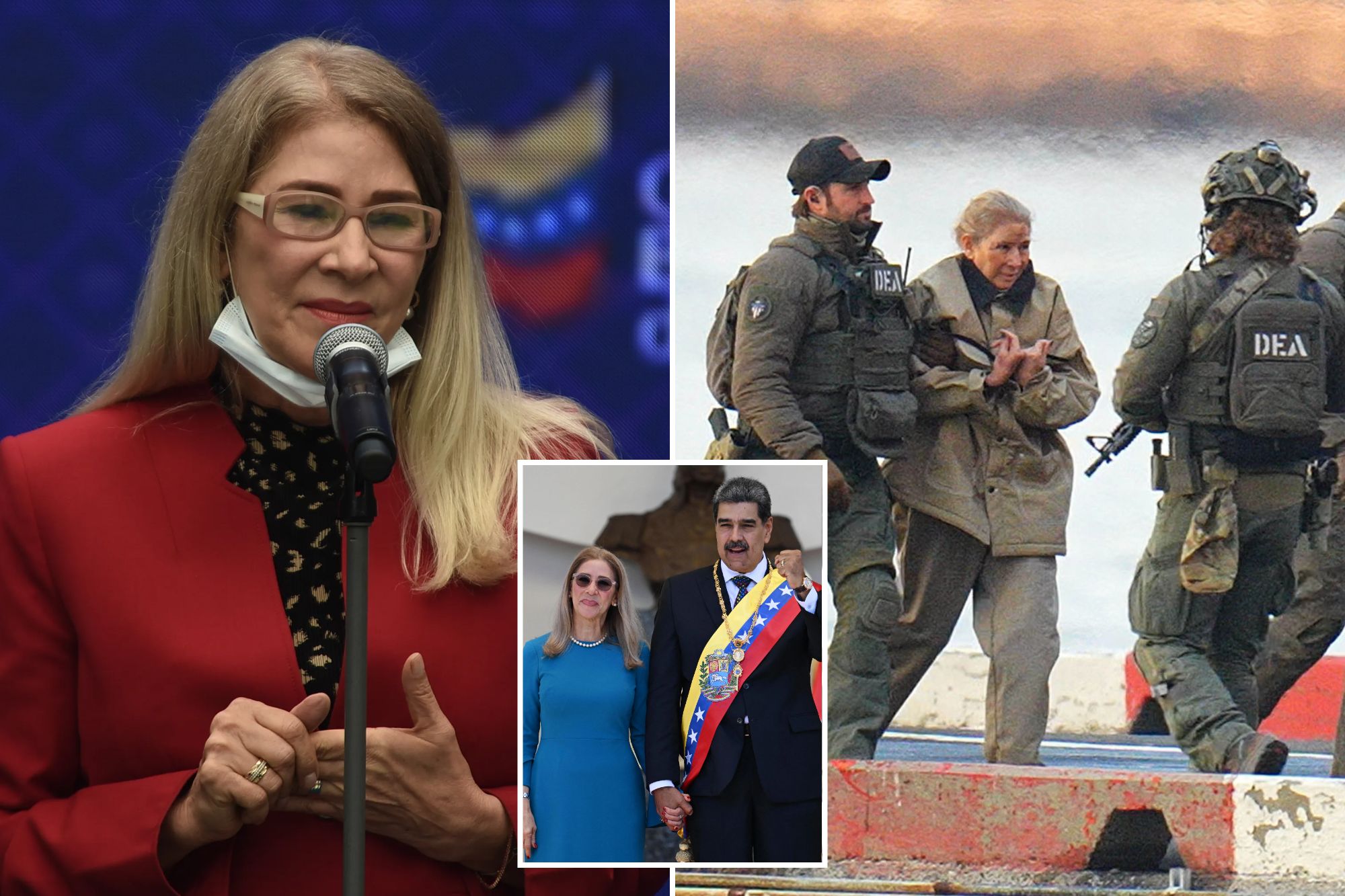
The former First Lady of Venezuela, Cilia Flores, has been arrested and indicted on drug trafficking charges alongside her husband, the ousted president Nicolás Maduro. This development follows a U.S. raid on their Caracas residence, leading to their transportation to the United States for prosecution. Flores, 69, appeared in court with visible injuries, including a bruised eye, which her legal team claims were sustained during the raid.
The indictments against both Maduro and Flores detail a complex web of allegations that suggest their involvement in a narcoterrorism operation. According to a former Venezuelan intelligence chief, Flores is not merely a passive figure but a crucial player in the regime’s corruption. Zair Mundaray, who previously served as a senior prosecutor under Maduro, stated, “She is a fundamental figure in corruption in Venezuela — absolutely fundamental — and especially in the structure of power.”
Allegations and Charges
Flores has been charged with conspiracy to import cocaine and possession of firearms, among other offenses. The U.S. government claims that she accepted substantial bribes from drug traffickers to facilitate their operations. Notably, her nephews, referred to as “narcophews,” were arrested previously in the U.S. for their roles in drug trafficking, allegedly intending to use proceeds from cocaine sales to fund Flores’ campaign for the National Assembly in 2015.
The U.S. Department of Justice has indicated that much of the cocaine was seized with assistance from Venezuelan law enforcement, which, according to the indictment, was supported by state-sponsored gangs known as “colectivos.” Mark P. Jones, a political science fellow at Rice University’s Baker Institute, emphasized that if the charges are accurate, they illustrate a systematic corruption within the Maduro regime. “She clearly benefited from corrupt acts within the Maduro regime,” he said.
Witness accounts, including that of a former bodyguard, suggest that Flores was aware of the drug trafficking operations. Jones noted, “I believe the only way they would have been able to operate would have been with her assistance.”
A Political Legacy of Ambition
Cilia Flores’ political journey began under the mentorship of late Venezuelan president Hugo Chávez. She played a notable role in Chávez’s rise, even representing him pro bono during his imprisonment following a failed coup attempt in 1992. After Chávez was elected in 1998, Flores served as attorney general, while Maduro held the position of vice president. Following Chávez’s death in 2013, Maduro ascended to the presidency.
Described as “Latin Lady Macbeth,” Flores has been characterized by some as more politically astute than her husband. Her political strategy reportedly involved placing family members in key government positions, a tactic that has raised questions about loyalty and trust within the regime. “In this kind of environment, there is very limited trust,” Jones explained, noting that hiring relatives serves as a survival instinct among political figures.
The indictment of Flores and her subsequent arraignment mark a significant moment in Venezuela’s tumultuous political landscape. While the international community continues to grapple with the implications of the Maduro regime, the focus on Flores reveals the intricate dynamics of power and corruption at play within the country. As both she and Maduro plead not guilty to the charges, the unfolding legal battles will likely draw further scrutiny on their reign and the future of Venezuela.