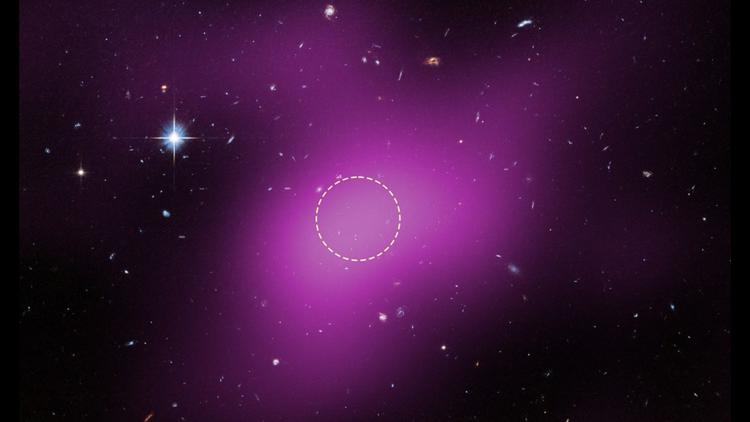
A team of scientists has identified the first known “failed galaxy,” a celestial body that never formed stars. This discovery provides a rare opportunity to study dark matter without the interference typically presented by stars. The finding, published in a study by researchers from the University of California in March 2024, offers new insights into the processes of galaxy formation and the behavior of dark matter in the universe.
Understanding the Failed Galaxy Phenomenon
The failed galaxy, named VCC 1287, is located approximately 50 million light-years away from Earth in the constellation Virgo. Unlike typical galaxies that undergo significant star formation, VCC 1287 contains little to no stars, making it a unique specimen for research. The absence of stellar light allows scientists to focus on the underlying dark matter that influences the galaxy’s structure.
According to the researchers, VCC 1287 is an essential piece in the puzzle of how galaxies evolve. Traditional models of galaxy formation suggest that dark matter plays a crucial role in attracting gas and dust, which eventually lead to star formation. However, VCC 1287 challenges these models, raising questions about the conditions necessary for galaxies to thrive.
Significance of the Discovery
The implications of this discovery extend beyond our understanding of VCC 1287 itself. By examining a galaxy that failed to form stars, scientists can refine their models of dark matter and its effects on galaxy formation. This could lead to breakthroughs in understanding not just this galaxy, but the evolution of the cosmos as a whole.
The study of VCC 1287 may also shed light on the distribution of dark matter in the universe. Dark matter, which constitutes about 27% of the universe, remains largely invisible and detectable only through its gravitational effects. By observing how dark matter behaves in a galaxy that has not formed stars, researchers can gain insights into its properties and distribution throughout the universe.
As scientists continue to explore the cosmos, the discovery of this failed galaxy opens up new avenues for research. It highlights the importance of understanding the various paths galaxies can take in their evolution and how these paths impact our comprehension of the universe’s history.
In conclusion, the identification of VCC 1287 as the first known failed galaxy marks a significant milestone in astronomical research. This unique galaxy not only enriches our understanding of dark matter but also challenges existing theories about galaxy formation. With further study, researchers hope to uncover more about the universe’s mysterious components and the fundamental processes that govern cosmic evolution.