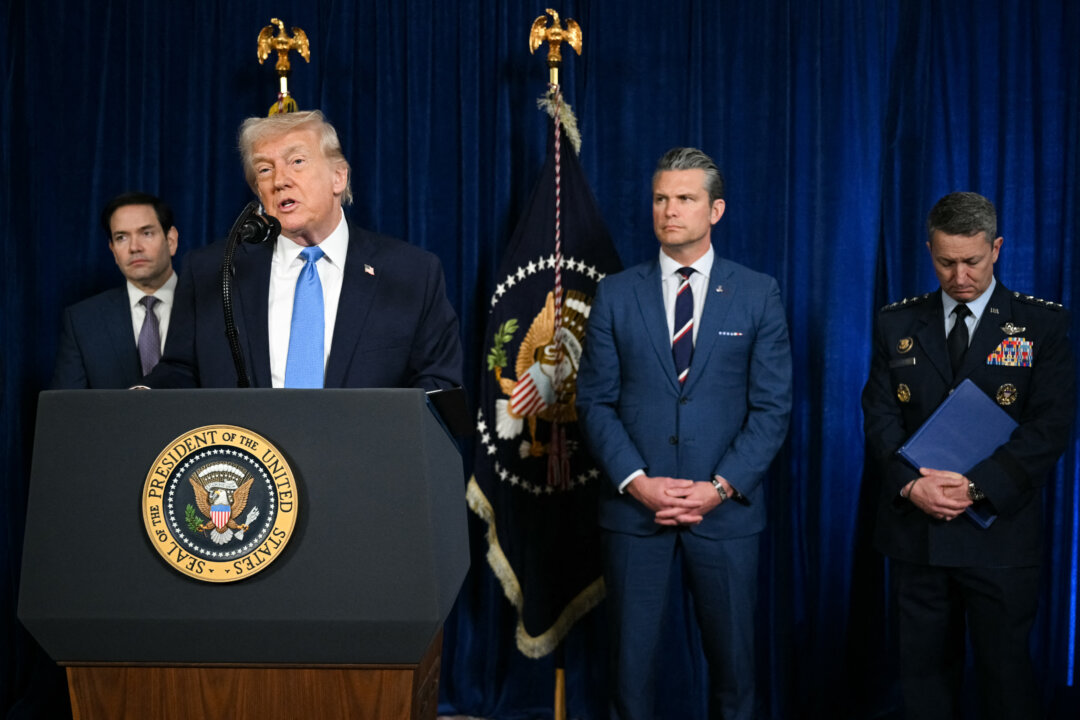
President Donald Trump has named the acquisition of Greenland as a key priority for U.S. national security, emphasizing the need to deter adversaries in the Arctic region. On Tuesday, White House press secretary Karoline Leavitt stated that military options are among the various strategies being considered to achieve this goal.
In her statement to The Epoch Times, Leavitt clarified the administration’s stance. “President Trump has made it well known that acquiring Greenland is a national security priority of the United States,” she said. “It’s vital to deter our adversaries in the Arctic region.”
The White House’s comments come amid ongoing discussions about the geopolitical significance of Greenland, particularly as melting ice opens new shipping routes and access to natural resources. The Trump administration has expressed concerns regarding the increasing influence of other nations, particularly Russia and China, in the Arctic.
Military Options on the Table
Leavitt indicated that the President and his team are evaluating a variety of options to advance this foreign policy initiative. “Utilizing the U.S. Military is always an option at the Commander in Chief’s disposal,” she added, highlighting the seriousness with which the administration views the situation.
The suggestion of military involvement raises questions about the potential ramifications of such actions. Experts note that any military move could escalate tensions with other nations already engaged in the Arctic, leading to significant diplomatic challenges.
The prospect of acquiring Greenland is not new. The United States has historically shown interest in the territory, notably when President Trump first floated the idea in 2019. At that time, the Danish government firmly rejected the proposal, stating that Greenland is not for sale.
Despite the previous setback, the current administration appears undeterred in its pursuit of a strategic foothold in the region. The discussions reflect broader trends in global politics, where Arctic sovereignty and resource access are increasingly contested.
Geopolitical Context and Future Implications
Greenland, an autonomous territory of Denmark, is located strategically between North America and Europe. Its vast landmass holds substantial natural resources, including minerals and potential oil reserves, making it a point of interest for various nations.
The melting of polar ice caps due to climate change is opening new navigation routes, significantly altering the geopolitical landscape. As the Arctic becomes more accessible, nations are vying for influence and control over the area’s resources.
The U.S. military’s potential involvement raises critical questions about international law and the rights of the indigenous populations of Greenland. Any proposed actions will likely face scrutiny from both domestic and international stakeholders.
As discussions continue, the implications of the U.S. strategy in the Arctic will unfold, revealing the complex interplay between national security interests and international diplomacy. The global community will be watching closely as the situation develops, particularly in light of the strategic importance of Greenland in a rapidly changing world.