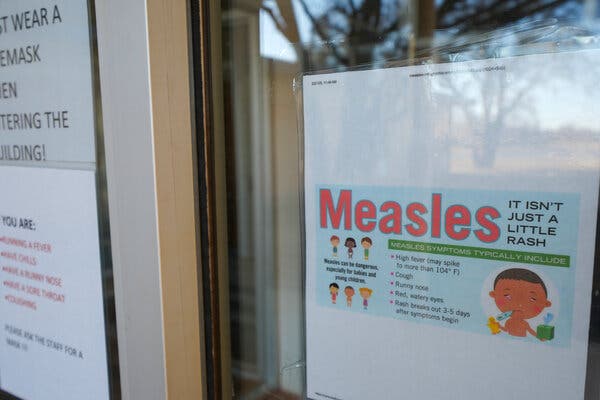
Health officials in South Carolina reported a concerning escalation in a measles outbreak, with **99 new cases** identified in just three days. This surge brings the total number of infections to **310**, primarily affecting children. The outbreak, which began in **October** along the northern border of the state in **Spartanburg County**, has prompted significant public health responses.
As the number of cases continues to grow, **200 individuals** exposed to the virus are currently under a **21-day quarantine**. Health officials issued a statewide alert to healthcare providers, emphasizing the “importance of heightened awareness” regarding the virus. They also recommended that employers permit employees time to quarantine if they have been exposed.
The situation is not confined to South Carolina; **four measles cases** have also been reported in **North Carolina**. These cases involve individuals who had recently visited Spartanburg County. North Carolina health officials have indicated that, at this point, the virus has not spread to others in the state.
Despite some success in increasing the uptake of measles, mumps, and rubella (**MMR**) vaccinations in South Carolina since the outbreak began, large communities remain unvaccinated. According to **Dr. Linda Bell**, South Carolina’s state epidemiologist, only two individuals out of those confirmed to have measles were fully vaccinated. “We still have a ways to go with hundreds of people who are still lacking immunity,” she stated during a news conference.
Vaccination Rates and Historical Context
In the **2024-25 school year**, approximately **90 percent** of students in Spartanburg County had received the required childhood immunizations, including the MMR vaccine. This figure is slightly below the national average and does not meet the **95 percent** threshold recommended by health experts to effectively control the spread of the virus.
Many schools in the region report vaccination rates significantly below **90 percent**, according to data from the South Carolina Department of Health and Environmental Control. This drop in vaccination rates coincides with a troubling trend; **2025** marked the worst year for measles infections in the United States in recent history, with over **2,100 cases** reported, the highest since **1991**. The rise in South Carolina’s cases raises concerns that **2026** may follow a similar trajectory.
Compounding the situation, another significant outbreak is ongoing along the **Utah-Arizona border**, with health officials documenting dozens of new cases over the past three weeks. The current climate has left public health experts uncertain about the future.
“**2025 was the year of measles**,” noted **Noel Brewer**, who leads the National Sustainability Committee for the Elimination of Measles, Rubella and Congenital Rubella Syndrome. “**Is 2026 the year that they go away, or the year that gets worse?** That’s the big question.”
With health officials urging communities to prioritize vaccinations and awareness, the coming months will be crucial in determining how this outbreak is managed and whether additional cases can be contained. The spread of measles, a highly contagious disease, underscores the importance of maintaining high vaccination coverage to protect public health.