President Lee Jae Myung concluded a two-day visit to Japan on Wednesday, which highlighted potential for enhanced economic cooperation and initiatives to examine the remains of Korean forced laborers. This visit included discussions with Prime Minister Sanae Takaichi in Nara and marked their second meeting in just over two months as both nations navigate complex geopolitical challenges.
The summit coincided with heightened tensions in the region, particularly following Lee’s recent talks with Chinese President Xi Jinping in Beijing. This backdrop is underscored by China’s recent restrictions on exports of dual-use items to Japan, raising concerns about possible impacts on the supply of critical rare earth minerals essential for high-tech manufacturing.
Advancing Bilateral Relations
During their discussions, Lee and Takaichi expressed commitment to advancing bilateral relations through “future-oriented cooperation” in various sectors, including supply chains, artificial intelligence (AI), and cultural exchanges. They achieved what Lee termed “small but meaningful progress” concerning historical issues, agreeing to conduct DNA analysis on remains found at the Chosei undersea coal mine in Yamaguchi Prefecture. This site, where a flood in 1942 claimed the lives of 183 individuals, including 136 Korean laborers, was a focal point of their talks.
National Security Adviser Wi Sung-lack reported that Takaichi prioritized the Chosei coal mine issue during the summit, emphasizing the leaders’ shared goal to enhance humanitarian cooperation concerning historical matters. The Nara summit represents a strategic effort to institutionalize high-level diplomatic engagement, often referred to as “shuttle diplomacy,” between Seoul and Tokyo, both crucial allies of the United States in Asia.
Despite concerns regarding Takaichi’s conservative stance on historical issues, Lee’s visit has sparked cautious optimism about the potential for collaborative progress, particularly in economic areas. The South Korean delegation reiterated its interest in joining the 12-member Comprehensive and Progressive Agreement for Trans-Pacific Partnership (CPTPP), a multilateral trade pact led by Japan.
Focus on Supply Chains and Security
Past efforts by South Korea to join the CPTPP faced obstacles, notably due to a ban on seafood imports from eight Japanese prefectures following the 2011 Fukushima nuclear disaster. Nevertheless, the discussions in Nara raised hopes for future advancements in this area, particularly in light of the shared consensus on the necessity of stable supply chains. Although details regarding discussions on Beijing’s export controls were not disclosed, the leaders acknowledged the importance of cooperation amid regional tensions.
Lee emphasized the need for trilateral cooperation among Seoul, Tokyo, and Beijing, aiming to identify common grounds for collaboration in Northeast Asia. Additionally, the summit outlined cooperation that extends beyond trade, including plans for working-level consultations on AI, intellectual property rights, and joint responses to transnational crimes, such as online scams.
Both leaders expressed a commitment to security coordination, reaffirming their dedication to the complete denuclearization of the Korean Peninsula and the establishment of lasting peace. They agreed to maintain close coordination on policies concerning North Korea, highlighting the significance of trilateral relations with the United States.
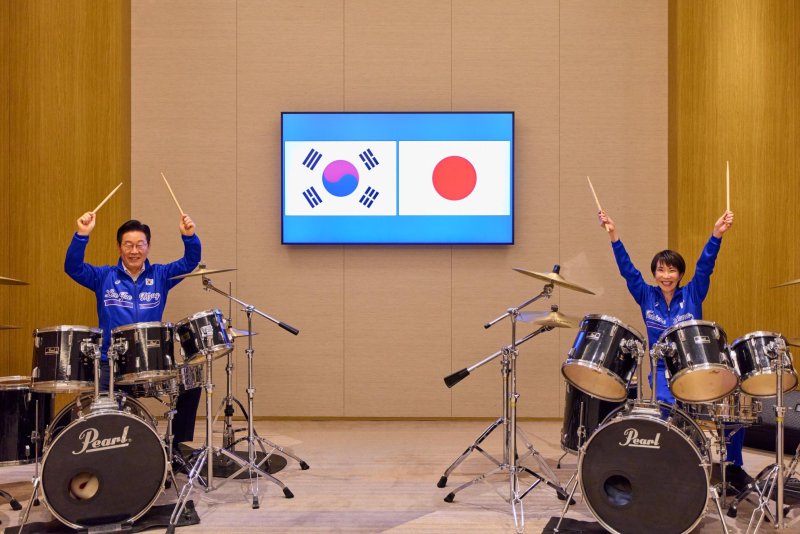
The Nara summit featured a warm atmosphere, with Lee and Takaichi engaging in cultural exchanges, such as exchanging gifts and playing drums to popular K-pop songs, which showcased a carefully crafted rapport aimed at enhancing bilateral ties.