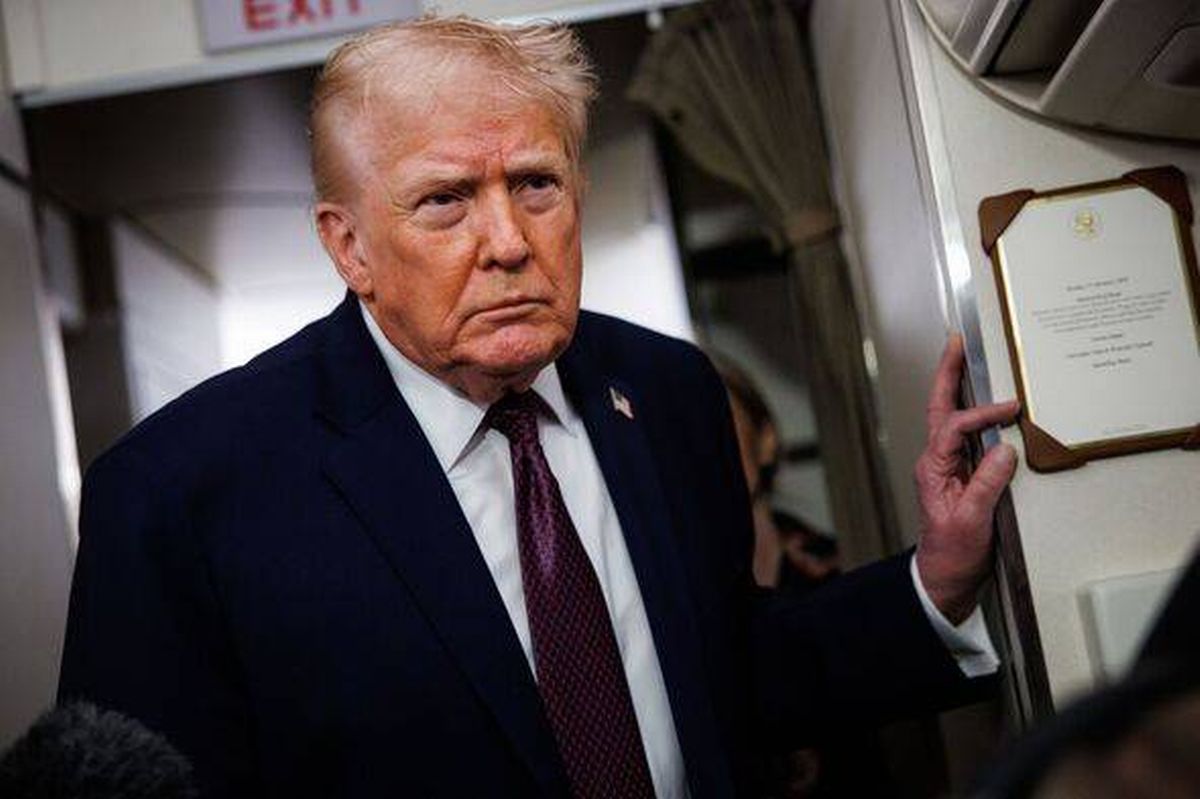
In a provocative move, Donald Trump shared an altered image on the official White House Instagram account that has rekindled discussions about the United States’ interest in Greenland. The post, made on the evening of March 15, 2024, featured Trump looking out from the White House towards a map of Greenland, with the caption “Monitoring the situation.” This image followed Trump’s recent comments asserting that the U.S. would take control of the Arctic territory “one way or another.”
The original photograph depicted Trump observing a construction site for a future White House ballroom, which was subsequently modified to include the map of Greenland. This shift in imagery coincided with Trump’s claims that negotiating a deal for Greenland would be simpler than military intervention. He warned that if the U.S. does not act, nations like Russia or China could expand their influence in the region.
International Reactions and Implications
Trump’s comments have drawn significant concern both domestically and internationally. He emphasized that Greenland would benefit from a stronger relationship with the U.S., particularly concerning defense. “Greenland does not want to see Russia or China take over,” Trump stated, highlighting the island’s precarious position amid increasing military activity from both nations. He claimed that the territory’s defense capabilities are minimal, asserting, “Greenland, basically their defense is two dogsleds.” However, he did not provide evidence for his assertions regarding Russian or Chinese naval presence near Greenland, which have been challenged by the Danish government.
The remarks prompted a swift response from China. Mao Ning, a spokesperson for the Chinese foreign ministry, dismissed Trump’s claims, asserting that the Arctic should be viewed as a global concern. She stated that China’s involvement in the region is aimed at promoting stability and sustainable development, urging recognition of the rights of all countries in the Arctic.
In a further escalation, Trump affirmed his determination to secure Greenland, stating, “If we don’t take Greenland, Russia or China will. And I’m not going to let that happen.” When questioned about potential repercussions for NATO, which has Article 5 stipulating collective defense, Trump acknowledged the risk but questioned the alliance’s reliability. “I like NATO. I just wonder whether or not if needed NATO would they be there for us? I’m not sure they would,” he remarked.
Local Concerns and Political Fallout
Concerns about the implications of Trump’s comments have also emerged from Greenland. The mayor of Nuuk, Avaaraq Olsen, expressed her worries about escalating tensions and the negative impact of misinformation. In a statement, she urged Trump to cease spreading false narratives, particularly regarding military threats. “That kind of statement is also hurting people in Greenland,” Olsen stated, emphasizing the need for truthful discourse.
Greenland, with a population of approximately 57,000, is a territory of Denmark, which maintains significantly less military strength than the U.S. Any attempts by the U.S. to annex Greenland could jeopardize NATO relations, a concern that has been reiterated by Danish officials. The Danish Prime Minister, Mette Frederiksen, described the situation as a “decisive moment” in the conflict with Washington, reaffirming Denmark’s commitment to international law and self-determination.
On the diplomatic front, U.S. Secretary of State Marco Rubio is scheduled to meet with Danish representatives at the White House later this week. This meeting comes as the UK engages in discussions with NATO allies regarding troop deployments to counter perceived Russian aggression in the Arctic. NATO leader Mark Rutte noted that discussions are ongoing about enhancing security measures in the region, particularly in light of increased Russian and Chinese activities.
As the dialogue continues, some U.S. officials have suggested exploring the possibility of purchasing Greenland rather than resorting to forceful measures. Reports indicate that options could include direct payments to Greenlanders to encourage them to seek independence from Denmark and potentially align with the U.S.
The situation remains fluid, with international implications that extend beyond the Arctic. As tensions rise, the global community watches closely to see how this issue unfolds and what it may mean for U.S. relations with both NATO allies and other nations involved in Arctic interests.