The United States is grappling with a significant outbreak of measles, reporting at least 171 cases in just the first two weeks of January 2026. This figure is alarmingly close to the average annual total recorded over the last 25 years since measles was declared eliminated in the country. The outbreak is concentrated in specific areas, particularly upstate South Carolina and along the Utah-Arizona state line, raising concerns about broader public exposure.
As the measles virus spreads rapidly, tracking each exposure has become increasingly challenging. Dr. Linda Bell, the state epidemiologist for South Carolina, noted that individuals may be in the community while unknowingly infectious. This reality has resulted in the identification of numerous public exposure locations, including schools, churches, restaurants, and healthcare settings. The South Carolina health department is cautious about publicizing all exposure sites, citing the need for specific incident details before release.
Recent cases illustrate the interconnectedness of outbreaks across states. For instance, a family from North Carolina visiting Spartanburg County, South Carolina, was potentially exposed. Similarly, health officials in New Mexico have warned of possible exposure at an Albuquerque hotel linked to a visitor from South Carolina. Moreover, at least four major international airports in the United States recorded measles cases or potential exposures during the holiday travel season.
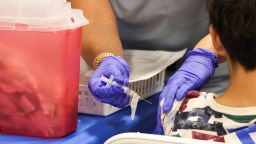
Dr. Jesse Hackell, a retired pediatrician and member of the American Academy of Pediatrics, emphasized that vaccination is critical in mitigating the risk of exposure. He explained that the measles-mumps-rubella (MMR) vaccine is remarkably effective, with a single dose providing 93% protection and the second dose increasing that to 97%. While the vaccine is particularly crucial for children, it is advisable for older children and adults to get vaccinated as well.
Steps to Take in Case of Exposure
If you suspect exposure to measles, the first step is to check your vaccination status. Those who are vaccinated typically face minimal risk and may only need to monitor for symptoms. Dr. Raynard Washington, director of the public health department in Mecklenburg County, North Carolina, stated, “If you have immunity to measles, you will most likely just be directed to watch for symptoms as a precaution.”
For unvaccinated individuals, immediate action is necessary. Receiving the MMR vaccine within 72 hours of exposure may provide some level of protection or reduce the severity of illness. Individuals should contact their healthcare provider before visiting any medical facility to prevent potential spread to others. Dr. Bell advised that anyone who suspects they may have measles should notify their provider in advance and consider wearing a mask.
Dr. Stuart Simko, a pediatrician in South Carolina, has implemented protocols similar to those used during the early days of the COVID-19 pandemic. Telehealth visits, masking, and waiting in cars for appointments have been effective in preventing the spread of the virus in his practice.
Monitoring Symptoms and Staying Informed
Early symptoms of measles resemble other respiratory illnesses, initially presenting as fever, cough, and runny nose. The characteristic rash typically appears a few days later, starting in the mouth and moving down the body. An early sign that may indicate measles is conjunctivitis, or pink eye, which can develop even before the rash.
Monitoring symptoms is vital, as no specific treatment exists for measles. Regular check-ins with healthcare providers can help manage the condition, especially for children who may experience complications. Hospitalization may be required if symptoms indicate pneumonia or encephalitis, which is swelling of the brain.
Understanding the local vaccination rates is also crucial. Dr. Hackell highlighted that a school with a high vaccination rate is less likely to see an outbreak than one with lower rates. Awareness of vaccination coverage can guide parents in making informed decisions and communicating effectively with healthcare providers.
In response to the ongoing outbreak, the South Carolina public health department provides updates twice weekly, while other state health departments are also issuing notifications about potential exposures. Recently, Mecklenburg County reported detecting measles in local wastewater, indicating the presence of the virus in the community.
To minimize the spread of measles, unvaccinated individuals who have been exposed should remain in quarantine for 21 days post-exposure. This precaution helps prevent further transmission during the incubation period, as individuals can be contagious before showing symptoms. In South Carolina, over 400 individuals are currently in quarantine due to known exposures.
In conclusion, vaccination remains the most effective way to ensure safety against measles, giving parents confidence even in the event of exposure. Dr. Hackell stressed that, “Vaccination is the best way for parents to have some confidence, even in the event of an exposure.”