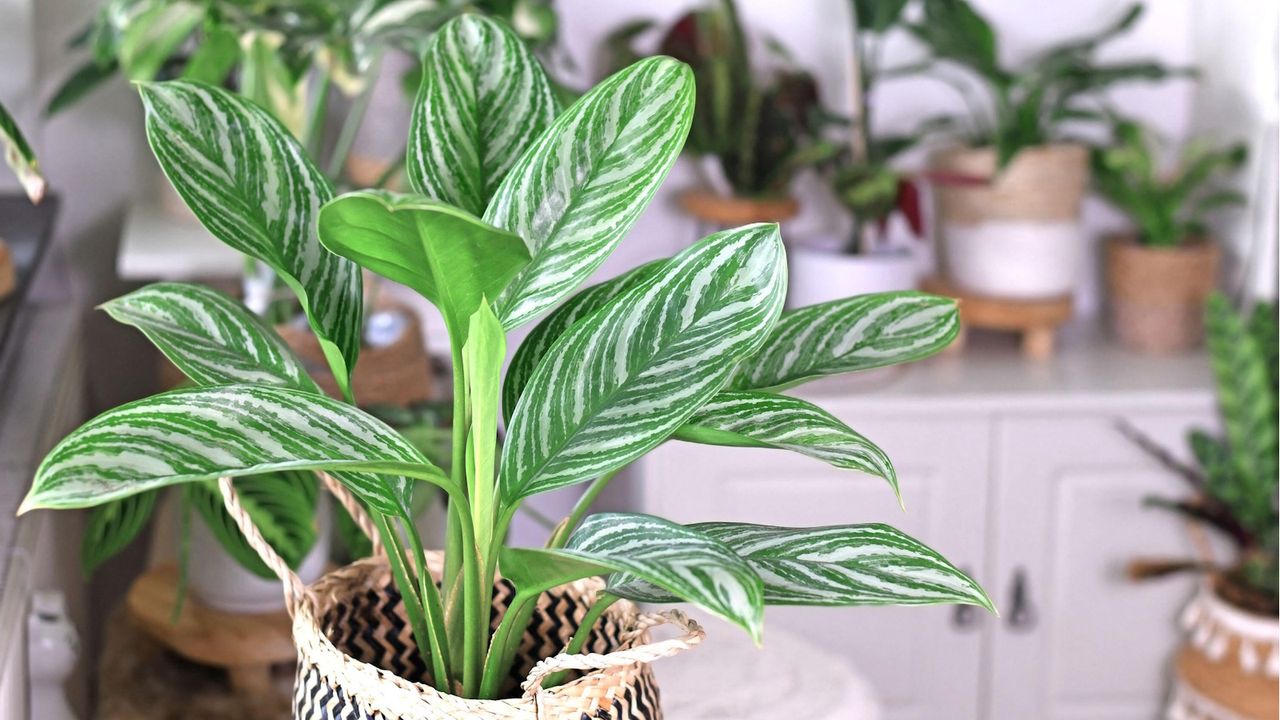
Chinese evergreens, known scientifically as Aglaonema, are beloved houseplants for their remarkable ability to thrive in low-light conditions. This makes them an excellent choice for dimly lit areas in homes and offices. For those looking to expand their collection, propagating a Chinese evergreen is straightforward and can be accomplished through two effective methods: division and cuttings.
Propagating by Division
The division method is a quick way to create new plants and works best for mature Chinese evergreens, typically around three years old. This technique is recommended for plants that have become pot-bound, indicated by yellowing leaves. The process is simple and can be completed in under ten minutes.
Begin by gently removing the plant from its pot. If the roots are tightly bound, a gentle twist may be necessary, possibly using a garden trowel to assist in loosening the plant from the pot. Once out, remove excess potting soil by shaking the plant and brushing the roots clean.
Next, loosen the root ball. This step is crucial, especially if the plant has never been repotted. Squeeze the root ball gently to identify natural separations among the shoots, which indicates where the plant can be divided.
When separating the clumps, each division should have its own shoot and root system. If the roots are tangled, a sharp garden knife can be used to carefully cut between sections, ensuring minimal damage to the roots. After separation, prune any damaged roots or yellowed leaves, adhering to the one-third pruning rule to avoid shock.
Finally, pot each section in a well-draining houseplant mix and ensure the pots have drainage holes. Water thoroughly and place them in a bright, warm location. Consistent moisture is essential, but avoid soggy soil to promote healthy recovery.
Propagating with Cuttings
If the Chinese evergreen is not mature enough for division, propagating through cuttings is an excellent alternative. This method is effective in spring and summer, although it can also be attempted in cooler months with supplemental heat.
To start, choose healthy stems that have two or three leaves. Using sharp pruning shears, cut approximately an inch below a leaf node, with the stem ideally measuring four to six inches in length.
Before planting, prepare the cutting by stripping the lower leaves, leaving the top leaves intact. Applying a rooting hormone can significantly enhance the chances of successful root development. Dip the cut end into the hormone, ensuring an even coating.
For rooting, it is preferable to use soil rather than water for better reliability. Fill a nursery pot with well-draining potting soil and insert the cutting, making sure the bottom leaf node is buried. Water the base of the stem thoroughly to secure it in place.
Place the cutting in a warm, bright area and maintain moisture levels. Root development typically occurs within a few weeks, and checking progress can be done by gently tugging on the stem.
Understanding these two propagation methods allows plant enthusiasts to expand their collection of Chinese evergreens effectively. Whether using division or cuttings, proper care and attention to detail will ensure successful growth and a thriving indoor garden.