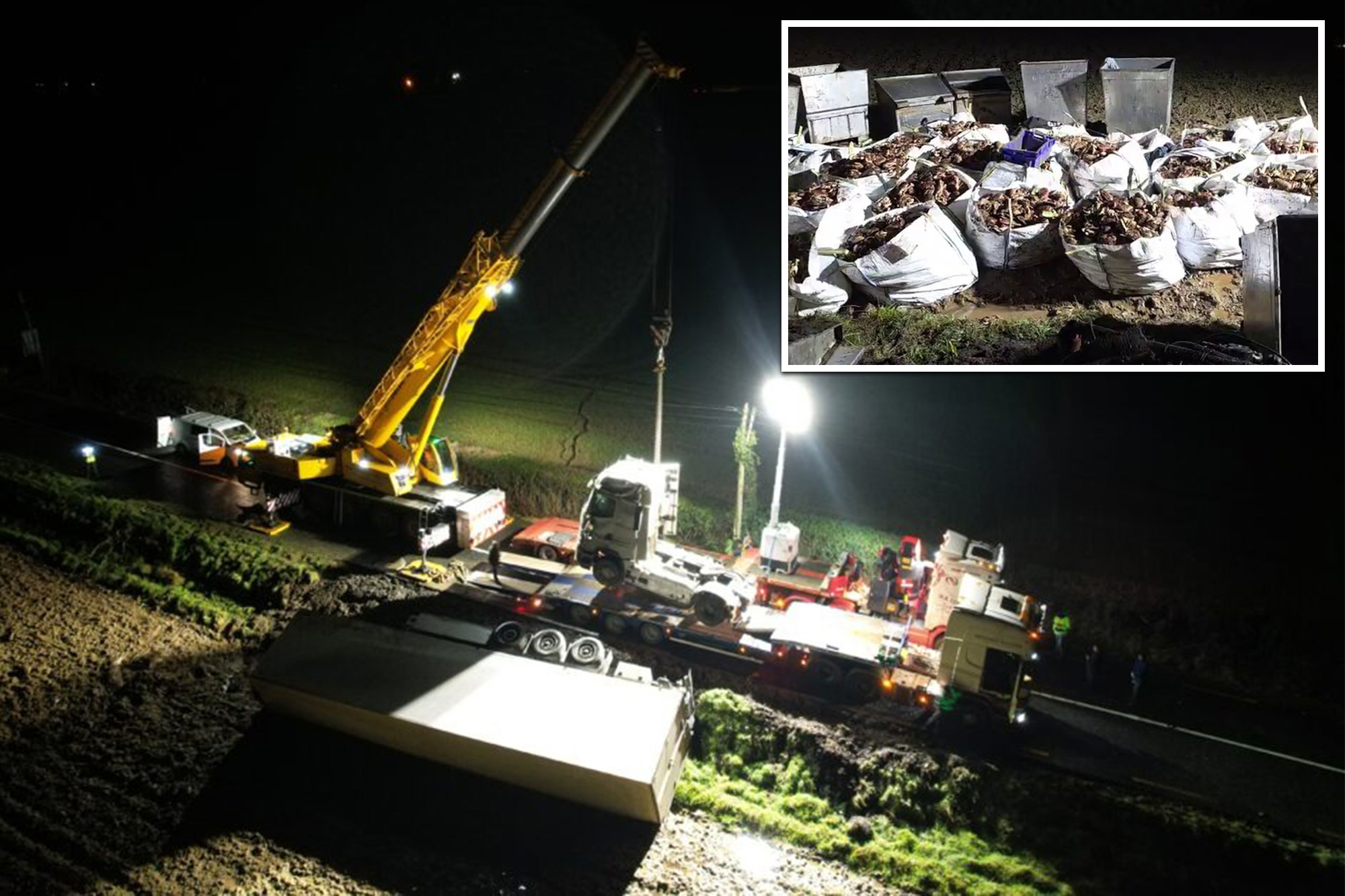
A transport truck carrying approximately 15,000 live crabs overturned on a highway in County Donegal on January 12, 2024, prompting a significant recovery operation involving local volunteers. The driver was unharmed, but the incident left the community in shock as thousands of crustaceans attempted to escape towards the Atlantic Ocean, only 160 feet away.
The truck, owned by local businessman Odham McLaughlin, was transporting crabs destined for restaurants in Portugal, with an estimated value of €90,000. Initially, McLaughlin approached the situation with a sense of calm, thinking it was just another day in the transport business. However, the magnitude of the situation quickly became apparent when he learned about the contents of the overturned vehicle.
The accident led to a rapid response from the Donegal County Council, which closed the highway to facilitate the recovery efforts. McLaughlin described the scene as chaotic, with crabs “skittering all over” the area. Recognizing the need for help, he reached out to nearby villages, including Burnfoot, Greencastle, and Moville, to gather volunteers willing to assist in the unusual rescue mission.
Over the course of roughly 18 hours, around 80 volunteers—comprising men, women, and children—worked tirelessly to collect the crabs. They used sandbags to gather the crustaceans and a crane to return them to their container. Tragically, while most of the crabs were successfully retrieved, some perished during the accident, while others managed to escape entirely.
McLaughlin expressed gratitude for the community’s support, stating, “Everybody from the village came in to help. I don’t think it’ll ever be forgotten.” Despite the impressive recovery efforts, the situation took a disappointing turn shortly after the operation concluded. Authorities determined that the crabs were no longer fit for human consumption due to their ordeal, leading to the difficult decision to dispose of the entire lot.
The incident serves as a reminder of the unexpected challenges faced in the transport industry and the resilience of local communities in times of crisis. McLaughlin’s experience has sparked conversations about the safety measures required for transporting live seafood and the potential impacts on local economies reliant on such exports. While he may be feeling crabby about the outcome, the collective effort of the community reflects a spirit of cooperation and support that will not soon be forgotten.