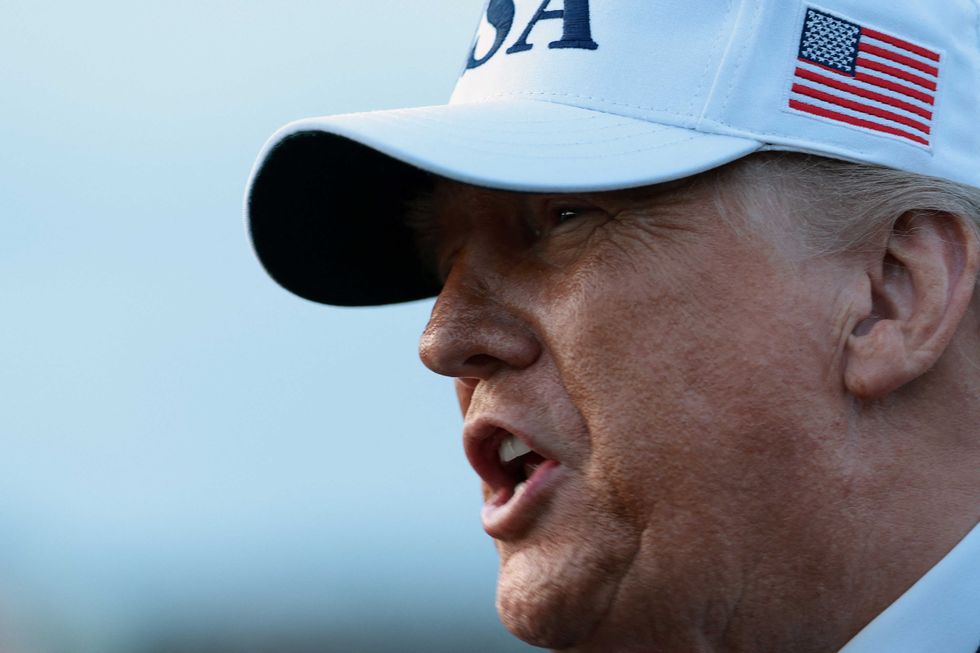
President Donald Trump has intensified his rhetoric regarding the potential deployment of U.S. military forces in Minnesota, where protests have erupted following the killing of Renee Good by Immigration and Customs Enforcement (ICE) agents earlier this month. The protests, particularly concentrated in Minneapolis, have drawn thousands of participants expressing their anger over police actions and the agency’s presence in the city.
During a post on his social media platform, Truth Social, Trump criticized Minnesota’s handling of the situation, questioning the state’s opposition to ICE’s activities. He stated, “ICE is removing some of the most violent criminals in the World from our Country, and bringing them back home, where they belong. Why is Minnesota fighting this? Do they really want murderers and drug dealers to be ensconced in their community?” His comments reflect a broader narrative he has pursued regarding crime and immigration.
In a pointed remark directed at Representative Ilhan Omar (D-MN), Trump reiterated a controversial claim about her personal life, suggesting that her political stance is a distraction from larger issues in the state. He mentioned, “The crooked Governor and ‘Congresswoman’ Omar, who married her brother, don’t mind because it keeps the focus of attention off the 18 Billion Dollar, Plus, FRAUD, that has taken place in the State! Don’t worry, we’re on it!”
The protests in Minneapolis have been largely peaceful, with demonstrators advocating for justice in Good’s case and decrying the increased presence of ICE agents in the city. Thousands took to the streets on Saturday, voicing their concerns over both the killing of Good and the implications of federal enforcement actions in local communities.
Trump’s threats to invoke the Insurrection Act, which dates back to 1807 and grants the president broad authority to deploy military forces to quell unrest, underscore the escalating tensions surrounding the protests. The law has not been employed in recent decades, and its potential use raises significant concerns about civil liberties and the role of federal authority in local matters.
As the situation develops, both local leaders and community members continue to engage in discussions about the balance between public safety and civil rights. Representative Omar has called for non-violence among protesters, urging them to avoid giving the administration a pretext to take more aggressive actions against demonstrators.
The outcome of these protests and Trump’s military threats may have lasting implications for Minnesota and its residents, as well as for national discussions surrounding immigration and law enforcement practices.