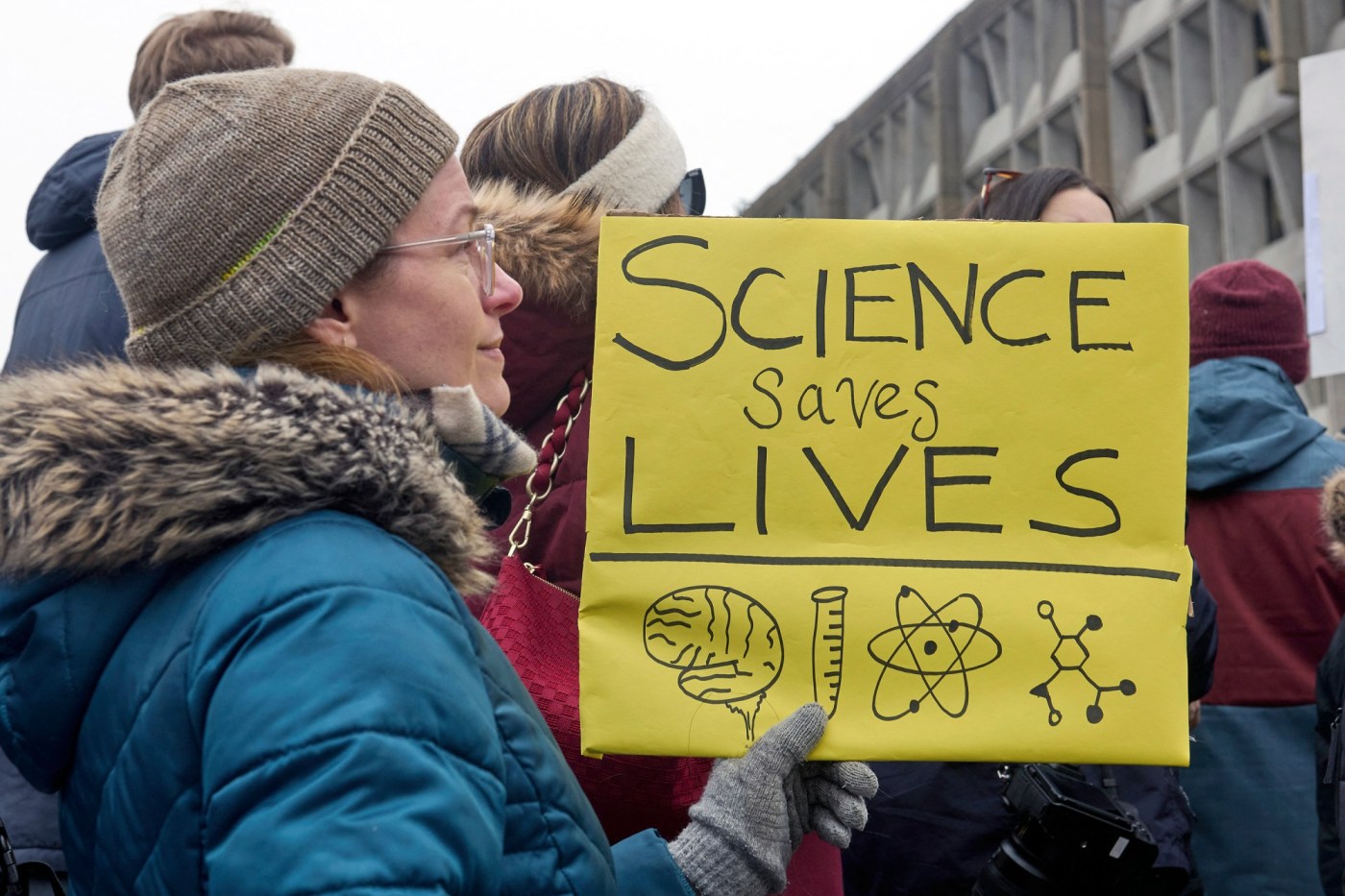
The Trump administration has agreed to reevaluate thousands of science and medical research grant applications that were previously stalled due to their association with diversity, equity, and inclusion initiatives. This decision has sparked cautious optimism among stakeholders, as many of these applications could lead to significant advancements in fields such as HIV prevention and Alzheimer’s disease.
The review primarily impacts institutions like the University of Washington, which received $572 million from the National Institutes of Health (NIH) in 2024. Washington’s Attorney General, Nick Brown, has joined forces with 16 other state attorneys general in a lawsuit against the federal government to challenge the actions that led to the halting of these vital research projects.
According to reports from Inside Higher Ed, following last month’s agreement, the NIH has already reviewed hundreds of applications and approved 499 of them. While this initial movement is promising, skepticism remains regarding the administration’s intentions.
Historically, during his first term, President Trump sought to eliminate $6.1 billion from NIH research funding, which included $1 billion earmarked for cancer research. Bipartisan efforts in both the House and Senate successfully blocked these attempts. Throughout 2025, Trump also aimed to exert more control over higher education institutions.
The administration initiated a pause on federal grant applications in January, followed by cuts to research funding in February. These actions prompted a series of lawsuits from affected universities. Notably, institutions such as Cornell University faced funding cuts of $30 million, while Columbia University saw reductions amounting to $200 million, and Brown University lost $50 million. Even Trump’s alma mater, the University of Pennsylvania, was not exempt, facing a withholding of $175 million under the pretense of protecting civil rights.
The administration also encouraged universities to align with its policies regarding race and gender in hiring and athletics through a proposed higher education compact, which would provide funding advantages.
Despite the recent agreement with state attorneys general, the NIH still faces a considerable backlog of applications. While this decision does not obligate the agency to fund any of the stalled applications, it does require them to consider the pending proposals. The movement toward this review process is encouraging, but the journey to this point has been fraught with challenges, taking nearly a year and multiple lawsuits to achieve.
In a nation that has long prided itself on medical and technological innovations, the lengthy process of reevaluating these research grants raises concerns about the efficiency and priorities of federal funding in the scientific community.