The leaders of all 27 European Union nations are set to hold an “extraordinary meeting” later this week in response to escalating pressure from U.S. President Donald Trump regarding Greenland. The meeting, called by European Council President Antonio Costa, comes after Trump announced a new tariff on goods imported from eight NATO allies, including Denmark, which governs Greenland.
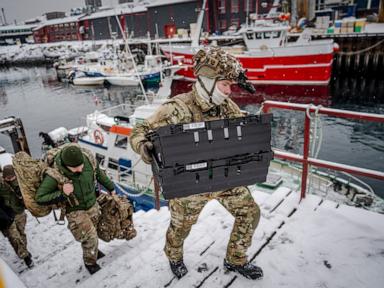
On Saturday, Trump declared a 10% tariff on goods sent to the United States from Denmark, Norway, Sweden, France, Germany, the United Kingdom, the Netherlands, and Finland. This decision follows the recent deployment of small military contingents from these nations to participate in exercises in Greenland, raising concerns among European leaders.
European Response to U.S. Tariffs
During conversations with European leaders, Costa noted a reaffirmation of their “strong commitment” to international law and Arctic security through NATO. He emphasized solidarity with Denmark and Greenland amidst Trump’s ongoing attempts to acquire the strategically significant island. Costa pointed out that the imposed tariffs would undermine transatlantic relations and contradict the existing EU-U.S. trade agreement.
“We are ready to defend ourselves against any form of coercion,” Costa stated, highlighting the EU’s commitment to engage constructively with the U.S. on mutual interests.
An EU Council spokesperson confirmed that the upcoming summit will take place in person in Brussels. The new tariffs, set to take effect on February 1, 2024, are poised to escalate to 25% on June 1, 2024, remaining in force until the U.S. can finalize a purchase of Greenland.
Greenland, a self-governing territory of the Kingdom of Denmark, has been at the center of geopolitical discussions since Trump first suggested acquiring it during his initial term. Danish and Greenlandic officials have consistently rejected these proposals, seeking to maintain their autonomy and control over the territory.
Implications of Trump’s Tariffs
Trump’s renewed tariffs point towards a potential transatlantic trade war. In light of these developments, a French official confirmed that French President Emmanuel Macron will request the activation of the EU’s anti-coercion instrument should new tariffs be imposed. This mechanism, referred to colloquially as the bloc’s “trade bazooka,” would enable the EU to impose significant restrictions on U.S. goods and services.
Among the potential measures are restrictions on U.S. investments in EU countries, barriers to public procurement schemes, and limitations on intellectual property protections. Trump’s rhetoric has long suggested that U.S. control over Greenland is essential for American security and to counteract influence from China and Russia in the Arctic region.
Despite Trump’s claims that only the U.S. can ensure Greenland’s security, a 1951 defense agreement grants the U.S. military access to the territory. Danish politicians have expressed a willingness to collaborate with Washington to enhance American and NATO presence in Greenland. In response to past U.S. criticisms regarding the protection of Greenland, Denmark recently announced a $6.5 billion defense package aimed at bolstering Arctic security.
Despite these efforts, Trump’s threats to acquire Greenland through force remain a concern. He has indicated a willingness to pursue aggressive measures if diplomatic solutions fail. This stance has been exacerbated by the recent deployment of NATO forces to Greenland for the Danish-led Operation Arctic Endurance.
On Monday, Danish Defense Minister Troels Lund Poulsen and Greenlandic Foreign Minister Vivian Motzfeldt are scheduled to visit NATO headquarters in Brussels for discussions with Secretary General Mark Rutte. The outcomes of these meetings could significantly influence future relations between the U.S. and its European allies as tensions rise over Greenland’s status.