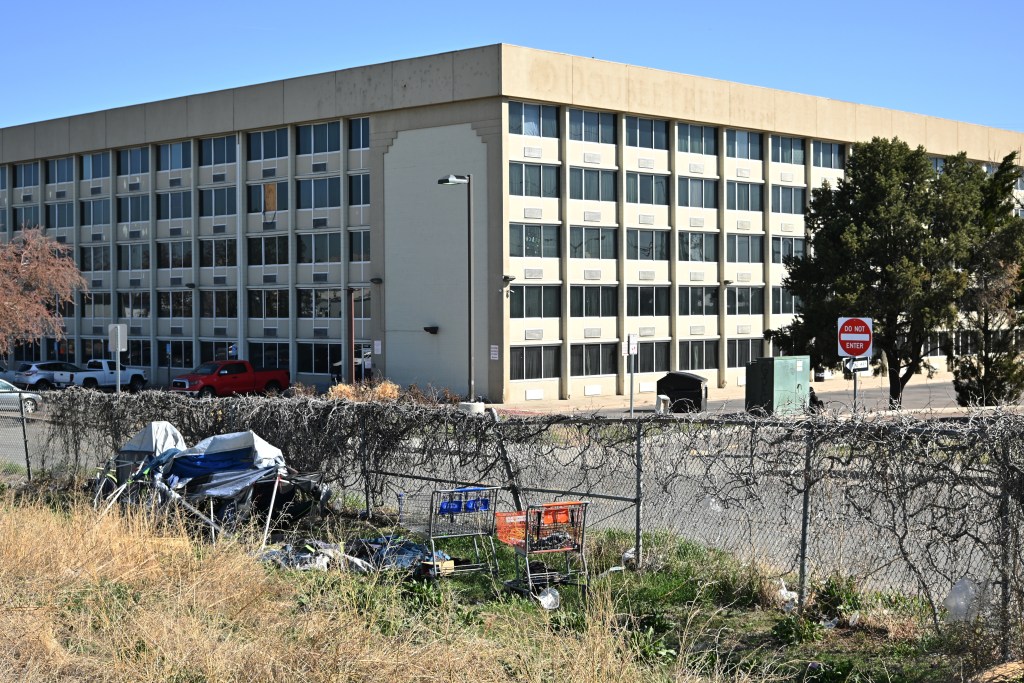
Denver has reopened one of its largest emergency shelters as the city faces severe cold weather. The Aspen, a former DoubleTree hotel located in northeast Denver, is now accepting up to 250 people in its ballroom. This decision by Mayor Mike Johnston came on December 8, 2023, after the city’s four other emergency shelters reached full capacity during the initial cold snap.
With temperatures predicted to drop near zero, the urgency for shelter is critical. Without proper clothing, frostbite can set in within 30 minutes. Mayor Johnston’s office emphasized the need for immediate action, stating, “With life-threatening cold settling over the city… we will be opening the ballrooms at 4040 Quebec (St.) for temporary emergency cold weather shelter,” according to spokesman Jon Ewing.
The mayor’s unilateral move follows a previous decision by the City Council, which rejected a contract to use the Aspen as a cold-weather shelter late last year. During a council meeting on December 8, eleven out of thirteen council members voted against the contract. Councilwoman Shotel Lewis, representing the district that includes the shelter, expressed frustration. She stated that the mayor had assured her in 2023 that the site would not be used for this purpose: “My district is already overrepresented with shelters, with eight of them. This is ridiculous.”
Only Councilmen Kevin Flynn and Darrell Watson supported the contract. The council’s decision has led to ongoing tensions between the mayor and council members, with both sides accusing each other of mismanagement. Lewis accused the mayor of failing to implement a long-term strategy for sheltering, arguing that the Aspen should function as a navigation center providing resources to homeless individuals rather than as a shelter.
In response, Ewing noted that the need for immediate shelter arose unexpectedly after the council’s rejection of the contract. He explained, “The real emergency is that it is 5 degrees outside and people are going to die if we don’t get them inside.” The Aspen was deemed suitable due to its existing facilities, including cots, showers, and bathrooms, which are essential for immediate use.
The city’s ability to respond effectively to cold weather has been complicated by a shift in policy. Previously, emergency shelters were activated when temperatures dropped below 10 degrees, but this threshold has now been lowered to 25 degrees, increasing the demand for shelter. Ewing highlighted the limited options available for emergency shelters, stating, “We do not just have shelter sites lying around. There are only so many spaces.”
The tensions between the mayor and council members remain unresolved. Lewis remarked, “It’s the mayor’s responsibility to run the city as the executive,” suggesting that a change in leadership might be necessary if the situation does not improve. Ewing countered that it is unfair to disrupt city operations and then blame the administration for scrambling to address the ensuing crisis.
As the weather forecast indicates warmer temperatures for the following week, the underlying issues between the mayor’s office and the City Council are unlikely to thaw. The situation underscores the complexities of managing homelessness and shelter resources in a city facing severe winter conditions.