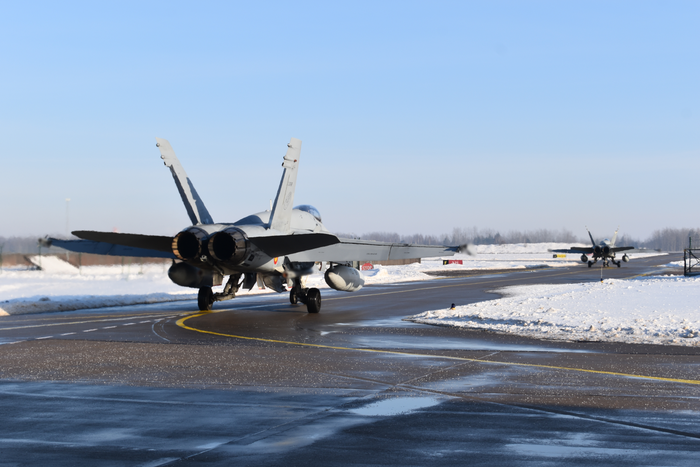
A Spanish fighter wing has made a significant move in defense strategy by deploying to Lithuania with counter-drone systems for the first time. Spain’s 15th Wing arrived at Šiauliai Air Base in early December 2023, marking its participation in NATO’s Baltic Air Policing mission. The introduction of the Crow counter-drone system highlights the increasing threat posed by unmanned aerial vehicles to European infrastructure.
This deployment comes amid growing concerns over drone incursions, particularly along NATO’s eastern flank, where many nations share borders with Russia. The 15th Wing has previously operated in the region, but this marks the first occasion it has integrated counter-drone technology into its operations. The Crow system, developed by Spanish defense company Indra, is designed to detect and neutralize drones using a combination of radar, cameras, and electronic warfare capabilities.
Addressing a New Threat
Drones have emerged as a notable threat in both combat and peacetime scenarios. Recent incidents, including a September 2023 event where nearly 20 Russian drones entered Polish airspace, have intensified NATO’s focus on counter-drone measures. The alliance responded by scrambling fighter jets and, in some cases, shooting down intruding drones. Similar incidents saw Romania deploying jets to escort a Russian drone out of its airspace, raising alarms about the security of NATO member states.
The situation has prompted NATO to bolster its air defenses, particularly in the Baltic region. The introduction of the Crow counter-drone system is part of this strategy, aimed at safeguarding military assets and the surrounding areas. According to Lithuania’s Minister of National Defense, Robertas Kaunas, the deployment serves as a testament to the solidarity among NATO allies in enhancing European security.
Lt. Col. Fernando Allen, commander of the Spanish detachment, emphasized the changing landscape of military threats. He noted that NATO forces are adapting to the challenges posed by drones, which operate at lower altitudes and can maneuver unpredictably compared to traditional aircraft. This has necessitated the development of new operational tactics specifically tailored to counter drone threats.
Future Strategies and Considerations
As NATO military leaders address the complexities of intercepting low-cost drones, discussions have emerged regarding the effectiveness of current interception methods. Traditional fighter jets, while effective against manned aircraft, may not be the most efficient solution for neutralizing smaller unmanned threats. Major Natalia Sanjuán Cortés, public affairs officer for the 15th Wing, indicated that the unit is reassessing the tools and strategies required for effective drone engagement.
The Crow system represents a significant advancement in counter-drone technology, capable of engaging threats from both fixed and mobile positions. First delivered to the Spanish military in 2022, the system reflects an ongoing commitment to modernize defense capabilities in response to evolving threats.
As drone incursions continue to pose challenges across Europe, the deployment of Spain’s 15th Wing with the Crow system serves as a proactive measure. With NATO’s focus on collective security and shared responsibilities, the integration of such technologies will likely play a crucial role in safeguarding the airspace of member states in the face of increasing aerial threats.