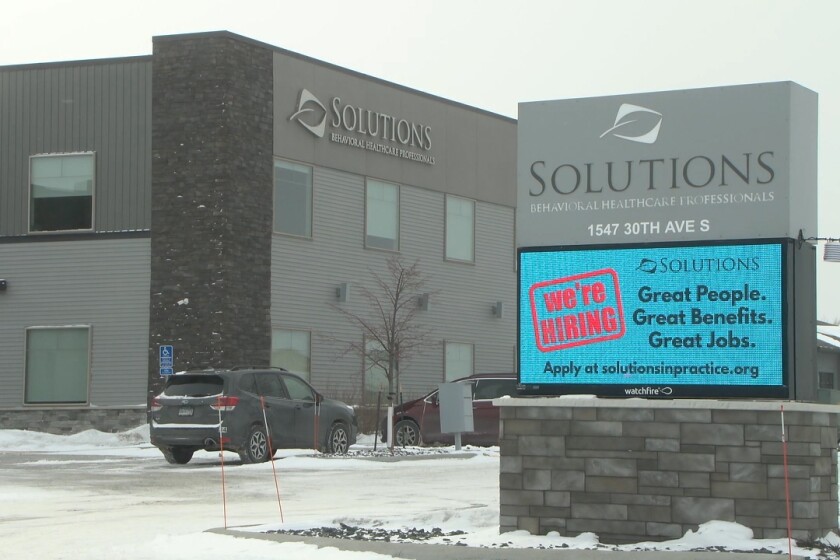
A nonprofit organization based in the Red River Valley is set to reduce its services for children experiencing severe behavioral and mental health challenges due to changes in federal funding. The decision impacts programs critical for children like nine-year-old Asher, who has multiple diagnoses, including PTSD, ADHD, dyslexia, and autism. His mother, Gabbie Link, has expressed concern over the potential consequences of these cuts, noting that Asher has struggled significantly in various settings outside the home.
Asher has exhibited challenging behaviors, which have included physical outbursts in school. Link describes incidents where he has “trashed classrooms” and even “attacked staff members.” With the support of Solutions, a nonprofit in Fargo, North Dakota, Asher has made progress, now attending school from 7:30 a.m. until noon. “There’s been a night and day difference, but he still needs a lot more hours and support,” Link said.
Joel Bakken, the executive director of Solutions, explained that the program Asher participates in is designed to help prevent violent behaviors from escalating. However, beginning January 1, 2026, the North Dakota Department of Health and Human Services will impose a cap on services, limiting clients to only 42 hours of support annually. Bakken expressed concern regarding this change, stating, “It is difficult at best to pull off a support system for someone at risk for hospitalization with just 42 hours for the year.”
This cap is part of a larger initiative to standardize billing and service limits for Medicaid-covered programs across North Dakota. Bakken highlighted the potential risks of inadequate support, noting that without proper intervention, children could end up in mental health facilities or even face incarceration. “Sadly, this population group is growing, and we hope to continue addressing that area,” he added.
For Link, the implications of these service cuts are serious. She desires for Asher to lead as “normal” a life as possible, fearing that limiting access to necessary support will hinder his ability to integrate into society. “Removing the ability to learn how to commingle with everyone else will drastically affect his future,” Link stated.
Solutions has passed several state audits in 2025 and has attempted to extend its program through service agreements. Unfortunately, these requests were denied due to claims of insufficient documentation.
As of now, WDAY News has reached out to the North Dakota Department of Human Services for comments regarding the service changes but has not received a response. The situation reflects ongoing challenges that nonprofits face in maintaining essential services amid shifting funding landscapes, particularly for vulnerable populations like children with complex behavioral needs.