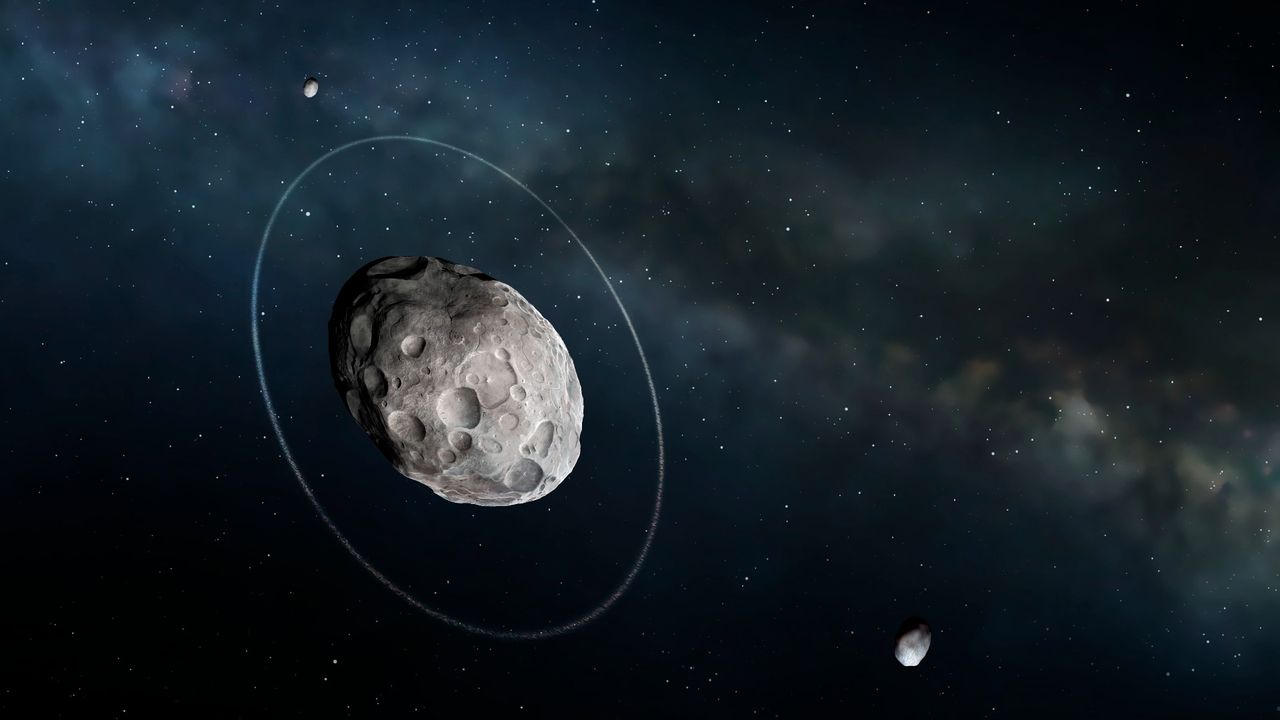
Dwarf planets, despite their small size, play a significant role in our understanding of the solar system. These unique celestial bodies, including well-known names like Pluto and Ceres, orbit the sun much like their larger counterparts, yet they possess distinct characteristics that set them apart. Recently, a word search has been created to engage enthusiasts and educate them about these fascinating objects that reside in the far reaches of our cosmic neighborhood.
The dwarf planets primarily inhabit regions such as the Kuiper Belt and the scattered disk, areas located beyond the orbit of Neptune. Their elongated orbits and relative distance from Earth make them challenging to study. Nevertheless, each new space mission unveils surprising insights about these icy worlds. For instance, NASA and the European Space Agency (ESA) have been pivotal in expanding our knowledge through missions that have revealed the complex geology and atmospheric phenomena on these distant bodies.
The word search offers a unique opportunity for participants to familiarize themselves with the names and characteristics of various dwarf planets. It serves as an educational tool, encouraging learners to explore the solar system’s outer regions without the need for a spacecraft. As individuals engage with this interactive quiz, they can discover more about the unique features of these celestial bodies, which continue to intrigue astronomers and enthusiasts alike.
The activity invites participants to embark on a mini-expedition, diving into the mysteries of our solar system. As they search for names like Haumea and Makemake, they also gain insights into the ongoing research and discoveries surrounding these dwarf planets.
In addition to the word search, astrophysics enthusiasts can stay updated with the latest developments in space exploration, including news on rocket launches and key skywatching events. Such resources are essential for anyone interested in the ever-evolving field of astronomy.
By participating in this engaging activity, individuals not only enhance their knowledge but also join a larger community of space enthusiasts eager to uncover the secrets of the universe. The allure of dwarf planets like Pluto and Ceres continues to inspire curiosity, paving the way for future explorations and discoveries in the vast cosmos.