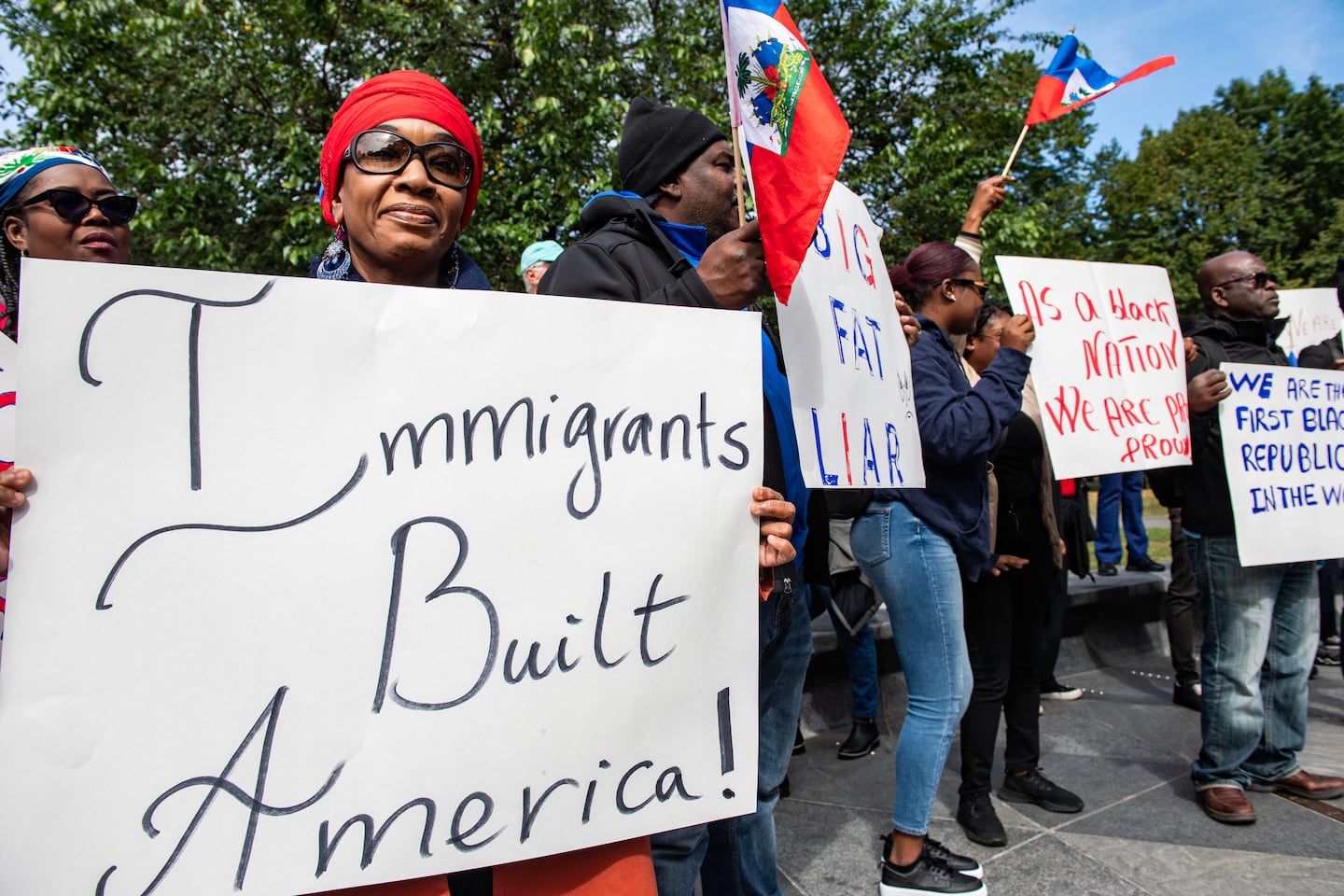
UPDATE: A federal judge has delivered a crucial reprieve to approximately 45,000 Haitians in Greater Boston, temporarily blocking the Trump administration’s attempt to end their Temporary Protected Status (TPS). This urgent development comes just before a planned revocation on February 3, 2025, leaving many in a state of relief but also uncertainty.
The TPS allows Haitians, who have faced instability since the 2010 earthquake, to live and work in the U.S. without fear of deportation. However, the Trump administration had indicated it would challenge this status in the U.S. Supreme Court, citing a lack of national interest for continued protection. Following the judge’s ruling late Monday, the Department of Homeland Security confirmed it would pursue an appeal, keeping the future of these protections in limbo.
In Boston, the atmosphere shifted quickly from panic to relief. John Randall, CEO of Amego, Inc., described the chaos that ensued as his team scrambled to inform Haitian workers that their jobs were secure—at least for now. “Everyone is in a holding pattern but they’re still employable and legal today,” Randall stated. His organization, which employs many TPS holders, faced the distress of having to notify workers of potential job losses.
Advocates and public officials have underscored the significant humanitarian and economic repercussions of ending TPS. Many Haitian workers have contributed to the local economy for over a decade, and losing them could spell disaster for various sectors. “This is just a write-off of an entire section of our workforce,” Randall warned.
As anxiety grips the community, many TPS holders fear the repercussions of being sent back to a Haiti riddled with violence and unrest. Nicole Albert from the Gilbert Albert Community Center noted a drastic drop in ESOL class attendance, attributing it to fears of deportation. “People were starting to hide, thinking, ‘I don’t want to get deported and then my kids stay behind,’” she explained.
Legal experts like Leslie Ditrani have reassured TPS holders that they are still authorized to work and do not need to take any immediate action regarding their employment status. However, the uncertainty continues to loom large, particularly for those who have already lost opportunities in anticipation of the deadline.
The ripple effects of this situation extend to various employers. Christopher White, CEO of Road to Responsibility, shared that they have already faced significant staff losses, with over 100 Haitian workers leaving since last summer. As the organization serves 1,000 individuals across Southeastern Massachusetts, the absence of these workers has been felt acutely. “These are good, hard-working people,” White said, advocating for their rightful place in the workforce.
The emotional toll is evident, especially for families reliant on these workers. Dr. Karen Scanlan expressed her heartbreak over the potential loss of a caregiver for her nonverbal autistic daughter, highlighting the deep personal connections at stake. “It’s just heartbreaking to me that she can’t work because of this,” she lamented.
With the legal battle still unfolding, the implications for Greater Boston’s economy and its Haitian community remain critical. Advocates emphasize that many TPS holders have no desire to return to Haiti, a country still grappling with violent unrest. As the community watches closely, the future of TPS hangs in the balance, with many hoping for a more permanent resolution.
As developments continue, the focus remains on the impact this ruling will have on the lives of thousands. Authorities have urged the community to stay informed and prepared for any changes in the legal landscape. The next steps from the Supreme Court could redefine the futures of thousands of families caught in this precarious situation.