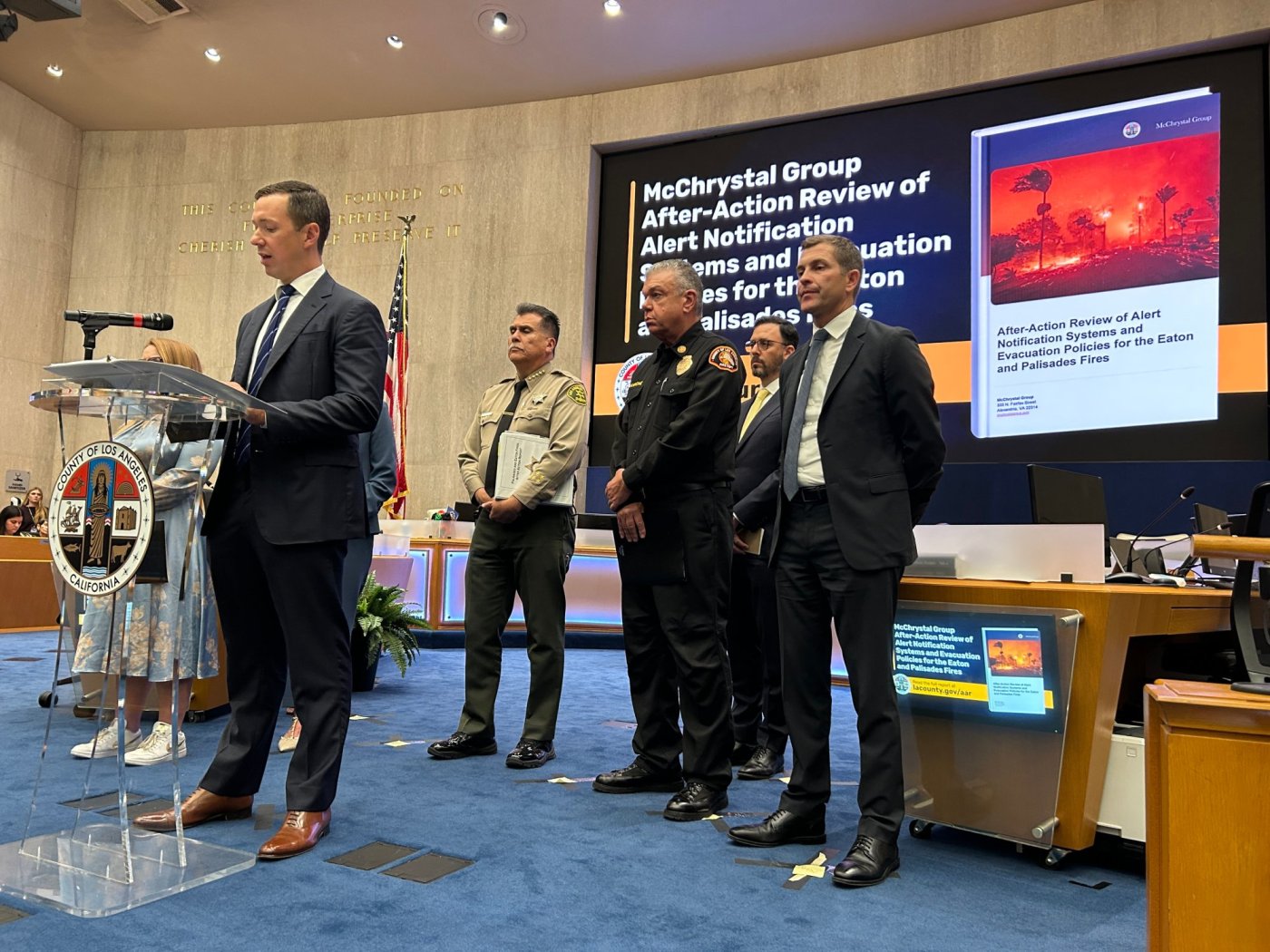
UPDATE: Los Angeles County agencies are currently reviewing an independent after-action report on the devastating January wildfires that ravaged Altadena, officials announced just moments ago. This urgent examination comes amidst rising concerns over the effectiveness of evacuation alerts and community notifications during the crisis.
The report, commissioned by the county and prepared by the McChrystal Group, aims to assess actions taken during the fires and provide critical recommendations for future responses. County officials have not disclosed whether agencies proposed significant edits to the document, sparking questions about the transparency of the review process.
According to the Los Angeles County Counsel, legal protections prevent the release of draft documents, including this after-action report. The Counsel stated, “For a review of this significance, it is standard practice to include a validation step in which stakeholders review a draft report.” This measure is intended to ensure that findings are both accurate and actionable.
Despite these assurances, the city of Los Angeles has opted to release drafts of its own fire response report, raising further questions about accountability in the wake of the Eaton fire. Kathryn Barger, the county supervisor for the affected Fifth District, emphasized the necessity of uncovering the truth to prevent similar tragedies in the future. She stated, “Our Board invested nearly $2 million to have a specialized, independent third party conduct this review with the highest level of integrity.”
The catastrophic wildfires in January claimed 31 lives and destroyed an alarming 16,251 properties across Altadena, Pacific Palisades, and other areas. Criticism has mounted regarding the delayed issuance of evacuation orders, which were not activated until around 3:35 a.m. on January 8, several hours after spot fires were initially reported.
An investigation within the report concluded that there was “no single point of failure” regarding public alerts but highlighted a series of underlying weaknesses. These included outdated policies, inconsistent practices, and vulnerabilities in communication systems that hampered the effectiveness of notifications.
County officials have already begun implementing some recommendations from the after-action report, addressing longstanding challenges in training, staffing, and interagency cooperation that were exposed during the fires.
As the review process unfolds, residents and stakeholders await the finalized report, keenly aware of the implications for future emergency responses. The urgency of this situation cannot be overstated as communities strive for safety and accountability in the wake of a disaster that has left a profound impact on the region.
Stay tuned for updates as more information becomes available regarding the findings and recommendations from this critical review.