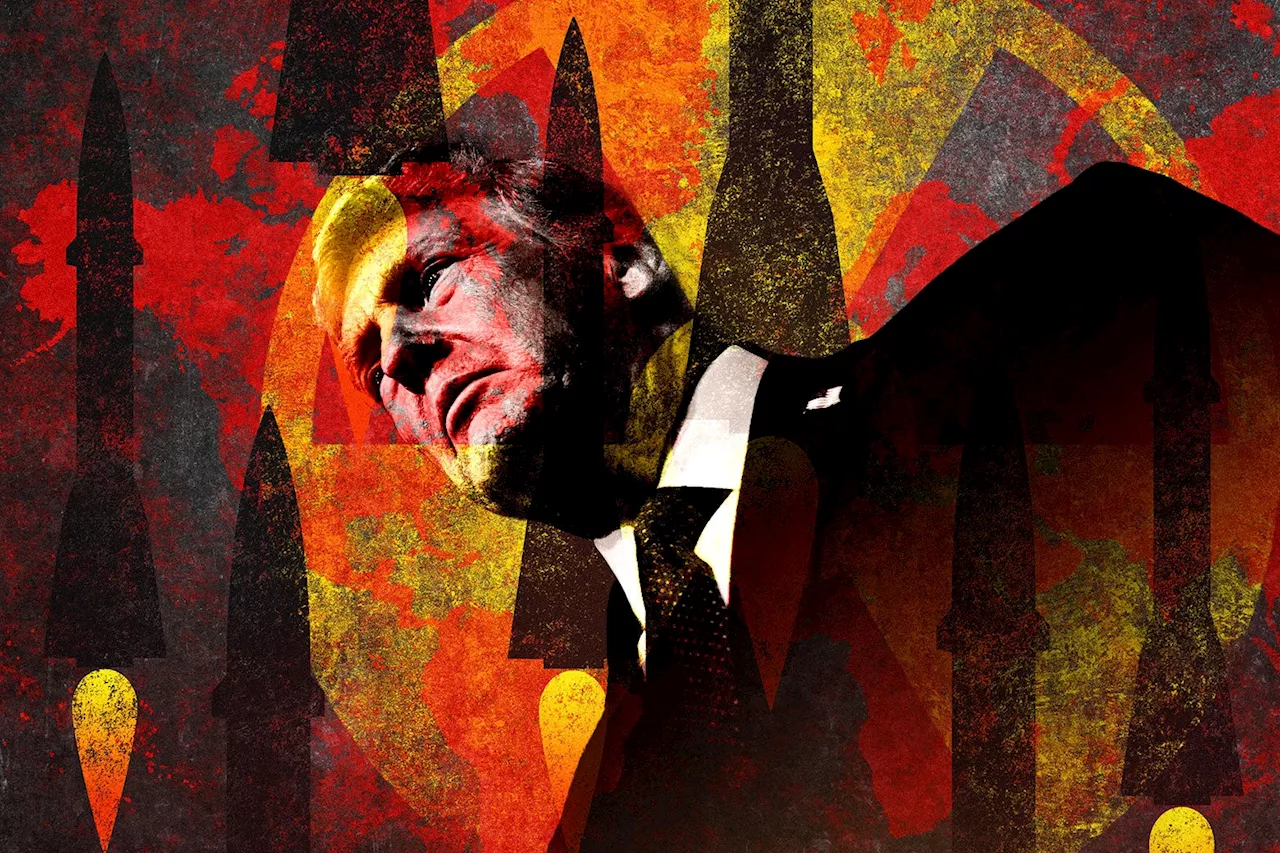
President Donald Trump has made headlines by announcing his decision to let the New START treaty, the last significant nuclear arms control agreement between the United States and Russia, expire. This decision, which is set to take effect on March 1, 2024, has sparked widespread concern among political analysts and international relations experts.
During a recent social media post, Trump dismissed the treaty, stating, “Rather than extend ‘NEW START’, we should have our Nuclear Experts work on a new, improved, and modernized Treaty that can last long into the future.” Critics argue that this statement ignores the historical significance of New START, which was hailed for its stringent measures, including deep cuts to nuclear arsenals and rigorous on-site inspections.
Implications of Trump’s Decision
The underlying reasons for Trump’s rejection of New START may be rooted in his longstanding disdain for agreements made by former President Barack Obama. Trump has previously criticized the Iran nuclear deal, another Obama-era agreement, suggesting that his motivations are more personal than strategic. This perspective raises questions about the future of nuclear arms control and the safety of global security.
Notably, Russian President Vladimir Putin had proposed extending New START for an additional year, a suggestion Trump declined. This refusal comes despite reports from Trump’s administration indicating that discussions were underway to extend the treaty, showcasing a disconnect between diplomatic opportunities and the president’s rhetoric.
Trump’s assertions regarding military accomplishments further complicate the narrative. He claimed to have “completely rebuilt” the military during his first term, including enhancing nuclear capabilities. However, evidence suggests that no new nuclear weapons were added under his administration, raising doubts about the accuracy of his statements.
Political Context and Future Prospects
As the treaty’s expiration approaches, the political landscape is fraught with uncertainty. Trump could have initiated negotiations for a new treaty months ago but has instead focused on other priorities, such as infrastructure projects and personal branding. For instance, during discussions with Senator Chuck Schumer, Trump indicated he would restore funding for the Gateway Tunnel project, a move many interpret as a political maneuver rather than a genuine concern for infrastructure.
The looming expiration of New START marks a significant shift in U.S.-Russia relations. For the first time in half a century, there will not be a nuclear treaty in place between the two nations. The implications of this development are profound, as experts warn that it could lead to a renewed arms race and heightened tensions between nuclear powers.
Moreover, Trump’s reliance on advisers with limited experience in foreign relations, such as his son-in-law Jared Kushner, raises further concerns about the administration’s preparedness to engage in complex nuclear negotiations. As the world watches closely, the future of nuclear arms control hangs in the balance.
In summary, Trump’s decision to let New START expire not only reflects his personal vendetta against Obama-era policies but also poses significant risks to international security. Without a framework for arms control, the potential for misunderstandings and escalated conflicts increases, leaving many to question the long-term strategy of the current administration.