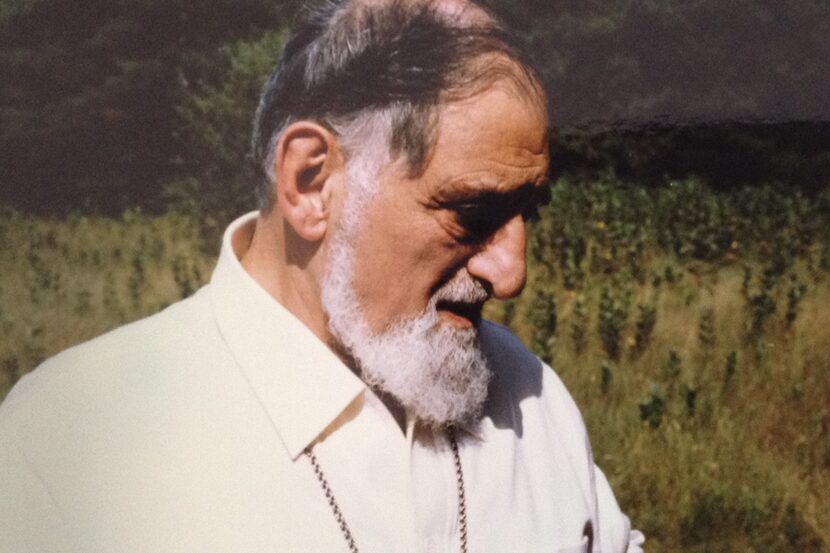
The life of Archbishop Joseph Raya, a prominent figure in the Melkite Catholic Church, is remembered for his unwavering commitment to justice, reconciliation, and spiritual renewal. Born in 1951, his legacy is intertwined with pivotal moments in history, notably his work in civil rights and interfaith dialogue.
Growing up, Father Raya was not only a spiritual guide but also a beloved family member, having acted as a godfather to many. His visits were marked by the sharing of traditional Lebanese treats like pita bread and baklava. He often celebrated the Byzantine Catholic Mass in the family home, transforming the dining room into a sacred space adorned with candles and a white tablecloth.
Father Raya, the seventh of eight children from Zahlé, Lebanon, was educated in Paris and ordained in Jerusalem on July 20, 1941. His early career took him to Cairo, Egypt, where he faced exile for defending women’s rights during the reign of King Farouk. He later became the assistant pastor at St. Ann’s Melkite Catholic Church in Woodland Park, New Jersey, where he met his future godchildren during a church picnic.
During a time of significant change, Father Raya played a crucial role in the church’s consideration of conducting liturgy in vernacular languages. His efforts supported the translation of the Greek liturgy into what became known as the Byzantine Daily Worship, widely adopted across Melkite churches in the United States.
In a notable chapter of his life, Father Raya was appointed pastor of St. George’s Melkite Church in Birmingham, Alabama, where he marched alongside Martin Luther King Jr. in the civil rights movement. His courage was evident as he faced violent opposition from the Ku Klux Klan, suffering physical attacks yet remaining steadfast in his commitment to social justice.
On October 20, 1968, he was elevated to the esteemed position of Archbishop of Akko, Haifa, Nazareth, and All Galilee. In this role, he tirelessly worked to bridge the divide between Arab and Jewish communities, advocating for love and understanding in the face of conflict. Despite the challenges he faced, including tensions with the Vatican and some local communities, his dedication to promoting spiritual renewal remained unwavering.
In a powerful lecture at Madonna House, a Catholic community in Combermere, Ontario, Archbishop Raya articulated his vision for peace: “Those who produce beauty, organize parades, make music, create art, are the hands and heart of God.” His words resonated with many, emphasizing the importance of kindness, creativity, and community.
Reflecting on his life, the impact of Archbishop Raya is felt deeply, especially in today’s world, which grapples with issues of racial prejudice and religious divides. He once remarked, “Those who acknowledge goodness, or re-create it, are acknowledging and singing that God is real and permanently present.”
As we navigate ongoing societal challenges, the spirit of Archbishop Raya serves as a reminder of the power of love and inclusivity. His life encourages us to embrace one another, sharing not only food but also compassion and understanding. In his memory, we are called to continue striving for a world where every person is welcomed with open arms, laughter, and joy.