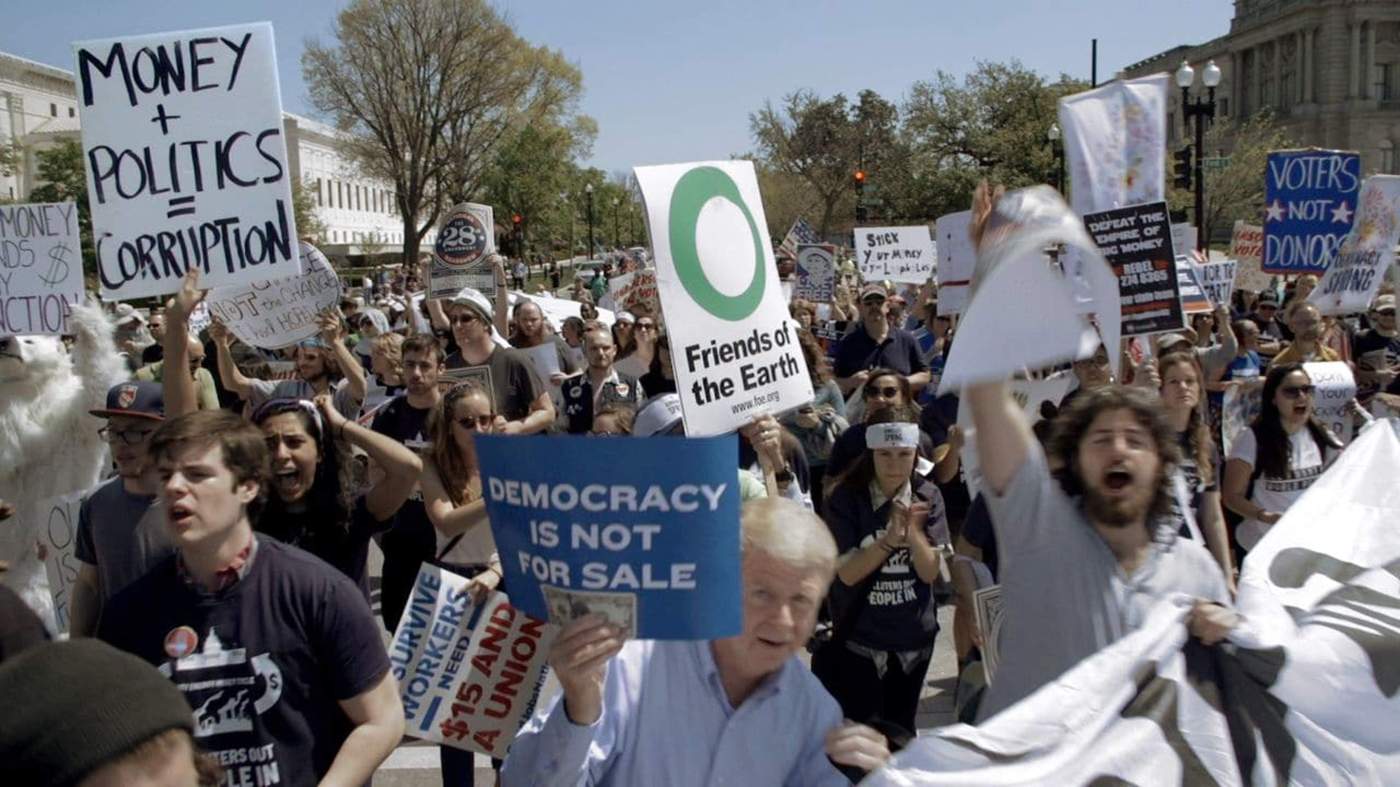
Concerns regarding the influence of money on U.S. politics are intensifying as recent statistics reveal a troubling trend. In 2024, candidates for the U.S. Senate reported raising only 27.5% of their itemized donations from within their own states, while House candidates reported a mere 17.5%. These figures indicate a significant detachment from local constituents, and projections suggest that the upcoming 2026 midterm elections may exacerbate this issue.
This year marks the 50th anniversary of the landmark Supreme Court case, Buckley v. Valeo, which established the current framework for unlimited campaign contributions. The ruling has led to a political landscape dominated by large donors, dark money, and foreign influence, resulting in a system that often overlooks the voices of everyday citizens. As it stands, Congress and state governments possess limited authority over the financial mechanisms in elections, raising questions about the sustainability of a democracy that fails to empower its citizens.
Calls for Constitutional Amendment
In light of these challenges, there is a growing call for a constitutional amendment aimed at restoring congressional and state powers to regulate campaign finance. Advocates argue that such measures are essential to protect the integrity of electoral processes and return authority to the people. Dan Shephard, a resident of Palmer Township, Pennsylvania, urges fellow citizens to contact their legislators and advocate for reforms that promote self-governance and democratic integrity.
Shephard emphasizes that a political system where citizens lack control over electoral rules is unsustainable. “We must act to reclaim our democracy,” he stated, highlighting the need for collective action in addressing the pervasive influence of money in politics.
Local Governance and National Issues
On a more localized level, a recent opinion piece by Josh Siegel, the Lehigh County Executive, has sparked debate regarding the removal of a Department of Homeland Security (DHS) office from county property. Critics argue that this office plays a crucial role in combatting drug and sex trafficking, and its absence could lead to rising crime rates. Samuel F. Nuttall Jr., a Bethlehem resident, expressed concern that the decision may undermine local law enforcement efforts.
In another political discourse, Robert K. McFadden from Upper Macungie Township has called for stricter regulations on law enforcement practices, advocating that officers should not conceal their identities while executing their duties. He draws from personal experiences and academic knowledge to highlight the potential for increased harm when individuals operate without accountability.
Furthermore, discussions have emerged comparing former President Donald Trump to historical figures such as King George III. Mark Anderson from Longswamp Township argues that Trump’s actions echo those of oppressive leaders, citing grievances from the Declaration of Independence. He posits that Trump represents a departure from the principles of governance that uphold democracy and accountability.
These discussions reflect a broader concern regarding the current state of U.S. governance and the influence of money in politics, raising fundamental questions about representation and accountability.
As these issues unfold, the public remains engaged, highlighting the importance of civic participation in shaping the future of democracy in the United States. The ongoing dialogue points to a critical juncture where citizens are called to evaluate the integrity of their political system and advocate for necessary reforms.
The Morning Call actively encourages readers to share their perspectives on these pressing issues. Letters to the editor can be submitted via email, allowing for a diverse range of opinions to contribute to the conversation around democracy and governance.