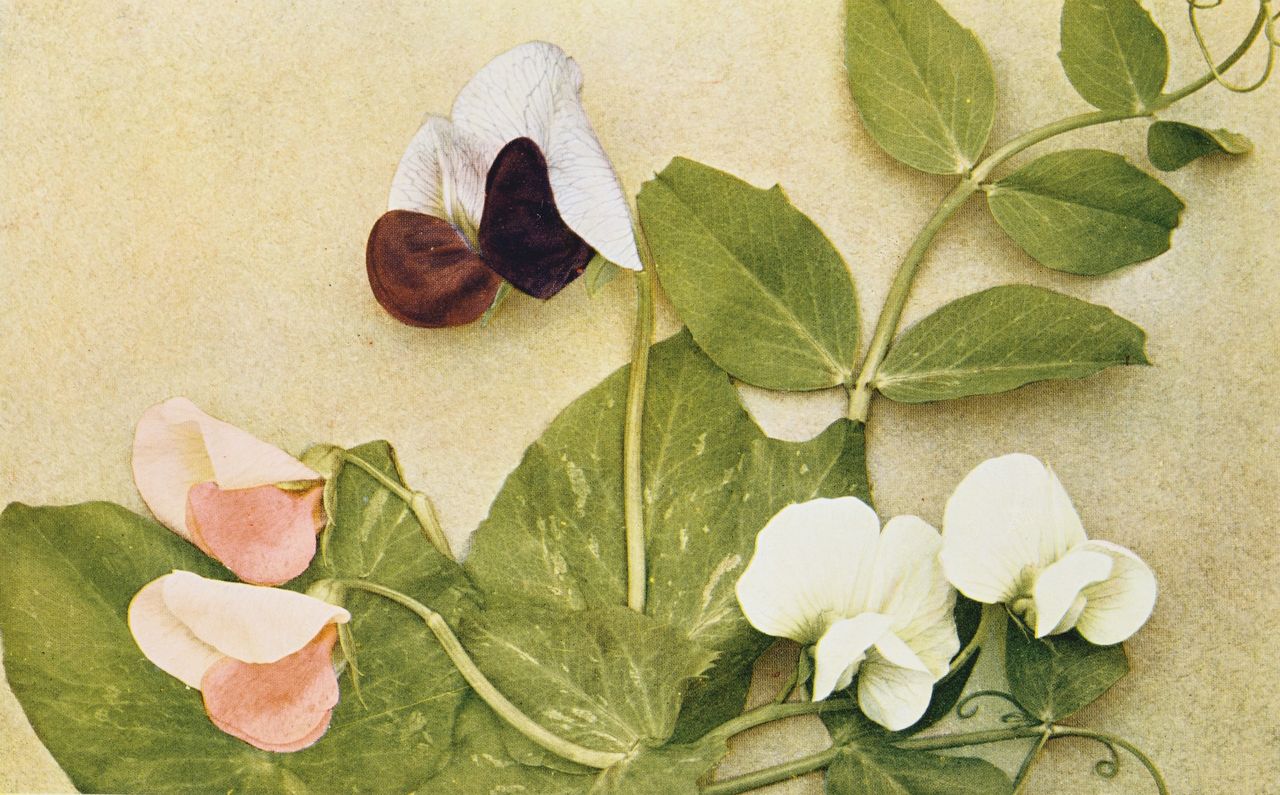
One of the most significant milestones in science occurred on **February 8, 1865**, when **Gregor Mendel**, an Augustinian friar, presented his groundbreaking experiments on pea plants. Conducted in the garden of the Monastery of St. Thomas in **Brno**, in what is now the **Czech Republic**, Mendel’s work laid the foundation for the field of modern genetics by demonstrating how heredity is transmitted in discrete units.
Mendel meticulously cultivated and crossbred over **28,000** pea plants, known scientifically as **Pisum sativum**, over a span of eight years. He recorded the traits of these plants with precision, focusing on attributes such as the color of the peas and pods, flower positions, and stem lengths. His choice of pea plants was strategic; they reproduce readily and exhibit clear, distinguishable traits, making them ideal for his experiments.
Despite facing skepticism from his contemporaries, including his bishop, who suggested that Mendel’s research was unworthy of his intellect, he remained resolute. In a letter dated **1859**, his abbot **Cyril Napp** expressed concern about the reputation of the monastery, stating that Mendel’s focus on pea propagation was a trivial pursuit compared to more traditional scholarly subjects. Yet, Mendel’s passion for elucidating the principles of inheritance drove him to continue his work undeterred.
Discovery of Inheritance Principles
Mendel’s experiments revealed several key findings about how traits are inherited. He identified discrete units, which he referred to as “particles,” that govern traits. For instance, when he crossed a green-pea plant with a yellow-pea plant, he consistently found that the offspring were either green or yellow, without any intermediate coloration. This observation led him to conclude that traits are inherited in specific patterns.
He also discovered that some traits exhibit a dominant inheritance pattern. When plants bred for smooth seeds were crossed with those having wrinkled seeds, the resulting offspring uniformly displayed smooth seeds. However, in subsequent generations, around **25%** of the plants reverted to the wrinkled appearance, indicating that the wrinkled trait was recessive and had been passed down from previous generations.
Mendel’s approach was not limited to single traits. He also crossbred plants with two different traits, leading to the discovery of the principle of segregation, which states that each trait is inherited independently of others. His meticulous record-keeping and analysis of the resulting generations allowed him to deduce mathematical patterns in inheritance.
Legacy and Recognition
Despite his groundbreaking contributions, Mendel’s work went largely unrecognized during his lifetime. The term “genetics” itself was not coined until the early **1900s**, when English biologist **William Bateson** rediscovered Mendel’s research and acknowledged its significance. Some of Mendel’s contemporaries even doubted the validity of his findings, claiming they were “too good to be true.”
In **2020**, a study reaffirmed the accuracy of Mendel’s results, demonstrating that the seeds available during his experiments and the classification methods used supported his conclusions. As research advanced, it became clear that inheritance is more complex than Mendel’s initial findings suggested. Some genes exhibit sex-linked inheritance, and various traits display incomplete penetrance, meaning they do not always manifest in the same way.
Research in early **2026** further challenged some established notions of Mendelian inheritance, revealing that certain disease-causing genes previously thought to be dominant may not function as expected.
In summary, **Gregor Mendel’s** pioneering work with pea plants not only defined the principles of inheritance but also established a framework that continues to influence genetic research today. His dedication to scientific inquiry, despite external skepticism, has earned him the title of the “father of modern genetics.”