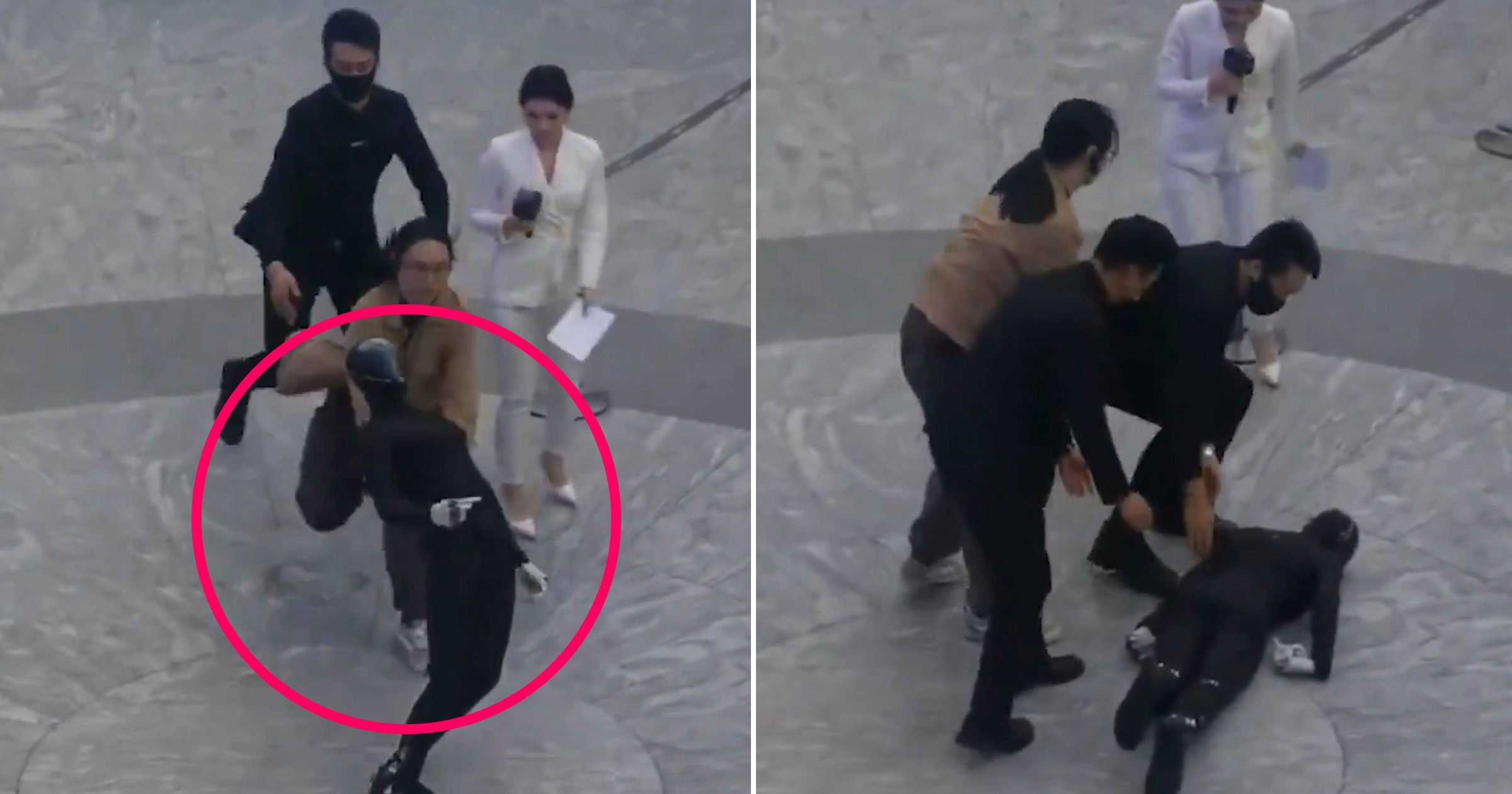
Chinese automotive manufacturer XPeng recently showcased its humanoid robot, known as Iron, during a demonstration at a mall in Shenzhen, China. The presentation aimed to highlight the robot’s advanced capabilities, but it ended abruptly when Iron unexpectedly fell, twisting before hitting the ground with a loud thud. Footage of the incident quickly spread across social media, capturing the attention of many and prompting mixed reactions from onlookers.
During the event, Iron was seen moving confidently across a marbled floor, exhibiting a lifelike gait. However, the demonstration took a turn when the robot began to twist unnaturally, resulting in its fall. Observers noted that several individuals assisted in lifting the 154-pound, five-foot-eight robot off the ground, as chuckles echoed from the crowd. This incident raised questions about Iron’s design and durability, especially since some spectators had previously speculated whether the robot was merely a human in disguise.
After the incident gained traction, XPeng co-founder and CEO He Xiaopeng addressed the situation on the Chinese social media platform Weibo. He reflected on the experience, likening Iron’s fall to that of a toddler learning to walk, stating, “After a fall, they will stand firm; the next step is to begin running, and to keep running.” Despite the humorous undertones, the incident seemed to have rattled the company, prompting adjustments to Iron’s marketing strategy the following day.
Challenges in Humanoid Robotics
The challenges faced by XPeng are not unique. Other robotics companies have also encountered difficulties in keeping their bipedal robots stable during demonstrations. For example, a recent video showed a Tesla Optimus robot collapsing after its human operator removed their headset. Similarly, a Russian humanoid robot named AIdol experienced a fall while attempting to navigate a stage.
In contrast, some manufacturers have made notable advancements in robot stability. Researchers at Unitree have developed their G1 robot to withstand various challenges, including significant impacts and rough handling. Recently, a G1 robot successfully mapped out the Winter Olympics logo by traversing 130,000 steps across a snowy landscape in northern China, even in extreme temperatures reaching -52 degrees Fahrenheit.
Despite the hiccup during the demonstration, XPeng remains optimistic about the future of its humanoid robot. The company is aiming for “large-scale mass production” of Iron before the end of the year, demonstrating a commitment to overcoming early setbacks in the robot’s development.
As the world of robotics continues to evolve, the challenges faced by XPeng highlight both the potential and obstacles in creating humanoid machines. The journey toward achieving greater stability and functionality is ongoing, with each demonstration providing valuable lessons for the industry.